

In modern industry and consumption. Dichroic glass, with its unique optical properties and a wide range of application scenarios, has gradually become an important material in the high-tech field.
Dichroic glass is the main application field
Architectural decoration
Dichroic glass has become one of the innovative materials in modern architectural design due to its changing color effect and excellent optical properties. It achieves the perfect combination of decorative and practical functions through the refraction, reflection and transmittance of light.
Exterior and curtain wall design
In the exterior walls and curtain walls of high-end buildings, dichroic glass can show different color effects according to changes in light and Angle of view. From the outside, dichroic glass adds a layer of dynamic beauty to the building. Take for example some common buildings: museums, art centers and so on. Through the use of dichroic glass curtain walls, the building shines brightly in the daylight. If at night, add roadside lights. Building facades also provide a distinctive visual aesthetic.

Interior decoration and partition
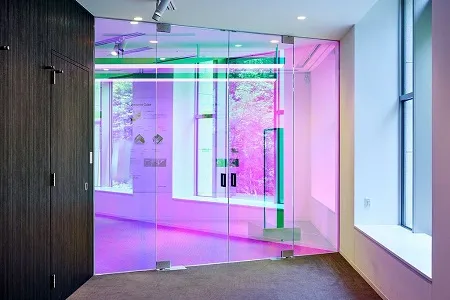
In interior design, dichroic glass is widely used in decorative areas such as partition walls, suspended ceilings and guardrails. Large area use may be slightly more expensive. So this kind of partition, decoration is very suitable. Dichroic glass can not only divide the space, but also create a transparent and artistic space atmosphere by refracting light. For example, the dichroic glass curtain wall installed in the hotel lobby. Dichroic glass can add a sense of premium, but also to attract the eyes of customers.
Art installation
Many public Spaces, such as squares, parks and exhibition halls. These venues often use dichroic glass for art installations. Because of the interaction of light and shadow brought by dichroic glass, it can create a sense of science and technology and modern works. It adds a touch of color to the cityscape.
Consumer electronics
In the field of consumer electronics, the application range of dichroic glass is also expanding year by year. Especially in the pursuit of design and high performance products. The advantages of this material can also be fully exploited.
Optical lens filters
In devices such as smartphones, digital cameras and drones. Dichroic glass as a filter, can selectively through or reflect specific wavelengths of light. This also improves the image quality of the lens. For example, when photographing a sunset or night scene, the filter can effectively reduce stray light interference. The sharpness of the picture and the degree of color reproduction can be improved.
Screen protector glass
Many high-end smart devices screen protection glass, using dichroic coating technology. This coating technology provides anti-scratch and anti-fingerprint functionality in addition. Dichroic glass can also show subtle color changes at different angles, enhancing the sense of technology and visual appeal of the product.
Smart wearable devices and optical components
Devices such as smartwatches and augmented reality (AR) glasses use dichroic glass as part of the display cover or optical module. Dichroic glass can enhance the design of the device and also optimize its optical performance. For example, dichroic glass in AR glasses can enhance the brightness and contrast of the image projection. This gives users a better visual experience.
Optical instruments and scientific research
Dichroic glass has become an important material in the field of optics because of its excellent spectral separation ability. Especially in the need for high precision optical instruments, played a key role.
Microscope filter
In biomedical research, dichroic glass filters are often embedded in the microscope's optical system to separate specific wavelengths of light. For example, in fluorescence microscopy. Dichroic glass can effectively screen fluorescent signals and avoid interference from background noise. This improves the contrast and sharpness of the image.
Spectrometer and spectral analysis equipment
The application of dichroic glass in spectrometers and other spectral analysis equipment can help researchers accurately analyze the wavelength composition of light. It is of great significance in the fields of environmental monitoring, chemical analysis and astronomical observation. For example, analyzing the spectral absorption properties of specific bands could be used to monitor air quality or identify the composition of interstellar matter.
Cars and vehicles
With the gradual development of the automobile industry, consumers have put forward higher requirements for the aesthetic and technological sense of vehicle design. Dichroic glass is also meeting these trends.
Headlight design
The front and rear lights of high-end cars. Dichroic glass because of its special optical effect, gives the lights a unique dazzling appearance. For example, when driving at night, the lights can reflect a variety of colors at different angles. Dichroic glass not only adds to the beauty of the vehicle, but also improves the recognition of the vehicle.
Interior trim
In the interior design of luxury cars, dichroic glass is widely used on the surface of the dashboard, trim strip and control panel. The overall smooth touch and changing colors of the dichroic glass add a futuristic and luxurious feel to the vehicle.
Smart windshield
Dichroic glass windshields, combined with smart technology, can selectively pass through or reflect sunlight. Provide a comfortable lighting environment for the cockpit. At the same time, reduce energy consumption and improve fuel efficiency.
Art and jewelry design
Dichroic glass's color-changing properties have made it a source of inspiration for many artists and designers. Popular in the field of art and jewelry design.
Art sculpture
Using the unique optical properties of dichroic glass, many artists have created sculptures with a sense of technology and the future. For example, an art sculpture that looks very ordinary on the outside. When combined with the interaction of daylight and light, dynamic color changes are likely to occur. An ordinary sculpture can become no longer ordinary.
Jewelry and accessories
In high-end jewelry design, dichroic glass is in sharp contrast to traditional gemstone materials because of its unique color changing effect. For example, a ring with dichroic glass. It can display a variety of colors in different light and angles. Bring unique aesthetic experience to the wearer.

Aerospace and military industries
Aerospace and military equipment operating in extreme environments place demanding demands on the performance of optical materials. Dichroic glass has become one of the indispensable materials due to its high stability and precise spectral control.
Satellites and sensors
Dichroic glass is widely used in optical components of satellites and sensors. Examples include spectral modules and filters. It can selectively pass through specific wavelengths of light. Helps devices capture and analyze target signals. At the same time eliminate unnecessary background interference.
Laser protection and detection equipment
In laser communications and military optical systems. Dichroic glass can be used as a protective lens or filter. It can effectively protect specific wavelengths of strong light and protect optical equipment from damage. For example, laser detectors in the battlefield use dichroic glass to improve target capture accuracy and response speed.