Mirrors are everywhere, from bathrooms to cars, from fashion stores to science LABS. But few people realize that the process of making mirrors is interesting and complicated. Mirrors date back to ancient times and were originally made of polished stone or metal. In the early stage, it only reflected blurred images.
With the development of technology and The Times, modern mirrors were born based on glass manufacturing technology and advanced coating processes. Mirrors can now reflect objects clearly, mainly relying on smooth surfaces and highly reflective metal coatings. The following is a detailed description of the mirror manufacturing process. From the selection of raw materials to the inspection of finished products, every step is crucial.
Historical background
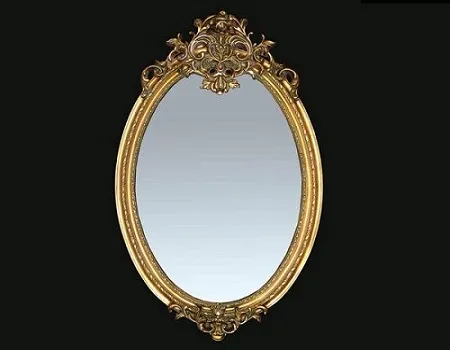
The first mirror made by man was not ideal. People use polished sheets of metal or bronze to observe the reflection. But the reflection is not good, the reflection is blurred. It's like a simulated lake, because the lake is also a natural mirror. It was only later, when humans mastered glass-making techniques, that the prototype of the modern mirror appeared.
Venetian craftsmen were the first to master the technique of coating glass with a thin layer of mercury. Later, he mastered the technology of coating silver on glass, so that high-quality products could be made. Today, production technology has also changed dramatically, becoming safer, more accurate and more efficient. However, the basic principles such as the ideal smoothness of the glass and the application of reflective coatings remain unchanged.
Selection of raw materials
The main materials used to make mirrors include glass, reflective metal (usually silver or aluminum), and a protective coating. The quality of the glass directly affects the optical properties of the mirror. Therefore, it is essential to choose a colorless, transparent, bubble-free and flawless float glass. The thickness of float glass is usually between 2 mm and 6 mm. Choose according to the purpose and requirements of the mirror.
Glass cleaning and preparation
Before transforming the glass into a mirror, it needs to be thoroughly cleaned. Dust, oil, fingerprints and other impurities on the surface of the glass can affect the reflection effect. Therefore, professional equipment is needed for cleaning. For example, professional cleaning agents and ultrasonic cleaning technology to ensure that the glass surface is completely clean. The cleaning process usually includes the following steps.
Initial cleaning: Use a mild cleaner and water to remove dust and light dirt from the surface.
Ultrasonic cleaning: Dip the glass into the ultrasonic cleaning tank. The vibration of sound waves can remove small impurities from the surface and inside of the glass.
Steam cleaning and drying: The surface of the glass is further cleaned with high temperature steam and quickly dried to prevent the formation of water stains.
Glassmaking
The whole process starts with making the base, which is the glass plate. The glass must be clean in order to avoid image distortion. Ingredients such as quartz sand, soda or limestone are used to make glass. All ingredients are thoroughly mixed in the furnace, where the temperature is up to 1150 degrees. This melts the sand and other ingredients into a liquid state. The molten material slowly passes through the liquid tin tank to obtain the desired shape and thickness. This process, also known as the "float glass process," produces perfectly smooth glass.
Silver plating process
Silver coated film is the most commonly used reflecting material in modern mirror manufacturing. Silver's high reflectivity allows mirrors to reflect light clearly and brightly. The silver plating process is usually achieved by chemical deposition. The detailed steps are as follows.
Preparation of silver ammonia solution: To prepare silver ammonia solution, dissolve silver nitrate in water. Ammonia water was added to adjust the chemical balance of the solution.
Chemical deposition: The cleaned glass is placed in the coating equipment and sprayed with silver ammonia solution. Through a chemical reaction, silver ions are reduced on the glass surface and deposited into a uniform silver film.
Rinsing and drying: Immediately after silver plating, rinse the glass surface with deionized water. Excess chemicals are removed, followed by a quick drying. Rapid drying is also in order to leave no water stains, while ensuring the clean mirror.

Protective coating
Although silver film has excellent reflection performance, it is easily affected by oxidation and corrosion. To protect the silver layer, it is usually coated with a protective coating. Common coating materials include copper and various synthetic resins. This stage prevents oxidation of the metal and protects it from mechanical damage. The steps to apply the protective layer are as follows.
Copper coating: A thin layer of copper is sprayed over the silver layer. This helps prevent oxidation of the silver layer. It also provides additional reflectivity.
Resin coating: Spray one or more layers of resin paint on the copper layer. The resin layer dries to form a hard protective layer. Provides wear and corrosion resistance.
Cutting and edging
The glass protected by coating and coating is cut into mirrors of different sizes. The cutting is usually done using a glass cutter. Cut according to customer's specifications or standard dimensions. This step needs to be precise, otherwise the wrong cut will create a lot of waste. The cutting is not finished. The edge of the cut mirror will usually be very sharp, so further treatment is required:
Edging treatment: Use a grinding wheel or edging machine to polish the edge of the mirror. To remove sharp edges and reduce safety hazards. Edging can also make the edge of the mirror more smooth and beautiful.
Chamfering and polishing: In order to improve the beauty and safety of the mirror, some mirrors will be chamfered. The edge of the mirror is cut at a certain Angle and polished. This process makes the glass very smooth, making it more decorative.
Back paint
In order to protect the reflection layer of the mirror and increase the service life of the mirror. The back of the mirror is usually coated with protective paint. The paint is usually black or some other dark color. This enhances the reflection of the mirror. And there is a degree of protection against scratches or corrosion on the back.
Primer coating: Spraying a layer of primer can improve the adhesion of subsequent paint.
Protective paint spraying: After the primer is dried, protective paint is sprayed to form a uniform thickness protective layer.
Inspection and quality control
In the production process of mirrors, strict quality control and inspection are essential. At the end of production, the manufacturer usually carries out a sample inspection of each batch of mirrors. The inspection content includes the surface quality of the mirror, the reflection effect, and the durability. Common tests include:
Visual inspection: Check the surface of the mirror for scratches, bubbles, stains and other imperfections.
Reflection check: Check the reflection quality of the mirror by optical instruments or visual inspection. Make sure the reflection is clear and deformities free.
Durability test: Test the corrosion and wear resistance of the mirror to ensure long-term use in a variety of environments.
Packing and shipping
After passing various tests, the mirror enters the packaging and transportation links. In order to prevent the mirror from being damaged during transportation. Usually with foam, cardboard, wooden boxes and other materials for protection. Be careful in the handling process, the mirror is fragile after all. Choose the appropriate packaging method according to the size and use of the mirror. Make sure the mirror remains intact during transportation and storage.
Decorative and functional mirrors
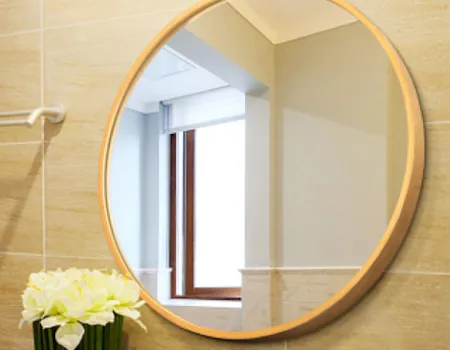
This functional item can significantly change the interior decoration. Modern technology allows us to manufacture custom mirrors in a variety of shapes and sizes. Not even the decorative elements. Like beveling or carving.
This process involves sanding the edges at a specific Angle to give the product extra depth and shine. The bevel can be narrow or wide. Depending on requirements and visual effects. Another way to add uniqueness is to apply engraving or scrub. These decorating techniques can be done manually or using professional equipment and add personality to the mirror.
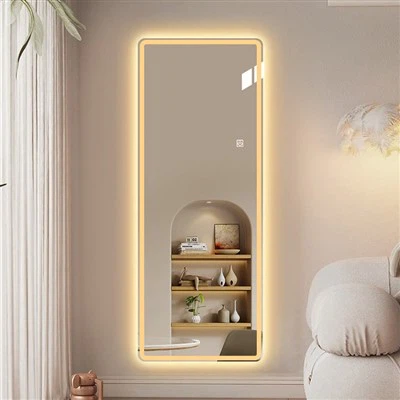
Backlit mirrors are also a recent mirror trend. This type of product is especially suitable for bathrooms or wardrobes. It can also create additional lighting. Posing for pictures also brings its own atmosphere. Make the room look more modern and comfortable.
Conclusion
The mirror manufacturing process is a complex and delicate process that requires strict control of every step from raw material selection, cleaning, coating, cutting, edging, painting, to inspection and transportation. With the advancement of technology, the quality and variety of mirrors continue to be rich and varied. Mirrors continue to meet the needs of People's Daily life, decoration and professional applications. Whether it is for household mirrors or decoration, the manufacturing process of modern mirrors reflects the exquisite technology and scientific progress.
When a person looks at his reflection in the mirror. They probably don't think about the amount of effort and technology that goes into this mirror. But by understanding how mirrors are made, people can re-evaluate this familiar and important element of life.