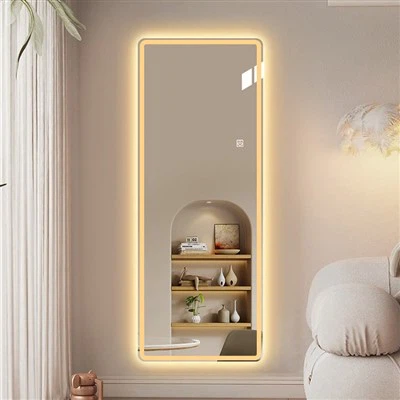
If someone asks you what color a mirror is, you probably say silver. That's the answer we've all agreed on - mirrors are silver, they reflect everything, and that's the end of it. But it's not really true. The ideal mirror in a physics textbook has no color at all; it just reflects every wavelength perfectly. Real mirrors made from real glass are slightly green because the glass absorbs light unevenly. And in design, mirrors are every color you can imagine - gold, bronze, grey, green, purple, champagne and brown. A brown colour mirror, or tinted brown mirror, reflects the room through a warm, earthy lens that's quite different from standard silver. Here's why mirrors come in colors, what brown mirrors do, and where they're used.
What Color Are Mirrors Actually?
A mirror is made by coating glass with a reflective metal layer, usually silver or aluminum. The metal layer is what reflects, and the glass is what you see through. In theory, the reflection should be perfectly neutral - every color in the room should come back exactly as it was. In practice, glass absorbs a tiny amount of light at most wavelengths, and it absorbs green slightly less than the other colors. That means ordinary mirrors are actually a very, very faint green, and if you look at mirrors arranged face to face in a mirror tunnel, the green tint gets stronger with each bounce.
The Perfect Mirror vs the Real Mirror
In a physics lab, a perfect mirror is a neutral surface with no color. In a home, a hotel or a bar, no one is looking for perfect neutrality - they're looking for atmosphere. That's why colored mirrors were developed. A colored mirror intentionally shifts the reflection so the room comes back warm, dark or gold instead of neutral. The mirror still functions - it still reflects and opens up a space - but the reflection carries a mood.
Related Post: "What is a tinted mirror? Types and Colors"

Why Colored Mirrors Exist
Colored mirrors emerged because designers wanted the space-expanding effect of a mirror without the sharp, clinical reflection of silver. Grey and smoked mirrors darken the reflection. Gold and bronze warm it. Champagne softens it. Brown deepens it. Each tint takes the same basic mirror and changes how it feels in a room.
The tints are created either by tinting the glass itself before applying the mirror backing, or by applying a colored backing behind clear glass. The result is permanent and consistent - it's not a film or surface treatment that can peel. The front of the mirror stays smooth glass and can be cleaned normally.
| Tint | Reflection tone | Vibe |
|---|---|---|
| Silver | Clear neutral | Bright, standard |
| Champagne | Pale warm gold | Soft, elegant |
| Bronze | Warm brown | Rich, warm |
| Brown | Deep earthy brown | Warm, grounded |
| Grey | Dark cool gray | Modern, moody |
| Green | Soft green | Contemporary |
Related Post: "What Does Tinted Glass Mean? Uses and Benefits Explained"
Request a custom quote for your glass project
Brown Colour Mirror
A brown colour mirror reflects the room through a warm, earthy brown lens. It's deeper than bronze and more grounded than champagne. Bronze carries a metallic, warm gold-brown tone; brown is flatter, darker and more neutral, like looking at the room through a piece of dark walnut or aged leather. It doesn't sparkle and it doesn't shout. It warms the room and holds the light.
A tinted brown mirror works particularly well in dark, layered interiors. It pairs with wood, brass, leather, stone and dark paint - the same materials that are common in modern hospitality design. In a bar, a brown mirror back wall catches bottle lights in warm patches. In a hotel lobby, it adds a sense of depth without being reflective enough to show every detail. In a bathroom, it gives the room a spa-like, warm feel.
What makes brown different from the other warm tints is that it doesn't read as gold. If you want luxury, you choose gold. If you want warmth, you choose bronze. If you want atmosphere without metallic color, you choose brown. It's a quieter, more grown-up tint. It also hides daily wear - fingerprints, smudges, water spots - better than a bright silver mirror because the dark surface doesn't show every mark, which is a practical advantage in busy bars and restaurants.

Where Brown Mirrors Are Used
Brown mirrors are most common in hospitality interiors. Restaurants and bars use them as back-bar walls and feature walls because the dark warm reflection softens the clutter of bottles, glasses and lights. Steakhouses, whiskey bars, cigar lounges and private clubs are the natural home - brown mirror reads as masculine, warm and intimate. It also works well in coffee shops, wine rooms and dark-themed restaurants where the goal is to make guests feel like they're sitting somewhere collected rather than newly built.
Boutique hotels use them in lobbies, hallways, elevators and guest bathrooms. In a small elevator cab, a brown mirror expands the space without reflecting it sharply, and the dark tint hides the marks that come with heavy use. In a spa or bathroom, it makes the room feel warm and restful; in a hotel bar, it makes the display feel rich. Retail stores - especially leather goods, watches and premium menswear - use custom colored mirror displays because the tint makes products feel curated and premium rather than sitting under a bright spotlight.
In residential projects, brown mirrors show up in walk-in closets, fireplace walls, bathroom vanities and bedroom accent walls. A brown mirror behind a bar cart or in a dark dining room ties the palette together. It works in a home study, a man cave, or a dark living room where the owners want depth but don't want the hard reflection of a standard mirror. In a powder room with brass fixtures and dark stone, it can cover an entire wall and still feel warm. It works in any room where the design leans warm and dark.
Related Post: "Is There Glass That Doesn't Reflect? Non Reflective Tempered Glass"
Brown Mirror Design Trends
Brown mirrors weren't always this visible. They used to be a niche material - a few dark bars, a few private clubs, not much else. That has shifted.
The last few years have pushed interior design away from bright, all-white spaces toward darker, more layered rooms. Hotels, restaurants and homes now feel collected rather than minimal, and brown mirrors fit that perfectly because they look like they've been there for a while. They pair with the materials that keep coming back - dark oak, travertine, brass, leather, concrete - without the need to add color.
There's also a social media angle. Dark, warm interiors photograph well, and designers know that a moody bar or hotel lobby looks more atmospheric than a bright one. Brown mirrors are a quick way to get that look.
The trend isn't just nostalgia. It's a response to the fact that spaces with too much light and too many white surfaces feel cold. Brown mirrors give you the same function as a mirror - opening a wall, reflecting light - but they keep the room feeling warm.
Related Post: "What Does Tinted Glass Mean? Uses and Benefits Explained"

Specifying Custom Colored Mirrors
When you're specifying a brown mirror, a few things matter. The depth of the tint is the first decision - a pale brown is subtle and warm, while a deep brown reads as clearly dark and atmospheric. Hold samples on site because lighting changes the perception, and warm versus cool lighting shifts the tint noticeably.
Thickness and edge finish matter for wall panels. 4mm or 5mm is standard for normal wall mirror; 6mm is used for larger feature walls. Polished edges look clean, raw edges look unfinished. If the mirror is in a humid area, the back coating needs to be properly sealed. Colored mirror suppliers can cut to custom sizes and match the tint across a full panel run.
Related Post: "China's Leading Glass Manufacturers (Updated 2026)"
Luck Glass: Your Brown Colour Mirror Manufacturer
Luck Glass is a professional decorative mirror manufacturer and commercial glass supplier producing a full range of colored mirrors, including brown colour mirrors, bronze, champagne, gold, grey, smoked, green and purple tinted mirrors. The company works as one of the colored mirror suppliers and a glass panel supplier for interior designers, contractors, hotel groups and distributors worldwide, with in-house tinting, mirroring, cutting, edge finishing and backing capability.
Luck Glass offers tinted brown mirrors and custom colored mirror in a range of tint intensities, panel sizes and thicknesses, with custom cutting, polished edges and installation support. As one of the established Chinese glass manufacturers, the company supports both single-panel samples and large commercial projects, with consistent tint matching, reliable lead times and technical support from sampling through installation.
Frequently Asked Questions
A: Standard mirrors look silver, but real glass mirrors are faintly green. In design, colored mirrors can be gold, bronze, champagne, grey, green, purple or brown.
Q: What is a brown colour mirror?
A: A tinted mirror that reflects the room through a warm, earthy brown lens. It's deeper and darker than bronze, and less metallic than gold.
Q: Where are brown mirrors used?
A: Bars, restaurants, hotel lobbies, elevators, bathrooms, walk-in closets, retail displays and residential feature walls.
Q: Is a tinted mirror the same as tinted glass?
A: No. Tinted glass is transparent; tinted mirrors are reflective and the color shows in the reflection.
Q: Can I order a custom colored mirror?
A: Yes. Most decorative mirror manufacturers offer custom tint intensity, panel size, thickness and edge finishing.
Related Post: "What Are The Different Types Of Decorative Mirror? A Complete Guide"
Final Thoughts
The color of a mirror is more complicated than it sounds, but for designers it's an opportunity. A standard silver mirror gives you a perfect reflection, and that's not always what you want. A brown mirror gives you the reflection, the depth and the space, but it warms the room, softens the light and holds the clutter. It's a quiet tint, and that's exactly why it works - it adds atmosphere without drawing attention. If you're designing a space that feels warm, dark and layered, it's one of the easiest ways to get there.