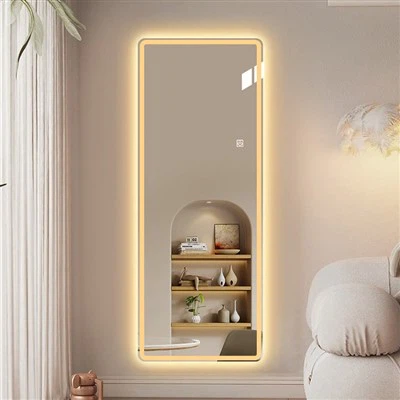
Anti-reflective glass is used in a wide range of industries, including consumer electronics, solar panels, optical devices, construction applications, and can even be used as art preservation. The main feature of AR glass is that it can reduce the reflection of light. To improve the clarity and quality of images or objects viewed or displayed through glass. In order to achieve this effect, we must treat the glass surface during the manufacturing process. The surface of the glass needs to be coated, which can change the physical properties of the glass. Thereby reducing light reflection and increasing light transmittance.
The manufacturing process of anti-reflective glass was mentioned in the previous article. This article mainly introduces the steps of coating application in its manufacturing process. Help you better understand the production process of anti-reflective glass.

What is anti-reflective glass?
The surface reflectivity of anti-reflective glass is lower than that of ordinary glass, and the amount of reflected light can usually be reduced to less than 1%. Untreated glass is generally about 4%. In order to reduce the light reflectivity of the glass surface, we need to treat the glass surface. The surface treatment changes the way light interacts with the glass, allowing more light to pass through while also reducing glare. AR glass is widely used in camera lenses, displays and glasses because it can improve the visibility, clarity and contrast of viewing objects.
Reflex action
But when the light hits the glass surface, some of the light will pass through the glass, and the other part will be reflected back. The higher the reflectivity of the anti-reflective glass, the lower the transmittance of light. This can lead to problems such as glare, visual distortion and reduced brightness. Then we can't see things clearly when we look at them. This can be especially problematic in applications that require high optical clarity. Such as photography, display screens, exhibition cases and so on. The coating application of anti-reflective glass aims to counteract these problems by reducing the reflection coefficient of the glass.
The importance of coating applications
Coating application This step is essential for converting ordinary glass into anti-reflective glass. It can be said that this is the most important step in the entire manufacturing process of anti-reflective glass. Through the application of micro - and nano-scale coatings, light reflection on the glass surface can be greatly reduced. Therefore, the performance of the glass has been improved, and the reflectivity can be reduced. These coatings create a situation where the light waves reflected off the glass surface destructively interfere with each other, thus cancelling out a significant portion of the reflection.
Coating applications in the manufacture of anti-reflective glass
There are many ways to treat the glass surface to create anti-reflection properties. The most common methods include chemical etching, physical vapor deposition (PVD), chemical vapor deposition (CVD), and sol-gel processes. Each approach has its advantages, disadvantages, and specific applications, but all have a common purpose. That is to reduce glass reflection and enhance light transmission.
Chemical etching
Chemical etching is one of the oldest and most widely used techniques for making AR glass. The process involves dipping glass into a chemical solution to selectively remove the surface material. By controlling the etching process, anti-reflection glass manufacturers can effectively create microscopic patterns that reduce reflection.
How it works: Treating glass with acid or other reactive chemicals etches the glass surface. This process requires a level of detail. The degree and pattern of etching determine the performance of glass as an anti-reflective material. Etching changes the surface structure of the glass, creating microgrooves. When light hits, the glass surface scatters the incident light, reducing the amount of reflection.
Advantages: The cost of chemical etching is relatively low and can be mass-produced. It is generally more common to make anti-reflective glass in this form. It is commonly used in architectural glass, because architectural glass needs to apply anti-reflection properties to large surfaces.

Limitations: This method is not as accurate as other methods. This makes it less suitable for applications that require extremely high optical clarity. Examples include camera lenses or precision instruments.
Physical Vapor Deposition (PVD)
Physical vapor deposition is a more advanced method for the application of anti-reflective coatings. In this process, the glass is placed in a vacuum chamber and a thin layer of anti-reflective material is deposited onto the surface through a vaporization process.
How it works: Solid materials like metal oxides (such as silicon dioxide or titanium dioxide) can be vaporized in a vacuum chamber. The evaporated particles condense on the surface of the glass, forming a thin film. The thickness and uniformity of the film require precise control, a process that requires not only advanced equipment, but also plenty of patience. This is very important for the manufacture of high-performance anti-reflective glass.
Advantages: Although the physical vapor deposition method requires certain equipment requirements, many anti-reflective glass manufacturers are also willing to try this method. Because PVD can control the coating thickness very precisely. This is essential to ensure that light waves reflected from different layers of the coating have destructive interference, effectively cancelling the reflection. Some demanding equipment applications are well suited for manufacturing in this way. Like camera lenses and scientific instruments.
Limitations: The requirements of the equipment are destined to be expensive. For large-scale production, this method consumes a lot of money. The average profit may not be that impressive. In addition, PVD-coated coatings scratch easily and require additional protective layers.
Chemical vapor deposition(CVD)
Chemical vapor deposition (CVD) is another vacuum-based process. But it involves a chemical reaction of the vapor phase precursor, which can form an anti-reflective film on the glass surface.
How it works: This method is to introduce the reaction gas mixture into the vacuum chamber. The gases react with each other to form a solid film. The film is usually composed of materials such as silica, which reduces light reflection while enhancing transmission.
Advantages: CVD enables uniform coating over complex shapes, ideal for 3D objects and irregular surfaces. The process also produces coatings with excellent adhesion and durability.
Limitations: CVD, like PVD, is an expensive process. Usually used only for high-performance applications. The process also requires precise control of temperature and gas flow in order to control the thickness and properties of the film.
Sol-gel process
Sol-gel process is a chemical method. It is coated on the glass by producing a liquid solution, which is then gelated to form a solid film. It is then coated with an anti-reflective coating, which makes an anti-reflective glass.
How it works: A liquid solution containing metal oxides is applied to the glass surface by dipping, spraying or rotating. The solution dries to form a porous nanostructured film that reduces reflection by creating a graded refractive index between the air and the glass.
Advantages: The sol-gel process is relatively low-cost and can be used to quickly coat large surfaces. The process produces a coating with high optical transparency and excellent anti-reflection properties, suitable for architectural and optical applications.
Limitations: The sol-gel process is sensitive to environmental conditions such as humidity, which may affect the quality of the coating. In addition, the durability of the coating produced by the sol-gel process may be lower than that produced by PVD or CVD.

Sum up
The manufacturing process of anti-reflective glass is complex. The application of this step in the coating involves more details, which requires a high enough technical content. Whether by chemical etching, PVD, CVD or sol-gel process, each method has its own advantages. According to different requirements, you can choose different processing methods. These treatments open up more application areas for AR glass. At the same time, it also consolidates the role of anti-reflection glass in glass materials.