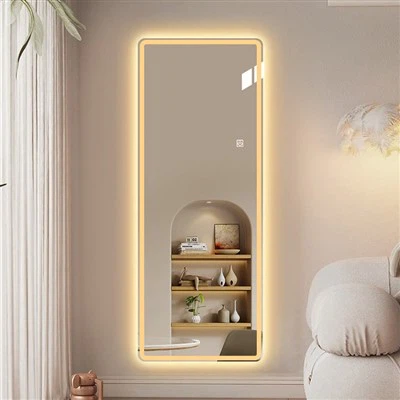
Glass and mirrors are essential in our lives. They are made of similar base materials. But there are significant differences in function and use. Both have the ability to reflect light, but there are subtle differences. Glass is mainly used to transmit and disperse light, while mirrors focus on reflecting images. In order to deeply understand the differences between glass and mirror, we can analyze the differences between them from many aspects such as their history, manufacturing process, physical properties, application scenarios, optical properties, and the function and use of the design. The following is the detailed analysis process.

The difference between material composition and manufacturing process
Material composition and manufacturing process of glass
In the previous article, we mentioned that the main component of glass is silicon dioxide. Simply put, it's sand. Plus a small amount of sodium oxide and calcium oxide. After melting at high temperatures, glass can be obtained by cooling. The process of making glass can be changed according to different needs. In general, ordinary glass is made by the float process. That is, the molten glass liquid floats on the surface of the molten tin and forms a smooth glass plate after cooling. Glass can be cut and processed into a variety of shapes and sizes for a wide range of applications.
The key property of glass is that it is transparent. It allows light to pass through freely. Therefore, glass is widely used in scenes such as Windows, glass doors, containers and optical devices. The quality of transparent glass depends on the purity of the raw materials in the production process and the precision of the manufacturing process.
Material composition and manufacturing process of mirror
The making of mirrors depends on glass. By adding a reflective coating to the glass surface, the mirror can be made on the basis of the glass. This reflective coating is usually a metallic material such as silver or aluminum. Early mirrors used mercury or silver. Today's technology tends to use aluminum because it is more reflective and economical. The manufacturing process involves depositing a metal film on the surface of the glass, which is then coated with a protective layer, such as a paint layer. To protect the reflector from damage.
The most important characteristic of a mirror is different from that of glass. What it shows is superior reflexes. By adding a metal reflection layer to the smooth glass surface, the mirror can accurately reflect light. Form a clear image. It is mainly used for reflection and observation environment, common in home decoration, optical instruments and so on. Used in the family, it has a good function and decoration. Today, mirrors are an indispensable part of our lives.
The difference in physical properties
Optical characteristic
The main optical property of glass is light transmission. Plain clear glass allows most light to pass through. There may also be slight refraction or scattering during passage. It depends on the thickness and material of the glass. Glass is not highly reflective, but more likely to spread or bend light. Therefore, it is very important in Windows, optical lenses and other applications.
The optical properties of mirrors are mainly reflective. Mirrors rely on their metal reflectors. The ability to reflect light back at almost the same Angle creates a sharp image. The reflection ability of the mirror is very strong, and the reflectivity can reach more than 90%. It is therefore used where accurate imaging is required. For example, bathroom mirrors, makeup mirrors, car rearview mirrors and other places we need in daily life.

Appearance and transparency
The appearance of glass is usually transparent or translucent, allowing light to pass through. People can see the other side through the glass. Of course, if it is frosted glass, you may not be able to see the situation on the other side. Depending on the treatment, the glass can also show different textures and colors. Such as acid-etched glass, laminated glass, colored glass and so on.
The appearance of the mirror is reflective. It's usually a smooth surface. People can't see the other side of the mirror from one side. Mirrors cannot transmit light because of their reflective layers. Instead, it reflects objects in the environment. This means that the mirror visually appears to have a certain sense of depth, but is actually achieved through reflection. This is also why a space with mirrors looks bigger and brighter. Because the mirror constantly reflects the light, it can make people's vision produce a large wrong feeling in the room.
Differences in application scenarios
Application scenario of glass
Glass is widely used in construction, everyday products and technology because of its transparency and mechanical strength. There are many common glass applications, and different glasses have different needs in different fields. Here is a detailed description.
Windows and Doors: One of the most widespread uses of glass is for Windows and doors in architecture. Whether it is an office building or a residential area, glass can be used. Through the glass, light enters the building. Make our space appear more bright. Some places need different needs, you can add sound insulation, heat insulation and other functions on the glass.
Containers and utensils: Glass is widely used in the manufacture of containers, such as glass bottles, cups, bowls, etc. These containers are also commonly used in daily life. Glass products are very delicate, but ordinary use should be careful to break. The non-reactive nature of glass makes it an ideal material for storing food, drinks and chemicals.
Optical equipment: Because the glass has good optical properties. It has important applications in optical instruments, such as microscope lenses, telescope lenses and eyeglass lenses in the laboratory. It can also ensure the accuracy of experimental results.
Electronic displays: The displays of smartphones, televisions and computers often use specially treated glass. Generally speaking, the glass of the display screen is relatively thin, but the performance is better. To ensure high strength and transparency while providing touch sensitivity.
Application scenarios of mirrors
Mirrors are mainly used in scenes that require reflection, and common applications include:
Home decoration: Mirrors are common in home decoration, and basically everyone has a mirror at home. Such as bathroom mirror, full-body mirror, wall decoration mirror, etc. It is not only used for the mirror function in daily life, but also to increase the sense of space and beautify the room.
Optical instruments: In many scientific and engineering devices, mirrors are used to reflect and direct light. Usually small in size, but powerful. Devices such as microscopes and astronomical telescopes rely on high-precision mirrors for imaging or focusing functions.
Automotive and traffic: rearview mirrors, reverse mirrors, etc. are important applications of mirrors. These scenes use the reflectivity of mirrors. It improves the safety of driving by reflecting the scene behind the driver.
Beauty and Medical: Mirrors have a wide range of uses in beauty, makeup and medical examinations. Cosmetic mirrors help people perform precise cosmetic procedures through magnification and clear reflection. We can use a makeup mirror when we apply makeup in our daily life. And those ten-fold mirrors can also be used for detailed makeup. In the medical field of operating rooms and dental offices, it is also possible to operate with mirrors. Because operating rooms and dental offices require fine viewing, this high-precision operation requires the magnification and reflection of mirrors to achieve.

The difference between function and use
The main function of glass
The main function of glass is to transmit light and provide a transparent or translucent visual experience. And in some cases protect or isolate the space. It is widely used in construction, lighting, containers and so on. The versatility of glass is also reflected in the fact that it can be manufactured in different forms according to different needs. For example, acid-etched glass, bulletproof glass, soundproof glass, etc. It further enhances its applicability in the construction and industrial fields.
The main function of the mirror
The main function of mirrors is to reflect light and images. Can provide accurate visual reflection effect. It has an irreplaceable role in decoration, scientific research, traffic safety and so on. The manufacture and use of mirrors are mostly concentrated in the occasions where objects need to be reflected. Such as home life, optical instruments and photographic equipment. Of course, mirrors can also be simply decorative or artistic. Many decorative objects in art are also composed of mirrors, creating a different visual experience.
Conclusion
In general. Glass and mirrors have similar raw materials and parts of the process. But essentially they have different characteristics. There are obvious differences in physical characteristics, design aesthetics and application scenarios. Glass is mainly used to transmit light, emphasizing transparency and physical strength. Mirrors emphasize reflectivity, providing visual feedback and imaging effects by reflecting light. The two have different advantages in some places. But it plays an important role in architecture, technology, decoration and other fields. With the continuous progress and development of technology, the application prospects of glass and mirrors are also expanding.