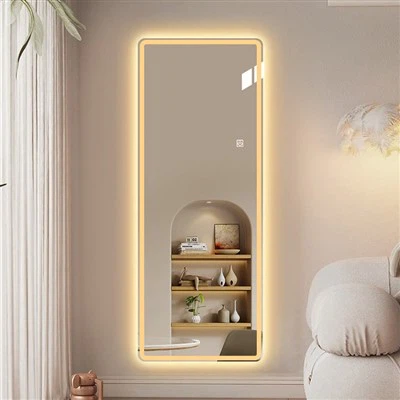
In recent years, technological innovations in the field of architecture have emerged in an endless stream, among which anti-glare glass has become the focus of attention in the industry for its unique properties and wide applications. This glass is treated by a special process to effectively reduce light reflection and glare problems. Anti-glare glass not only enhances visual comfort, but also improves the overall beauty and functionality of the building.
The anti-glare effect of this glass mainly stems from the following technical principles:
Surface microstructure design
One of the core technologies of anti-glare glass is surface microstructure design. This technique changes the way light travels on a physical level by building texture structures on the glass surface at the micro - or nano-scale. When light touches these textures, it diffuses in multiple directions, rather than simply reflecting specular light. This multi-directional scattering effect significantly reduces the intensity of the reflected light, thus achieving an anti-glare effect.

This design is often achieved in the following ways:
Etching process: Chemical agents are used to etch the anti-glare glass surface to form a randomly distributed microstructure.
Laser engraving: Regular or irregular microtextures can be carved on the glass surface by high-precision laser.
Nanoimprint: Precision patterns are imprinted on the glass surface using nanoscale molds to ensure uniformity and consistency.
Special coating application
Another key technology for anti-glare glass is the application of special coatings. By coating the glass surface with optically optimized coating materials, the reflectivity can be further reduced. At the same time, the durability and functionality of anti-glare glass can be improved. The coating usually consists of multiple layers of optical material. Different wavelengths of light are controlled by layers of materials to optimize optical properties.
Multilayer coating structure: Coating multiple layers of materials with different refractive indices on the glass surface can reduce the interference of reflected light.
Nano-coating technology: The anti-glare glass itself is also transparent, and the transparent nanoparticle coating can be applied on its surface. It also enhances anti-reflection properties.
Wear-resistant coatings and hydrophobic coatings: Some anti-glare coatings also have scratch resistance and waterproof functions, improving the durability of the glass.
Anti-fingerprint and anti-fouling function
In addition to optical properties, the surface design of anti-glare glass also focuses on practicality. For example, we all know that when the hand is pressed on the glass, there is often a fingerprint phenomenon. By adding anti-fouling layer on the surface of anti-glare glass, it can effectively reduce the adhesion of fingerprints, water stains and other dirt. This makes the glass easier to clean.

Oleophobic layer: Coating the surface of the anti-glare glass with oleophobic material can effectively prevent the adhesion of liquid and grease. This facilitates regular maintenance and cleaning.
Antifouling nano coating: This coating takes advantage of the special properties of nanoparticles to fill in tiny depressions in the glass surface. It also reduces dust accumulation.
Through the above three technical means, the performance of anti-glare glass in architecture is not limited to "seeing more clearly". More is involved in comfort, durability and environmental protection and other aspects. From home Windows to large glass curtain walls, from interior decoration to outdoor landscape design. Anti-glare glass is gradually becoming an important choice to improve the quality of buildings, and inject more scientific and aesthetic elements into modern buildings.