This is one of those questions people ask while standing in front of a reeded glass door, squinting to see what's on the other side. The short answer is yes - you can see through it, but not clearly. The vertical grooves bend and scatter light, turning whatever's behind the glass into a soft, blurred silhouette. You'll know if someone's in there, but you won't be able to read what they're holding or make out facial details. Exactly how much you can see depends on a handful of factors, and getting the privacy level you want means understanding those factors before you specify the glass.
The Short Answer: Yes, But Not Clearly
Reeded glass - sometimes called fluted or ribbed glass - has fine vertical grooves rolled into one surface. Those grooves act like a series of tiny lenses, bending light as it passes through and scrambling the image on the other side. The result is a distinctive striped look that lets plenty of light through while obscuring the details of what's behind it.
How the Reed Pattern Affects Visibility
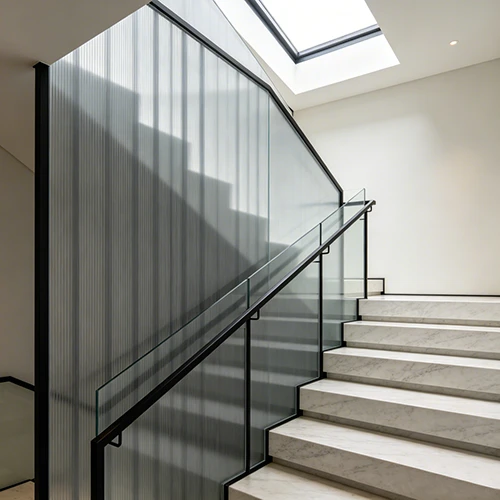
The grooves are doing two things at once. First, they're refracting light - bending it as it moves from air into glass and back out again. Second, they're scattering it - the curved surface sends light in multiple directions instead of letting it pass straight through. Together, these effects turn a sharp image into a soft, vertical-streaked blur.
Think of it like looking through a shower curtain made of glass. You can see shapes, movement and light changes, but fine details disappear. A person becomes a silhouette. A shelf of bottles becomes a patch of color. A TV screen becomes a flickering glow. That's exactly the level of privacy most people want from reeded glass - enough to feel private, not so much that the space feels closed off.
What You Can and Can't See Through It
What comes through clearly: movement, light levels, general shapes, color blocks. If someone walks past a reeded glass door, you'll see the motion and the outline of a person. If a light turns on in the next room, you'll notice the brightness change.
What gets blurred out: facial features, text on screens or documents, small objects, fine patterns and textures. You won't be able to read a book through reeded glass or recognize someone's face from more than a foot away. That's why it works so well for bathroom doors and office partitions - it gives privacy without killing the open feel.
Related Post: "What Are The Uses Of Glass Woven Fabric? Applications, Benefits And Sourcing Guide"
Factors That Determine How Much You Can See
Not all reeded glass is equally private. The visibility through it changes based on several things, and if you're specifying it for a project, it's worth knowing which levers to pull.
Groove Width and Depth
This is the biggest factor. Fine, narrow grooves create more blur because there are more bends in the glass surface scattering light. Wider, shallower grooves let more detail through - you might be able to make out more of what's on the other side. Most standard reeded glass panels fall somewhere in the middle, but if you need maximum privacy, ask for a fine-groove pattern. If you want to maintain more visibility, a wider groove works better.
Distance from the Glass
The closer something is to the glass, the more you can see it. Hold your hand an inch behind reeded glass and you'll see the outline clearly - fingers, palm, all of it. Move it three feet back and it becomes a vague shape. This is why reeded glass works well for shower doors (you're usually a couple feet away) but might not be ideal for a cabinet door where items sit right against the glass.
Lighting Conditions
Light direction matters a lot. If the room behind the glass is brighter than the side you're on, you'll see more through it - the backlight creates a silhouette effect. If your side is brighter, the glass acts more like a mirror and you'll see less of what's behind it. That's why bathroom reeded glass gives great privacy during the day (the bathroom is usually darker than the hallway) but might feel less private at night when the bathroom light is on and the hall is dark.
Glass Thickness
Thicker glass means more material for light to pass through, which slightly increases the blur effect. The difference between 6mm and 10mm reeded glass isn't dramatic, but it's noticeable if you compare them side by side. Thicker panels also tend to be used in larger applications where the grooves are proportionally finer, which adds to the privacy effect.
Related Post: "What Is Sandwich Glass? Fabric Laminated Glass Explained For Commercial Projects"
Discuss your project requirements with our team
Reeded Glass vs. Other Privacy Glass Options
Reeded glass isn't the only way to get privacy with glass. Here's how it stacks up against the common alternatives.
| Glass Type | Visibility Through It | Light Transmission | Look and Feel | Best For |
|---|---|---|---|---|
| Reeded glass | Blurred shapes, no details | High (80-90%) | Vertical stripes, textured, modern | Doors, partitions, cabinets |
| Frosted glass | Very limited, mostly silhouettes | Medium (60-75%) | Smooth matte, uniform, minimalist | Bathrooms, office partitions |
| Hammered glass | Highly obscured, almost no detail | Medium-high (70-80%) | Organic dimples, decorative | Feature walls, bar fronts |
| Nashiji glass | Moderate blur, fine pebble texture | High (80-85%) | Subtle pebbled, understated | Bathroom windows, cabinets |
| Clear glass | Full visibility | Very high (90%+) | Clean, transparent | Where privacy isn't needed |
| Tinted glass | Visible but color-filtered | Medium (50-70%) | Colored, sleek | Exterior windows, facades |
Reeded glass sits in a sweet spot - it provides meaningful privacy while still letting through most of the available light, and it does it with a distinctive texture that feels intentional rather than generic.
Where Reeded Glass Works Best
The right application makes all the difference. Reeded glass isn't perfect for every situation, but there are places where it really shines.
Bathrooms and Wet Areas
This is the classic use case, and for good reason. A reeded glass shower door or bathroom window gives you privacy from neighbors or hallway traffic while still letting natural light flood in. The vertical grooves also hide water spots better than clear glass, which means less cleaning and a cleaner look between scrubs. Just keep in mind the lighting factor - at night with the bathroom light on, visibility from the outside increases slightly.
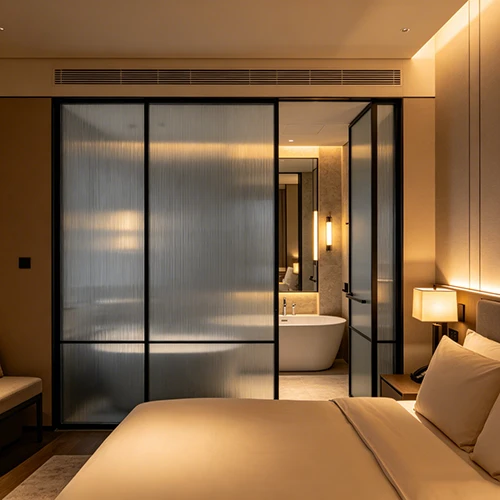
Interior Doors and Partitions
Reeded glass door panels and room dividers are having a major moment in residential and commercial design. They divide space without closing it off - you get the acoustic and visual separation of a door while maintaining the open, airy feel of glass. In offices, it means meeting rooms feel connected to the rest of the space while still keeping conversations private. In homes, it's a way to add character to a hallway or bedroom door without going full solid.
Cabinets and Furniture
Glass-front kitchen cabinets with reeded glass panels are everywhere in modern kitchen design. They let you see that there's something inside - you'll know which cabinet has the glasses - without displaying every dish and box. It softens the look of a kitchen and makes it feel more collected than open shelving, while still being more interesting than solid cabinet doors. The same logic applies to bathroom vanities, bookshelves and sideboards.
Related Post: "Which Is Better, Tempered Glass Or Laminated Glass? Strength, Safety And Application Guide"
Reeded Glass Texture Seamless: What to Look For
When you're sourcing reeded glass for a project, the quality of the texture matters. Reeded Glass Texture Seamless refers  to reeded glass with a consistent, uninterrupted groove pattern across the entire panel - no breaks, no uneven spacing, no distortion in the pattern. This is what you want for large panels and full-height doors, because any inconsistency in the groove pattern becomes very obvious when the glass is backlit or seen at an angle.
Cheap reeded glass can have wavy grooves, uneven spacing or pattern distortion, especially in larger panel sizes. Higher-quality reeded glass panels maintain consistent groove width and depth from edge to edge, which gives a cleaner, more premium look. If you're doing a run of cabinets or a full-height partition, ask the supplier about pattern consistency and request a sample panel in the size you're planning to use - a small sample won't show you the pattern issues that appear in large formats.
Seamless texture also matters when you're installing multiple panels side by side. If the groove spacing isn't consistent across panels, the vertical lines won't line up at the seams, which breaks the visual flow. A good textured glass manufacturer will ensure pattern matching across panels so the installation looks like one continuous piece of glass rather than a patchwork.
Sourcing and Pricing
Reeded glass price depends on the pattern quality, thickness, size and whether it's tempered. Standard reeded glass panels in common sizes are widely available and competitively priced. Custom sizes, large panels, tempering and special edge finishing add to the cost. Reeded Glass Texture Seamless with consistent pattern quality may cost slightly more than budget options, but the difference is usually worth it for visible installations.
For commercial projects, working directly with experienced reeded glass manufacturers gives you the best combination of price, quality and pattern consistency. A reeded glass supplier that runs its own rolling and tempering lines can offer more consistent quality and shorter lead times than a distributor sourcing from multiple factories. They can also handle custom sizes, hole drilling, cutouts and edge finishing in-house, which reduces the risk of damage during transit between processors.
If your project calls for reeded glass panels across multiple applications - doors, partitions, cabinets - sourcing from a single textured glass manufacturer ensures pattern matching and consistent quality throughout. Bulk orders bring the per-unit rate down significantly, so it's worth consolidating your glass needs rather than buying from multiple suppliers.
Always request physical samples before placing a large order. Pattern names aren't standardized across manufacturers - one company's "reeded" might have wider grooves than another's - and the only way to know exactly what you're getting is to see it in person. Compare total landed cost - packaging, shipping, insurance included - rather than just the per-square-meter number, especially if you're importing from overseas.
Related Post: "What Type Of Glass Is Best For A Front Door? Safety, Security And Style Guide"
Luck Glass: Your Reeded Glass Partner
Luck Glass is a professional textured glass manufacturer specializing in reeded glass panels, reeded glass texture seamless, decorative textured glass, hammered glass, frosted glass, back painted glass, silk-screen printed glass, laminated glass and custom decorative glass products, serving global contractors, developers, building material traders and brand clients. The company runs advanced rolling, tempering and finishing production lines with an experienced technical team that keeps quality consistent and delivery on schedule.
Luck Glass offers reeded glass in a range of groove widths and depths, with consistent seamless pattern quality across all panel sizes. All reeded glass can be tempered to meet EN 12150 and ANSI Z97.1 safety standards, with uniform groove spacing, stable edge quality and reliable strength. Full customization is supported across size, thickness, pattern selection, edge finishing, hole drilling and cutouts, with maximum panel sizes up to 3660mm x 2440mm and typical delivery within 25 working days.
Whether the project calls for reeded glass panels for a hotel bathroom, reeded glass door partitions for an office fit-out, seamless texture glass for a retail interior, or bulk supply from reeded glass suppliers for a large-scale commercial project, Luck Glass delivers efficient, reliable solutions tailored to each project's specifications and budget.
Frequently Asked Questions
Q: Can you see through reeded glass at night?
A: It depends on the lighting. If the room behind the glass is lit and the side you're on is dark, you'll see more - the backlight creates a silhouette effect. If both sides are equally lit, the blur effect is consistent. For maximum nighttime privacy, pair reeded glass with a curtain or shade, or choose a finer groove pattern.
Q: Is reeded glass more private than frosted glass?
A: Generally, frosted glass provides more complete privacy because it diffuses light uniformly across the entire surface. Reeded glass lets more light through and preserves more of the shapes and movement behind it. Which is "better" depends on what you want - reeded for a softer, more open feel with partial privacy, frosted for more complete obscuring.
Q: Does reeded glass reduce light?
A: Very little. Reeded glass still transmits 80-90% of available light, compared to 60-75% for frosted glass. The grooves scatter the light rather than blocking it, so you get a bright space with blurred views rather than a dim one.
Q: Can reeded glass be tempered?
A: Yes, reeded glass can and usually should be tempered for safety in doors, showers and partitions. The tempering process works the same way on textured glass as on clear glass, making it four to five times stronger. Confirm with your reeded glass manufacturers that the pattern you want is available in tempered form.
Q: How do I clean reeded glass?
A: The grooves can trap soap scum and dust, so use a soft brush or microfiber cloth with a mild, non-abrasive cleaner to get into the pattern. Avoid scouring pads and harsh chemicals that can scratch the surface. A squeegee after shower use helps prevent mineral buildup on reeded shower glass.
Related Post: "What Is The Lifespan Of Toughened Glass? Durability, Maintenance And Replacement Guide"
Final Thoughts
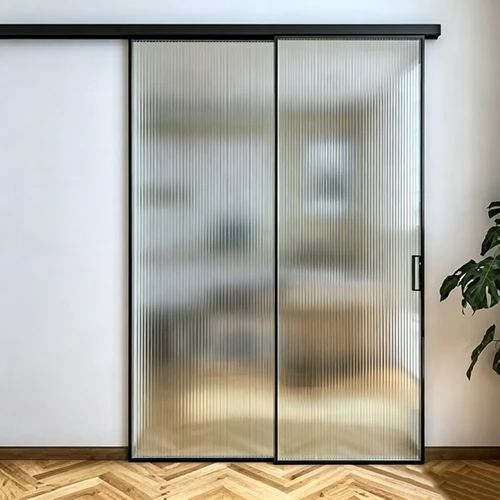
So can you see through reeded glass? Yes - but what you see is a soft, vertical-streaked blur, not a clear image. You'll catch movement and shapes, but details stay hidden. That balance of light and privacy is exactly why reeded glass has become so popular in bathrooms, offices, kitchens and commercial interiors. It gives you the openness of glass with the modesty of a curtain, and it does it with a texture that feels intentional and stylish.
Getting the right level of privacy means paying attention to groove width, lighting conditions and panel quality - and choosing a supplier that delivers consistent, seamless texture across every panel. By understanding how the pattern works, where it performs best and how to source it from reliable reeded glass suppliers, you can specify reeded glass with confidence and get the exact look and privacy level your project needs.
Related Post: "What Is The Bumpy Glass Called? A Guide To Textured And Patterned Glass Types"
Request a custom quote for your glass project