You've seen it a hundred times - that glass with a bumpy, patterned surface that lets light through but blurs the view. It's on bathroom windows, cabinet doors, office partitions, shower enclosures. You might have called it "frosted glass" or "obscure glass" or just "that bumpy stuff." But if you're trying to buy it or specify it for a project, you need the right terminology. The answer isn't as simple as one name - there's a whole family of textured and patterned glass, and knowing the difference matters when you're sourcing it.
So What Is That Bumpy Glass Actually Called?
The most common umbrella term is textured glass - sometimes called patterned glass, rolled glass or obscure glass. These all refer to glass that has a pattern pressed into one or both surfaces during manufacturing, creating a textured finish that diffuses light and obscures the view through it. The pattern is rolled into the glass while it's still hot and malleable, so it's a permanent part of the glass, not a coating or film that can peel off.
Within that family, you'll hear several more specific names depending on the pattern. Reeded glass (also called fluted or ribbed glass) has fine vertical grooves. Hammered glass has a dimpled, beaten-metal look. Nashiji glass has a fine, pebbled texture. Karatachi glass has a spiky, feather-like pattern. Millennium glass has a wavy, organic pattern. Each pattern has its own name, and different manufacturers sometimes use different names for very similar patterns, which can make sourcing confusing.
Frosted glass is technically a different thing - it's created by acid etching or sandblasting the surface to create a smooth, matte finish, rather than rolling a pattern into it. But in casual conversation, people often lump frosted and textured together because both obscure the view. If you're talking to a supplier, it's worth being precise about which one you want.
Related Post: "What Is The Lifespan Of Toughened Glass? Durability, Maintenance And Replacement Guide"
Common Types of Textured Glass
The pattern options are almost endless, but a few types show up again and again in commercial and residential projects.
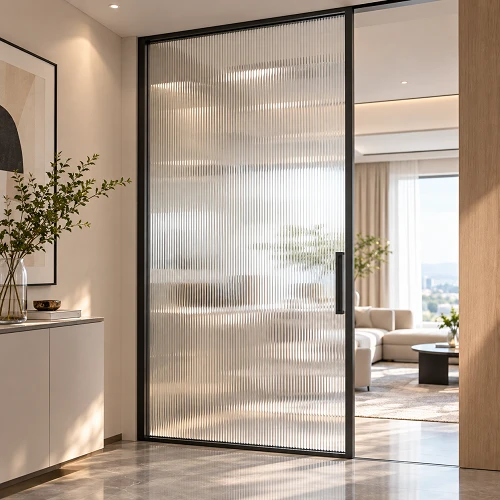
Reeded glass is having a major moment in interior design right now. Those fine vertical lines create a soft, blurred view that feels modern and sophisticated. It shows up on everything from cabinet doors to room dividers to shower enclosures. The pattern is subtle enough to feel timeless but distinctive enough to make a design statement.
Hammered glass has a more organic, handcrafted feel. The dimpled surface catches light in interesting ways, creating a shimmering effect that works well for feature walls, bar fronts and decorative panels. It's more decorative than reeded and tends to obscure the view more completely.
Nashiji glass is one of the most common "builder grade" textured patterns - a fine, uniform pebbled texture that's been used for decades in bathroom windows and cabinet doors. It's affordable, widely available and does a solid job of providing privacy without blocking too much light.
Karatachi and other spiky patterns are more niche, used mostly for decorative accents and specialty applications. Custom textured glass can be produced with virtually any pattern a designer can dream up, though custom patterns cost more and require longer lead times.
Architectural textured glass refers more to the application than the pattern - it's textured glass specified for building projects, whether that's windows, doors, partitions or facades. It's typically tempered for safety and available in larger panel sizes than consumer-grade textured glass.
Patterned Glass vs. Frosted Glass
While both obscure the view, patterned and frosted glass achieve that effect differently and have distinct characteristics.
| Aspect | Patterned / Textured Glass | Frosted Glass |
|---|---|---|
| How it's made | Pattern rolled into hot glass | Acid etched or sandblasted surface |
| Surface feel | Raised, tactile pattern | Smooth, matte finish |
| Light diffusion | Soft, directional diffusion | Even, uniform diffusion |
| Privacy level | Varies by pattern density | Consistent, high privacy |
| Design look | Decorative, tactile, pattern-driven | Clean, minimalist, uniform |
| Cleaning | Grooves can trap dirt | Smooth surface wipes clean easily |
| Cost | Standard patterns affordable | Similar to mid-range patterned |
| Customization | Custom patterns possible | Custom etchings possible |
| Best for | Doors, cabinets, feature walls, partitions | Bathroom windows, office partitions, signage |
Textured privacy glass is the category that covers both - any glass that provides privacy through texture or frosting, rather than through tinting or curtains.
Related Post: "What Type Of Glass Is Best For A Front Door? Safety, Security And Style Guide"
Discuss your project requirements with our team
Where Textured Glass Gets Used
The applications run pretty wide, but certain spaces really lean into what textured glass does best.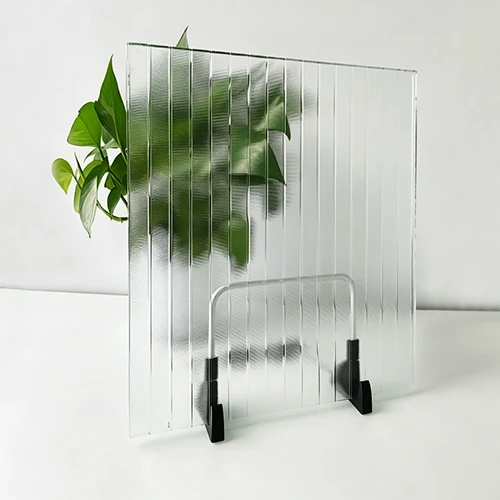
Bathroom window texture glass is probably the most common use case. It lets natural light flood in while keeping the inside private from neighbors and passersby. A fine pattern like Nashiji works well here because it obscures the view without completely blocking light.
Patterned glass for cabinet doors is another huge application, especially in kitchens and bathrooms. Glass-front cabinets with textured panels let you see that there's something inside without displaying every dish and bottle. It softens the look of a kitchen and makes it feel more open than solid cabinet doors, while hiding clutter.
Office partitions and meeting room walls use architectural textured glass to divide space without closing it off. The pattern provides visual privacy - you can see that people are in the room but can't read documents or screens - while still letting light flow through the space. It also helps muffle sound somewhat compared to fully open plan layouts.
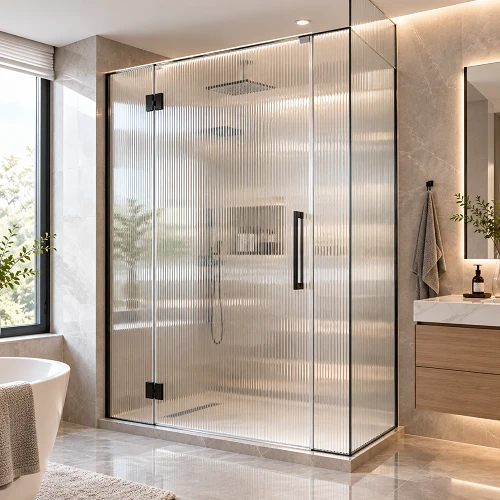
Shower doors and wet areas are another natural fit. Textured glass provides privacy in shared bathrooms and gym showers, and the pattern hides water spots better than clear glass. Tempered textured glass is the standard here for safety.
Retail and hospitality spaces use decorative textured glass for feature walls, bar fronts, display cases and entry doors. The right pattern can reinforce a brand aesthetic and create a memorable first impression.
How to Choose the Right Pattern
Picking a pattern comes down to three things: how much privacy you need, how much light you want to let through, and what look you're going for.
If privacy is the top priority - say, a bathroom window facing a neighbor's house - go with a denser pattern like hammered or a heavy frosted finish. These obscure the view almost completely while still letting light filter through.
If you want to maintain some visibility - like a cabinet door where you want to see what's inside, or an office partition where you want to know if someone's in the room - a lighter pattern like reeded or a fine Nashiji works better. These blur details but preserve shapes and movement.
For design impact, consider how the pattern interacts with light. Reeded glass creates beautiful vertical light streaks. Hammered glass shimmers. A bold custom pattern can become a focal point. Think about where the light source is and how it will hit the glass at different times of day.
Don't forget scale. A pattern that looks subtle on a small sample can feel overwhelming on a full-height partition. Always look at samples in the actual space, or at least at a larger sample, before committing to a big order. Custom textured glass gives you full control over the pattern, but it's worth ordering a prototype first to make sure it looks the way you envision.
Related Post: "Which Is Better, Tempered Glass Or Laminated Glass? Strength, Safety And Application Guide"
Pricing and Sourcing
Textured glass price varies based on the pattern, thickness, size and whether it's tempered. Standard patterns like reeded, hammered and Nashiji are widely available and competitively priced. Custom patterns, large panels and special thicknesses cost more. Tempering adds to the price but is required for most safety-related applications like doors, showers and partitions.
For commercial projects, working directly with an experienced textured glass manufacturer usually gives you the best combination of price, quality and pattern options. A frosted patterned glass manufacturer that runs its own rolling and tempering lines can offer more consistent quality and shorter lead times than a distributor that sources from multiple factories.
If your project calls for architectural textured glass for a building facade, patterned glass for cabinet doors across a hotel development, or textured privacy glass for an office fit-out, sourcing everything from a single supplier simplifies logistics and ensures consistent pattern matching. Bulk orders bring the per-unit rate down significantly, so it's worth consolidating your glass needs.
Always request physical samples before placing a large order. Pattern names aren't standardized across manufacturers - one company's "reeded" might have wider grooves than another's. And compare total landed cost - packaging, shipping, insurance included - rather than just the per-square-meter number, especially if you're importing from overseas.
Luck Glass: Your Decorative Textured Glass Partner
Luck Glass is a professional textured glass manufacturer specializing in decorative textured glass, architectural textured glass, custom textured glass, reeded glass, hammered glass, frosted glass, back painted glass, silk-screen printed glass, laminated glass and custom decorative glass products, serving global contractors, developers, building material traders and brand clients. The company runs advanced rolling, tempering and finishing production lines with an experienced technical team that keeps quality consistent and delivery on schedule.
Luck Glass offers a wide range of standard patterns including reeded, hammered, Nashiji, Karatachi, Millennium and more, with the ability to develop custom patterns for bespoke projects. All decorative textured glass can be tempered to meet EN 12150 and ANSI Z97.1 safety standards, with uniform pattern depth, stable edge quality and reliable strength. Full customization is supported across size, thickness, pattern selection, edge finishing, hole drilling and cutouts, with maximum panel sizes up to 3660mm x 2440mm and typical delivery within 25 working days.
Whether the project calls for bathroom window texture glass for a residential development, patterned glass for cabinet doors in a hotel, textured privacy glass for an office fit-out, or bulk supply from a frosted patterned glass manufacturer for a large-scale commercial project, Luck Glass delivers efficient, reliable solutions tailored to each project's specifications and budget.
Related Post: "What Is Sandwich Glass? Fabric Laminated Glass Explained For Commercial Projects"
Frequently Asked Questions
Q: Is textured glass the same as frosted glass?
A: Not exactly. Textured glass has a pattern rolled into the surface during manufacturing, creating a raised, tactile finish. Frosted glass is created by acid etching or sandblasting, resulting in a smooth, matte surface. Both obscure the view, but they achieve it differently and have different looks and feels. In casual conversation, people often use the terms interchangeably.
Q: Can textured glass be tempered?
A: Yes, textured glass can be tempered for safety, and it usually is for applications like doors, showers and partitions. The tempering process works the same way on textured glass as on clear glass, creating internal stress that makes it four to five times stronger. Always confirm with your textured glass manufacturer that the pattern you want is available in tempered form.
Q: How do you clean textured glass?
A: Textured glass needs a bit more attention than smooth glass because the grooves can trap dirt and soap scum. Use a mild, non-abrasive cleaner and a soft brush or microfiber cloth to get into the pattern. Avoid scouring pads and harsh chemicals that can scratch or etch the surface. A squeegee after shower use helps prevent mineral buildup on textured shower glass.
Q: Can I get a custom pattern made?
A: Yes, many manufacturers offer custom textured glass with bespoke patterns. This typically requires custom rollers and has a longer lead time and higher cost than standard patterns. It's worth ordering a prototype or sample panel before committing to a full production run, since custom patterns can look different at full scale than they do on paper.
Q: Does textured glass provide as much privacy as frosted glass?
A: It depends on the pattern. Dense patterns like hammered or heavy Nashiji provide similar privacy to frosted glass. Lighter patterns like fine reeded provide less privacy - you can see shapes and movement through them, just not details. If maximum privacy is your goal, compare samples side by side before choosing.
Final Thoughts
That bumpy glass you've been seeing everywhere has a name - textured glass, or patterned glass, depending on who you ask - and it comes in more varieties than you might realize. From subtle reeded grooves to bold hammered dimples to fully custom patterns, there's a textured glass for every design intent and privacy level. The key is knowing what you need it to do - block the view, soften the light, make a design statement - and matching the pattern to that purpose.
Sourcing smartly means working with a textured glass manufacturer that runs its own production lines, ordering physical samples to compare patterns, and consolidating your order to get the best bulk pricing. By understanding the terminology, knowing the common patterns, and partnering with a reliable supplier, you can specify decorative textured glass with confidence and get results that look great and perform for years.
Related Post: "What Are The Uses Of Glass Woven Fabric? Applications, Benefits And Sourcing Guide"
Request a custom quote for your glass project