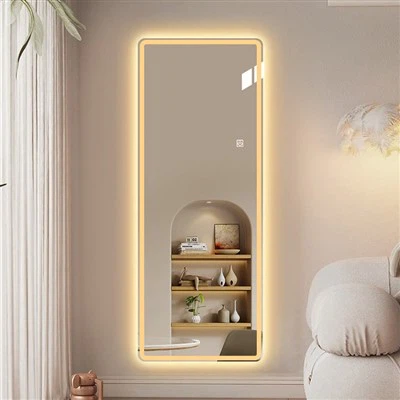
Glass is widely used in modern architecture, decoration and industrial applications. Glass is a versatile material. It is often used at all levels due to its transparency, sound insulation and heat insulation. Among the many glasses, anti-reflective glass, one-way glass and two-way glass have their own characteristics. They show unique advantages and application value in different scenarios.
Application scenarios of anti-reflective glass
Anti-reflective glass is widely used in various scenarios due to its excellent optical properties and physical properties. Here are some of its common application scenarios.

·Display devices: Anti-reflective glass is widely used in various display devices, such as TV screens, mobile phone screens and smart watch screens. By reducing the reflection of ambient light, anti-reflective glass can significantly improve the contrast and color surface of the picture. Even in bright outdoor environments, the screen content can be clearly seen.
·Museums and exhibition halls: Museums and exhibition halls are common application places for anti-reflective glass. The application of anti-reflective glass allows visitors to appreciate exhibits from all angles. At the same time, it reduces the interference of glass reflection on the viewing experience.
·In-vehicle and transportation fields: In car displays and dashboards, anti-reflective glass can reduce reflections under strong light conditions. This not only improves the user experience, but also enhances driving safety.
·Architecture and interior decoration: The application of anti-reflective glass in the fields of architecture and decoration is mainly concentrated in scenes that require clear vision, such as windows, display cabinets and interior partitions.
·Medical equipment and laboratory instruments: In medical equipment and laboratory instruments. Anti-reflective glass will be used on the display screens of some instruments. It can help reduce glare and improve the accuracy of observation data.
Application scenarios of one-way glass
One-way glass is mainly used in various scenes that require privacy protection or monitoring. The following are common application scenarios of one-way glass.
·Security monitoring field: In police stations, interrogation rooms and monitoring rooms, one-way glass is often used to monitor the state of suspects. With the illumination of light, everyone can clearly see the scene in the monitoring room.
·Residential and office buildings: One-way glass can also be used on exterior wall windows. It is mainly used to protect privacy while maintaining good lighting effects. However, large-scale use also requires attention to cost budget.
· Shopping malls and hotels: Some designers use one-way glass to achieve a combination of decoration and function. This combination is very suitable for use in shopping malls and hotels. The unique design form can attract many tourists.

· Car window glass: Some cars pay attention to their internal privacy protection. Usually drivers use one-way glass on the car windows to protect privacy. The higher the end of the car, the more this application is. At the same time, one-way glass also has the function of heat insulation, which can well prevent the temperature in the car from rising. Indirectly reduces the usability of the air conditioner in the car.
It should be noted that the effect of one-way glass depends on the intensity contrast of light on both sides. If the indoor light is stronger than the outdoor light at night, its privacy protection function will be weakened.
Application scenarios of two-way glass
The application of two-way glass is more flexible. It can be applied to scenes with a variety of functions and aesthetic requirements.
· High-end residential and office spaces: Two-way glass can be used as partition walls or windows. Privacy protection can be provided when needed.
·Medical institutions: When two-way glass is used as an observation window or clinic partition in a hospital, it can meet the dual needs of privacy and observation.
·Hotels and resorts: Some hotels or resorts also use two-way waves as bathroom partitions or windows. The customer experience has been improved.
·Conference rooms and exhibition halls: Combined with projection technology, two-way glass can also be used as a multi-functional display screen or background wall.