Glass and mirrors are essential in our lives. They are made of similar base materials. But there are significant differences in function and use. Both have the ability to reflect light, but there are subtle differences. Glass is mainly used to transmit and disperse light, while mirrors focus on reflecting images.
The difference between material composition and manufacturing process
Material composition and manufacturing process of glass
In the previous article, we mentioned that the main component of glass is silicon dioxide. Simply put, it's sand. Plus a small amount of sodium oxide and calcium oxide. After melting at high temperatures, glass can be obtained by cooling. The process of making glass can be changed according to different needs. In general, ordinary glass is made by the float process.

Material composition and manufacturing process of mirror
The making of mirrors depends on glass. By adding a reflective coating to the glass surface, the mirror can be made on the basis of the glass. This reflective coating is usually a metallic material such as silver or aluminum. Early mirrors used mercury or silver. Today's technology tends to use aluminum because it is more reflective and economical. The manufacturing process involves depositing a metal film on the surface of the glass, which is then coated with a protective layer, such as a paint layer. To protect the reflector from damage.
Related Post: "Colored glass: Unlocks its many applications"
The difference in physical properties
Optical characteristic
The main optical property of glass is light transmission. Plain clear glass allows most light to pass through. There may also be slight refraction or scattering during passage. It depends on the thickness and material of the glass. Glass is not highly reflective, but more likely to spread or bend light.
The optical properties of mirrors are mainly reflective. Mirrors rely on their metal reflectors. The ability to reflect light back at almost the same Angle creates a sharp image. The reflection ability of the mirror is very strong, and the reflectivity can reach more than 90%. It is therefore used where accurate imaging is required.
Appearance and transparency
The appearance of glass is usually transparent or translucent, allowing light to pass through. People can see the other side through the glass. Of course, if it is frosted glass, you may not be able to see the situation on the other side. Depending on the treatment, the glass can also show different textures and colors. Such as acid-etched glass, laminated glass, colored glass and so on.
The appearance of the mirror is reflective. It's usually a smooth surface. People can't see the other side of the mirror from one side. Mirrors cannot transmit light because of their reflective layers. Instead, it reflects objects in the environment. This means that the mirror visually appears to have a certain sense of depth, but is actually achieved through reflection.
Related Post: "The Top 10 Glass Manufacturers in China For 2026: A B2B Buyer's Guide"

Differences in application scenarios
Application scenario of glass
Glass is widely used in construction, everyday products and technology because of its transparency and mechanical strength. One of the most widespread uses of glass is for Windows and doors in buildings. Whether it is an office building or a residential area, glass can be used. Of course, different glass also has different areas of demand.
Application scenarios of mirrors
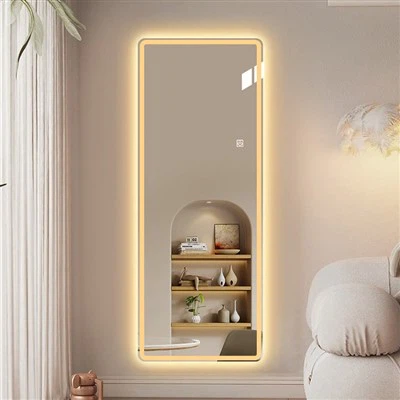
Mirrors are mainly used in scenes that require reflection, and common applications include home decoration. Such as bathroom mirror, full-body mirror, wall decoration mirror, etc. It is not only used for the mirror function in daily life, but also to increase the sense of space and beautify the room.
Related Post: "What Are The Latest Trends in Decorative Mirrors?"