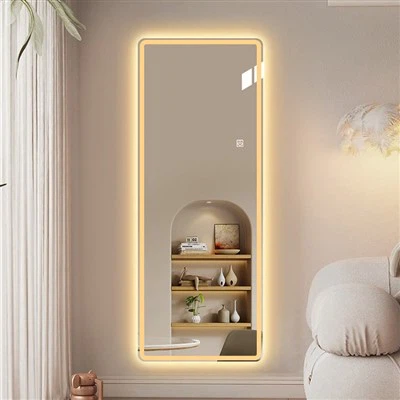
Decorative glass is used in interior design and architecture to add color, texture, privacy, and visual interest to residential, commercial, and hospitality spaces. Five common types are acid-etched glass, frosted glass, painted glass, fabric glass, and decorative textured glass. Each offers different visual effects and functional characteristics, making it suitable for applications such as partitions, wall panels, cabinet doors, reception areas, and feature installations. For architects, interior designers, contractors, and project buyers, selecting the right decorative glass involves more than appearance. Surface treatment, color consistency, light transmission, fabrication requirements, installation conditions, and maintenance all affect the final result. Understanding these differences helps project teams specify glass that meets both design expectations and practical requirements.
1. Acid-Etched Glass
Acid-etched glass is produced by treating the glass surface with an acid-based process  to create a smooth, translucent finish. The treatment diffuses light and reduces clear visibility through the glass while preserving a refined appearance. Depending on the product and processing method, the finish can be uniform or incorporated into a more detailed design.
Unlike some textured finishes, acid-etched glass generally has a relatively smooth surface. This makes it an option for contemporary interiors where designers want privacy without introducing a strong visual pattern.
Common applications
Acid-etched glass is frequently specified for:
Office partitions and meeting-room dividers
Bathroom enclosures and interior privacy panels
Cabinet doors and decorative inserts
Interior doors and architectural screens
Hospitality and commercial interiors
When sourcing from acid etched glass manufacturers, buyers should confirm the required opacity, surface uniformity, available thicknesses, edge-finishing options, and compatibility with any subsequent processing. If the glass will be used in a safety-critical location, the complete specification should identify the appropriate safety-glazing requirements.
Acid-etched finishes can help create a restrained, professional aesthetic, especially in spaces that need both daylight and visual separation.
Related Post: "What Is Acid-etched Glass"
2. Frosted Glass
Frosted glass is designed to diffuse light and obscure direct visibility. It may be manufactured through acid etching, sandblasting, applied films, or other finishing methods. Because the term describes an appearance rather than one single manufacturing process, buyers should confirm how a particular product is made. Frosted glass is especially useful when a project requires a balance between openness and privacy. It can separate spaces without making an interior feel as enclosed as a solid wall.
Where is frosted glass used?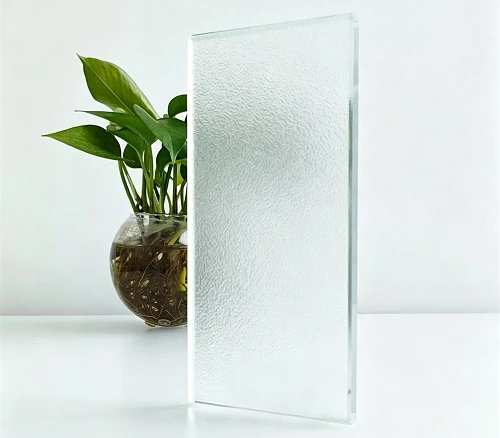
Typical applications include office partitions, bathroom windows, shower enclosures, doors, meeting rooms, and decorative cabinet panels. It can also be used for signage backgrounds and selected retail displays.
For commercial projects, a frosted glass factory should be able to clarify the finish type, dimensional tolerances, available sizes, processing capabilities, and cleaning recommendations. Buyers should also consider whether the surface treatment needs to cover the entire panel or only selected areas.
| Selection factor | What buyers should check |
|---|---|
| Privacy | Whether the finish provides the desired visual screening |
| Light transmission | Whether sufficient daylight passes through the panel |
| Surface finish | Smoothness, texture, and consistency between panels |
| Maintenance | Cleaning instructions and resistance to visible marks |
| Fabrication | Compatibility with cutting, drilling, tempering, or lamination |
Frosted glass is a versatile choice for interiors that require understated privacy. However, the degree of privacy depends on the finish, lighting conditions, and viewing distance, so samples should be evaluated in a representative environment.
Related Post: "What Is Frosted Glass"
3. Painted Glass
Painted glass, sometimes called back-painted glass, features a colored coating applied to  one surface of the glass. When installed with the coated side facing a wall or substrate, the visible side presents a smooth, solid-color appearance. Available colors can range from neutral whites and grays to bold accent colors, depending on the manufacturer's coating options.
One advantage of painted glass is its ability to introduce a consistent color surface into a design scheme. It can coordinate with cabinetry, furniture, wall finishes, and brand colors in commercial interiors.
Common applications of painted glass panels
Painted glass panels are used in kitchen backsplashes, reception desks, retail displays, wall cladding, cabinet fronts, and decorative feature walls. They can create a clean, continuous appearance that is difficult to achieve with some traditional wall finishes.
Before specifying painted glass, project teams should clarify:
Whether the coating is intended for interior or exterior use
The required color reference and acceptable color variation
The glass thickness, dimensions, and edge treatment
Whether the panel requires tempering or other safety-related processing
The installation method and compatibility with adhesives or support systems
The coating and installation details matter because the painted surface may be vulnerable if exposed to unsuitable chemicals, abrasion, moisture, or direct impact. The coated face should be protected during transportation and installation.
For larger projects, it is advisable to approve a physical sample under the intended lighting conditions. Colors viewed on a monitor may not accurately represent the finished glass.
Related Post: "What Is Back Painted Glass"
4. Fabric Glass
Fabric glass incorporates a fabric-like material or pattern into a glass construction to create a distinctive  decorative effect. Depending on the product, the visual design may be achieved through an interlayer, a laminated construction, or a specialized decorative process. The precise structure varies, so buyers should confirm the manufacturer's technical description rather than assume that all products sold as fabric glass have the same composition.
The defining appeal of fabric glass is its ability to combine the visual softness of textiles with the clean, architectural character of glass. It can introduce pattern and depth into interiors without relying on conventional printed or painted surfaces alone.
Design and application possibilities
Fabric glass may be considered for decorative partitions, cabinet inserts, wall features, hospitality interiors, retail displays, and selected furniture applications. It is particularly useful when designers want to coordinate glass elements with upholstery, curtains, or other textile-inspired finishes.
When comparing products, buyers should examine the pattern scale, color, light transmission, visual consistency, and construction. If the product is laminated, they should also verify the intended application, available dimensions, edge appearance, and suitability for the proposed environment.
Some buyers search for fabric glass price when preparing a project specification. Rather than comparing products by name alone, it is more useful to establish a consistent set of requirements, including glass dimensions, thickness, decorative construction, processing, packaging, and delivery scope. These details help ensure that quotations refer to comparable products.
Fabric glass can be an effective design choice, but its suitability depends on the exact construction and performance requirements of the project.
Related Post: "What Is Fabric Glass"
5. Decorative Textured Glass
Decorative textured glass features a pattern or relief on its surface. Depending on the manufacturing method,  the pattern may be pressed, rolled, embossed, or otherwise formed during production. Common visual effects include linear grooves, geometric motifs, ripples, and repeating organic patterns.
Compared with plain glass, decorative textured glass changes how light travels through the panel. It can create reflections, shadows, and visual distortion while providing varying levels of screening. The amount of privacy and light transmission depends on the specific pattern, thickness, and glass construction.
Popular applications
Textured glass is often used in interior doors, partitions, cabinet doors, shower screens, retail displays, decorative windows, and feature panels. Different patterns can support a wide range of design styles, from subtle contemporary interiors to more expressive decorative schemes.
When selecting decorative textured glass, consider the following:
Pattern scale: Large patterns may become a prominent design feature, while finer textures can feel more understated.
Light and privacy: Test the actual sample to understand visibility from both sides under different lighting conditions.
Orientation: Some patterns have a defined direction and must be installed consistently across multiple panels.
Cleaning: Deep grooves or pronounced textures may require more attention during maintenance.
Fabrication: Confirm whether the selected glass can be cut, drilled, tempered, laminated, or otherwise processed as required.
For projects using multiple panels, sample approval is important. Even when the same pattern is specified, differences in orientation, lighting, and installation can affect the overall appearance.
Related Post: "Types Of Decorative Glass"
How to Choose the Right Type of Decorative Glass
The best decorative glass depends on the project's functional requirements, visual direction, and installation environment. A finish that works well for a feature wall may not be the right choice for a shower enclosure or an office partition.
Use the following comparison as an initial guide.
| Glass type | Main visual effect | Typical applications | Key consideration |
|---|---|---|---|
| Acid-etched glass | Smooth, translucent finish | Privacy partitions, doors, cabinets | Opacity and surface uniformity |
| Frosted glass | Diffused light and reduced visibility | Bathrooms, offices, interior doors | Finish method and required privacy |
| Painted glass | Solid, uniform color | Backsplashes, wall panels, reception desks | Coating durability and color matching |
| Fabric glass | Textile-inspired pattern or appearance | Decorative partitions, furniture, hospitality spaces | Product construction and pattern consistency |
| Decorative textured glass | Patterned surface and varied light effects | Doors, cabinets, screens, feature panels | Pattern, cleaning, and fabrication needs |
Consider the project environment
Start by identifying where the glass will be installed. Interior decorative panels may have different requirements from exterior glazing, wet-area installations, or locations where human impact is possible. Glass used in safety-critical applications must meet the applicable local requirements and be specified as a complete system.
Confirm the desired visual effect
Review samples under lighting conditions similar to the final space. A translucent finish may look different when illuminated from behind, while painted and textured products can change in appearance depending on viewing angle and surrounding materials.
Check processing and installation requirements
Confirm dimensions, thickness, edgework, holes, cutouts, support methods, and installation clearances before production. Any required tempering, lamination, or other processing should be agreed upon early, because not every decorative finish is compatible with every fabrication method.
Coordinate the specification across suppliers
For multi-panel projects, consistency matters. Document the approved sample, color reference where applicable, pattern orientation, finish, dimensions, and acceptable tolerances. This helps architects, contractors, and procurement teams communicate the same requirements throughout the project.
Working with Luck Glass on Decorative Glass Projects
Luck Glass supports decorative glass selection for interior design and architectural applications. For project teams, the goal is to identify a suitable product specification before moving into detailed fabrication and procurement.
When evaluating options, buyers can discuss the intended application, preferred appearance, dimensions, processing requirements, and quantity with the Luck Glass team. This makes it easier to determine which decorative glass options may fit the design and which technical details need confirmation.
For customized or larger-volume requirements, it is helpful to provide drawings, reference images, a schedule of glass sizes, and any relevant installation details. These materials help clarify the expected finish and reduce ambiguity during quotation and production planning.
Luck Glass can help project buyers explore decorative glass options and coordinate product requirements according to the needs of the intended application. Final suitability should always be confirmed against the product's technical specifications, fabrication limits, installation method, and applicable building requirements.
Frequently Asked Questions
What are the five types of decorative glass?
Five common types are acid-etched glass, frosted glass, painted glass, fabric glass, and decorative textured glass. Each offers different visual effects and should be selected according to privacy, appearance, fabrication, and application requirements.
Which decorative glass is best for privacy?
Frosted and acid-etched glass are common choices for privacy because they diffuse light and reduce direct visibility. The actual privacy level depends on the finish, lighting, and viewing conditions, so samples should be checked before specification.
Can painted glass be used for wall panels?
Yes. Painted glass is often used for interior wall panels, backsplashes, reception desks, and cabinet fronts. The coating, glass construction, mounting system, and environment should be checked to ensure suitability for the intended use.
Is decorative textured glass suitable for commercial interiors?
It can be suitable for commercial partitions, doors, displays, and feature panels. Buyers should confirm the pattern, cleaning requirements, fabrication options, and any applicable safety-glazing requirements for the installation location.
What should I ask a decorative glass supplier before ordering?
Ask about available finishes, glass thicknesses, dimensions, processing options, sample approval, packaging, lead times, and technical documentation. For project orders, provide clear drawings and specifications so the supplier can assess the requirements accurately.
Final Thoughts
Acid-etched, frosted, painted, fabric, and decorative textured glass offer different ways to combine visual design with practical functionality. The right option depends on the intended application, desired appearance, privacy needs, fabrication requirements, and installation environment.
For architects, designers, contractors, and procurement teams, a clear specification and approved sample are essential steps toward a consistent finished result. By confirming technical details early and working with a supplier that understands project requirements, teams can select decorative glass that aligns with both design goals and practical needs.