Walk past a piece of dichroic glass and it does something ordinary glass never does: it changes color. Tilt your head, shift the light, and a panel that looked deep blue a moment ago can flash gold, violet or emerald. Iridescent glass does something similar, but the effect is softer, more pearlescent, less dramatic. The two are often confused - and for good reason, since both rely on thin-film interference to create color without pigments. But how they're made, how they behave, and where they're used are quite different. And for commercial and architectural projects, there's a third option worth knowing about: Textured Dichroic Glass, which combines the color-shifting magic of dichroic coatings with the tactile depth of patterned glass.
Dichroic vs. Iridescent: The Core Difference
The short version is that dichroic glass uses multiple precisely-engineered thin-film layers to reflect specific wavelengths of light, while iridescent glass uses a simpler single-layer coating to create a broad rainbow sheen. The result is that dichroic glass produces sharp, saturated color shifts that change dramatically with viewing angle, whereas iridescent glass produces a softer, more uniform pearlescent glow that's less angle-dependent.
How Dichroic Glass Works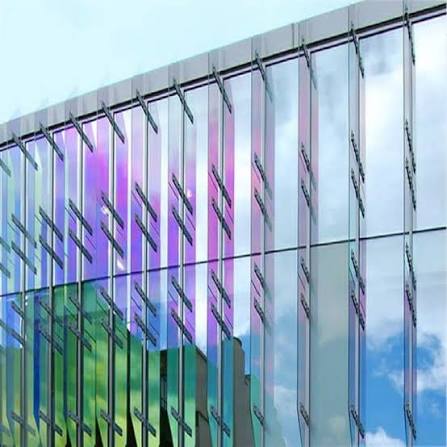
Dichroic glass gets its name from the Greek words "di" (two) and "chroma" (color), because it literally transmits one color and reflects another. The effect is created by depositing dozens of ultra-thin layers - sometimes 30 to 50 layers - of metal oxides like titanium, silicon and magnesium onto the glass surface in a vacuum chamber. Each layer is only a few nanometers thick, and the precise thickness and sequence of these layers determines which wavelengths of light get reflected and which pass through. Because the layers are so thin, light waves bouncing off different layers interfere with each other, amplifying some colors and canceling out others. That's thin-film interference, and it's the same physics that creates colors in soap bubbles and oil slicks.
The key point is that dichroic coatings are engineered. A manufacturer can dial in exactly which wavelengths to reflect - a deep blue that shifts to gold, a green that shifts to magenta, a violet that shifts to copper - by controlling the layer thicknesses. This precision is why dichroic glass is more expensive and more dramatic than iridescent glass. It was originally developed for NASA to protect spacecraft instruments and astronaut visors from specific wavelengths of light, and that aerospace heritage is still visible in the precision of the coating process.
How Iridescent Glass Works
Iridescent glass also uses thin-film interference, but the coating is much simpler - typically a single layer or a small number of layers of tin chloride or similar metal oxide, sprayed onto the glass surface and then heated to fuse it. The result is a broad, soft rainbow sheen that shifts gently with angle but doesn't produce the sharp, saturated color changes of dichroic glass. Iridescent glass is often described as "pearlescent" or "opalescent" because the effect is closer to the inside of a seashell than to a prism.
Because iridescent coatings are simpler and faster to apply, iridescent glass is significantly cheaper than dichroic glass. It's widely used for decorative bottles, tableware, and low-cost architectural accents. But for projects where you want a bold, controllable color shift - feature walls, art installations, high-end retail interiors - dichroic glass is the material that delivers.
Related post: "What is Aquatex glass? Pattern, Privacy, Uses and Aquatex Obscure Glass Guide"
What Is Textured Dichroic Glass?
This is where things get interesting. Textured Dichroic Glass takes the color-shifting properties of dichroic coatings and applies them to patterned or textured glass surfaces - reeded, bamboo, basketweave, aquatex, karatachi, contora and other rolled patterns. The combination creates an effect that neither material can achieve on its own: the texture refracts and scatters light in multiple directions, and the dichroic coating shifts the color of that scattered light, so the entire panel seems to shimmer and move as you walk past it.
Texture Meets Color Shift
On smooth dichroic glass, the color shift is relatively uniform across the panel - the whole pane changes from one color to another as you move. On textured dichroic glass, each ridge, groove and raised pattern element catches light at a slightly different angle, so different parts of the panel show different colors simultaneously. A reeded textured dichroic glass panel might show gold on the vertical ribs and deep blue in the valleys between them. A bamboo pattern might have green leaves shifting to copper while the background texture shifts from violet to teal. The effect is dynamic, almost alive, and it changes throughout the day as the angle of the sun moves across the sky.
This makes textured dichroic glass particularly effective for feature walls, lobby installations, retail storefronts and hospitality interiors, where the goal is to create a memorable visual experience rather than just a colored surface. It also works well for partitions and doors, where the texture provides privacy (like ordinary patterned glass) while the dichroic coating adds a layer of visual interest that plain patterned glass can't match.
Available Patterns and Textures
Textured dichroic glass can be produced with virtually any rolled glass pattern as the base. Common options include:
Reeded / ribbed - parallel vertical or horizontal ribs that create linear color bands
Bamboo - organic bamboo stalk and leaf patterns with natural color variation
Basketweave - interwoven blocks that create a checkerboard of shifting colors
Aquatex - fine water-droplet texture with soft, diffused color shifts
Karatachi - bold irregular polygon patterns with dramatic color contrast
Contora - small dense square patterns with a pixelated shimmer effect
Autumn - vertical ribbed texture with warm color transitions
The dichroic coating itself is also customizable. Standard color shifts include blue-to-gold, green-to-magenta, violet-to-copper, and silver-to-rainbow, but custom color combinations can be developed for large projects. The coating can be applied to one side or both sides, and the textured side can face inward or outward depending on the desired effect and cleaning requirements.
Where Textured Dichroic Glass Shines
Textured dichroic glass is a specialty material, and it's not the right choice for every project - but in the right setting, it creates an effect that nothing else can match.
Hospitality interiors are one of the strongest applications. A textured dichroic glass feature wall behind a hotel reception desk, or a dichroic glass partition separating a restaurant bar from the dining area, becomes an instant talking point for guests. The color shift keeps the space feeling dynamic without requiring moving parts or lighting effects, and the texture adds a tactile quality that smooth dichroic glass lacks.
Retail and commercial spaces also benefit. A storefront clad in textured dichroic glass panels draws the eye from the street, and the color shift means the facade looks different at different times of day - morning light produces one palette, afternoon sun another, evening interior lighting a third. For brands that want a distinctive physical presence, it's a powerful material.
Art and cultural installations are another natural fit. Museums, galleries and public art projects use textured dichroic glass to create immersive light experiences that change with the weather, the season and the viewer's position. Because the color is produced by light interference rather than pigments, it never fades - the same panel will look as vibrant in 30 years as it does on the day it's installed.
More practically, textured dichroic glass can be used for interior doors, cabinet inserts, shower enclosures and backsplashes in high-end residential projects. The texture provides privacy where needed, and the dichroic coating adds a luxury element that elevates the space beyond what ordinary patterned glass can achieve.
Related post: "Does obscure glass block light? Light Transmission, Privacy and Autumn Obscure Glass Explained"
Luck Glass: Your Textured Dichroic Glass and Decorative Glass Partner
Luck Glass is a professional decorative glass manufacturer producing a full range of textured and patterned glass, including Textured Dichroic Glass, reeded glass, bamboo pattern glass, basketweave glass, aquatex glass, karatachi glass, contora glass, autumn obscure glass, frosted glass, back painted glass and laminated glass. The company supplies global commercial glass suppliers, dichroic glass suppliers, dichroic glass panels distributors, building material traders and brand clients, with advanced rolling, coating, tempering, laminating and finishing production lines.
Luck Glass offers textured dichroic glass across a full range of base patterns - reeded, bamboo, basketweave, aquatex, karatachi, contora, autumn and more - with standard and custom dichroic color shifts including blue-to-gold, green-to-magenta, violet-to-copper and silver-to-rainbow. All textured dichroic glass can be tempered to EN 12150 and ANSI Z97.1 safety standards, laminated for security and acoustic performance, or assembled into double glazed units. Full customization is supported across pattern selection, color shift specification, coating side, panel size, thickness, edge finishing, hole drilling and cutouts, with maximum panel sizes up to 3660mm x 2440mm and typical delivery within 30 working days for custom dichroic orders.
Whether the project calls for textured dichroic glass feature panels for a hotel lobby, dichroic glass patterns for a retail storefront, textured dichroic glass partitions for a corporate office, or bulk supply from wholesale glass manufacturers for a large-scale commercial build, Luck Glass delivers consistent pattern and coating quality, technical support on color shift performance and safety compliance, and competitive pricing for both sample orders and full-container shipments.
Frequently Asked Questions
Q: What is the difference between dichroic and iridescent glass?
A: Dichroic glass uses 30-50 precisely-engineered nanometer-thin metal oxide layers to reflect specific wavelengths, producing sharp, saturated color shifts that change dramatically with viewing angle. Iridescent glass uses a simpler single-layer coating, producing a softer, more uniform pearlescent rainbow sheen. Dichroic glass is more expensive and more dramatic; iridescent glass is cheaper and more subtle.
Q: What is Textured Dichroic Glass?
A: Textured Dichroic Glass combines a dichroic color-shifting coating with a patterned or textured glass base (reeded, bamboo, basketweave, aquatex, etc.). The texture refracts light in multiple directions, so different parts of the panel show different colors simultaneously, creating a dynamic shimmer effect that smooth dichroic glass can't match.
Q: Does dichroic glass fade over time?
A: No. The color in dichroic glass is produced by thin-film light interference, not by pigments or dyes. The metal oxide layers are fused to the glass in a vacuum chamber and are extremely durable. A properly manufactured dichroic glass panel will retain its color shift for decades, even in exterior applications.
Q: Can textured dichroic glass be used outdoors?
A: Yes, when properly laminated or tempered. The dichroic coating is durable and UV-resistant, but for exterior applications it's typically specified as laminated glass for safety and to protect the coating from weathering. Always confirm with your supplier that the specified configuration is rated for exterior use.
Q: How do I choose the right pattern for textured dichroic glass?
A: The pattern determines how the color shift is distributed across the panel. Fine patterns like aquatex and contora create a uniform, pixelated shimmer; bold patterns like karatachi and basketweave create strong color contrast between raised and recessed areas; linear patterns like reeded create horizontal or vertical color bands. Always request physical samples with your chosen pattern and coating before committing to a large order.
Related post: "What are some different types of glass patterns? A Visual Guide to Textures, Privacy and Bamboo Pattern Glass"
Final Thoughts
The difference between dichroic and iridescent glass comes down to precision and drama. Iridescent glass is a soft, affordable rainbow coating that adds a gentle sheen. Dichroic glass is an engineered, multi-layer coating that produces sharp, controllable color shifts - and when you add a textured base pattern, you get Textured Dichroic Glass, a material that does things no other glass can. Each ridge and groove catches light at its own angle, so a single panel can hold a dozen colors at once, and all of them shift and move as you walk past. It's not a material for every project - it's too specialized, too expensive, too bold for ordinary bathrooms and standard office partitions. But for a feature wall, a lobby installation, a retail facade or a high-end interior that needs to be unforgettable, textured dichroic glass is in a category of its own. The color isn't painted on. It isn't a film. It's built into the glass, layer by nanometer-thin layer, and it will keep shifting colors for as long as the glass exists.
Explore Dichroic Glass Textures