Short answer: on a properly made back painted glass panel, the paint does not peel off - it stays bonded to the glass for years. But cheap or badly fabricated panels, poor surface preparation, or harsh installation environments can cause the coating to lift, bubble, or chip. The difference between a finish that lasts and one that fails almost always comes down to how the panel was made and how it is mounted, not to the paint itself.
Glass is smooth, non-porous, and hard to stick to. That is exactly why back painted glass looks clean - but it is also why a lazy manufacturing process shows up as peeling edges and cloudy patches later. If you are specifying white back painted glass for a kitchen splashback, a feature wall, or commercial wall panels, it helps to know what actually makes the paint let go.
Why Paint on Glass Fails
Paint sticks to most materials because it soaks into pores. Glass has no pores. So the coating has to bond purely on the surface, like glue to a mirror. That bond depends on three things: the glass being spotlessly clean, the paint being compatible with glass, and the film being cured hard.
When any one of those steps is skipped, the layer that should be permanent becomes a skin that can separate at the edge. Once water or steam gets under that edge, it wicks underneath the film and lifts more and more surface over time. This is why peeling almost always starts at the cut edge or around a drilled hole - never in the middle of a well-coated panel.
Related Post: "What Are The Different Types Of Colored Glass?Back Painted Glass Types And Sourcing Guide"
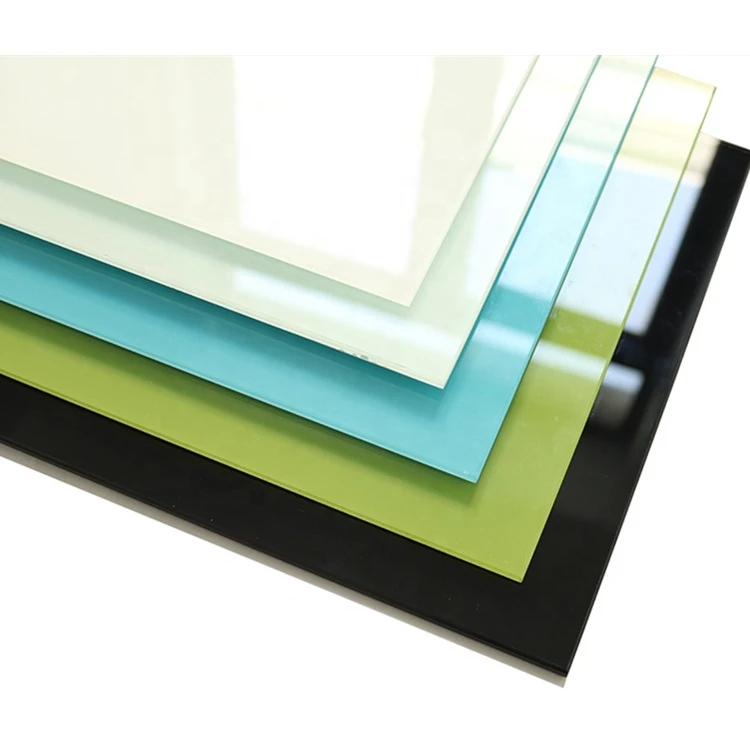
Common Reasons Back Painted Glass Peels
Dirty glass before coating
The most common cause is simple contamination. Fingerprints, grease, or residual detergent left on the glass before painting stops the film from keying. From a distance the panel looks perfect on day one, but six months later the edge starts to turn cloudy. Reputable back painted glass panels go through a dedicated washing cycle with deionized water and a dust-controlled coating booth; cut-rate jobs often skip the wash entirely.
Wrong type of paint
Ordinary wall paint or spray-bomb acrylic will not stay on glass. Back painted glass needs a coating formulated for smooth, non-porous surfaces - usually a polyurethane or specially developed glass paint. Some manufacturers in a hurry use general-purpose industrial coatings that look identical when wet but yellow or soften under heat. White back painted glass is especially unforgiving: even a slight degradation shows as an off-white patch instead of a clean bright surface.
| Cause | How It Shows Up | How to Avoid It |
|---|---|---|
| Unclean glass | Cloudy edge, peeling corners | Buy from a factory with a washing line |
| Wrong paint | Yellowing, soft film | Ask for coating type and curing method |
| Under-cured film | Bubbles, smudges | Check fully cured panels before install |
| Rough handling after paint | Chips at edges | Handle, transport, and seal edges |
| Harsh cleaners | Scratched, matte surface | Use soft cloths, non-abrasive cleaners |
Curing rushed
A coating that has not been fully cured is still soft. If the panel leaves the oven too early, it might look dry but never reaches full hardness. Heat from a hob, steam from a shower, or even direct sunlight can then soften the film enough for it to peel back. This is also why tempered back painted glass tends to perform better - the paint is baked alongside the tempering cycle, which forces a much harder final finish.
Damage during installation
Peeling is not always the manufacturer's fault. Cutting, drilling, or grinding a panel after it is painted chips the edge and gives moisture an entry point. Mounting the panel directly against a damp wall without ventilation traps condensation behind it. Screws overtightened on an unsecured panel can flex the glass and crack the film at the hole.
When It Actually Holds Up
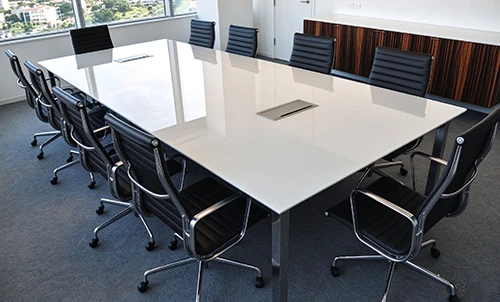
When the process is done properly, back painted glass behaves like a finished architectural surface. White back painted glass splashbacks in residential kitchens stay white for years; back painted glass wall panels in lobbies and retail stores stay uniform across large runs; commercial back painted glass suppliers batch-color orders so that adjacent panels match instead of drifting.
Temperature swings, normal cleaning, and occasional splashes do not damage the cured coating. The finish is non-porous, so mould cannot grow on it, and the color sits on the back of the glass - protected by the glass itself on the front face. Scratches on the surface are the main physical threat, not peeling.
Related post: "What Is Back Painted Glass? Production, Applications And Sourcing Guide"
Where White Back Painted Glass Gets Used
White back painted glass earns its place wherever a smooth, seamless, easy-to-wipe surface matters.
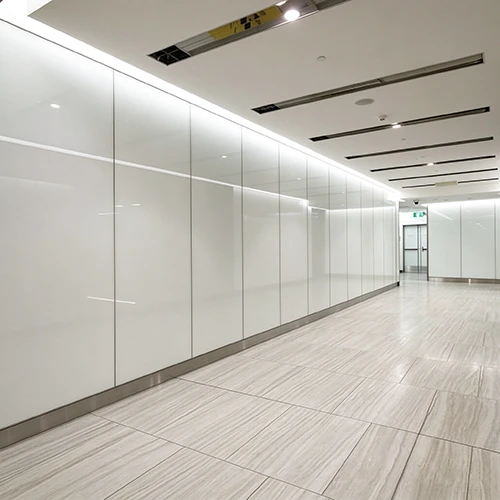
The clean bright tone works almost like a fresh sheet of drywall, but it never stains and never needs repainting.
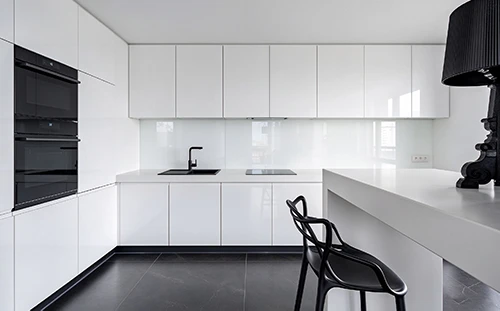
The most familiar application is the kitchen splashback. A full-height white panel behind the hob and counter turns the wall into one uninterrupted surface - no grout lines to discolour, no porous paint to absorb grease. It also reflects light, which makes a galley kitchen feel brighter and wider.
Bathrooms come second. White back painted glass backsplash panels work well around a vanity or inside a shower recess, because moisture runs off the non-porous finish and the panel can be wiped in one motion. It pairs cleanly with stone tops, white cabinetry, and chrome fittings without competing with them.
Beyond the home, white back painted glass wall panels show up in commercial interiors: reception feature walls, elevator backdrops, retail display niches, and office kitchenettes. The reason architects keep choosing it is consistency - one panel to the next reads the same flat white, even across a long run. It is also used on wardrobe and cabinet doors, furniture fronts, and as a neutral backing for shelving lighting, where the white surface bounces light evenly instead of absorbing it.
In short, anywhere you would normally reach for painted drywall, tile, or laminate but want a hygienic, wipe-clean, jointless finish, white back painted glass is the upgrade.
How to Spot Problems Early
Peeling does not arrive all at once. Watch for three signs: a soft grey haze along the edge where the panel meets the wall, tiny bubbles under the film that spread when pressed, or a slight orange-peel texture that was not there when it was installed. Catching it at the edge means a small repair or reseal; waiting until the middle lifts usually means replacing the panel.
New installations should be checked within the first few months, when any manufacturing flaw would surface. If the edges stay crisp and the white stays evenly white after heating, steam, and cleaning cycles, the finish will most likely keep that condition for years.
Care That Protects the Finish
Back painted glass is low-maintenance on purpose. A damp microfiber cloth and a drop of mild detergent handles everyday splashes. Avoid scouring pads, abrasive creams, bleach, and solvent-based cleaners - they do not peel the paint instantly, but they dull the surface and can attack edge seals over time.
In a kitchen, wipe down grease before it builds up; in a bathroom, keep the area ventilated so steam does not sit against the back edge; on a feature wall, avoid leaning wet sponges or vases against the trim. These habits are far more about protecting the edge seal than the painted face.
Related post: "How Does Back Painted Glass Work? Production, Performance And Applications Guide"
Luck Glass: White Back Painted Glass Manufacturer
At Luck Glass, we produce back painted glass panels for architects, contractors, and trade buyers, including a range of white and neutral back painted glass panels for splashbacks, wall cladding, and commercial interiors. Every sheet is cut, washed, coated, and cured in-house, with color matched to RAL or Pantone when a specific brand white is required. We can temper the panels for kitchen and bathroom installations, finish edges to your detail, and batch-color multi-panel orders so a long run of wall panels stays uniform.
We work on project volumes rather than retail sizes, which means we control surface preparation, coating selection, and curing from start to finish. If you are comparing decorative glass manufacturers for a fit-out, we can send color samples so you can judge the white tone under your own lighting. Talk to our team about your next project, or download our catalog to see the full range of colored glass finishes.
Common Questions
Does white back painted glass yellow over time?
Quality coatings resist UV yellowing, especially when the paint is cured during tempering. Budget films can warm to an off-white shade after years of direct sunlight, which is why exact white is worth specifying properly.
Can peeling paint be repaired?
Small edge chips can sometimes be touched up, but widespread bubbling means the bond has failed and the panel usually needs replacing. Touch-ups never match perfectly on white surfaces.
Is back painted glass the same as lacquered glass?
They are near-identical products - a colored coating on the back of glass. Terms vary by region, but the performance expectations are the same.
Related post: "Is Lacquered Glass Good For The Kitchen? Benefits, Cost And Sourcing Guide"
Can I use back painted glass behind a cooker?
Yes, and heat-resistant tempered back painted glass is the standard choice. It wipes clean after splashes and will not absorb grease the way tiles or paint do.
Final Thoughts
Peeling glass paint is almost never a mystery - it traces back to a skipped wash, the wrong coating, a rushed cure, or an installation that traps moisture. A well-made back painted glass panel does not need heroic maintenance; it needs a clean edge, a sensible cleaner, and a supplier who controls the whole line. When those basics are in place, the paint stays exactly where it is supposed to, and the white stays white.