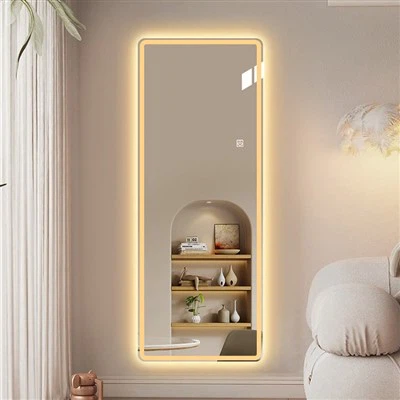
Patterned glass is a type of decorative glass with a textured or embossed surface that creates distinctive visual effects while allowing natural light to pass through. Unlike ordinary clear glass, which has a smooth and transparent appearance, patterned glass features designs such as lines, waves, geometric shapes, floral motifs, and other repeating textures. These patterns can soften visibility, add visual interest, and help create a balance between light transmission and privacy.
Patterned glass is widely used in residential interiors, commercial buildings, office partitions, doors, windows, shower enclosures, and furniture. Its combination of decorative appeal and practical functionality makes it a versatile material for architects, interior designers, contractors, and building developers.
What Is Patterned Glass?
Patterned glass is generally manufactured by passing molten glass between rollers, one or both of which have a patterned surface. As the glass moves through the rollers, the design is transferred onto its surface. After forming, the glass is gradually cooled through an annealing process.
The resulting glass has a textured surface that changes how light passes through it. Depending on the pattern, depth, and glass thickness, the texture can create varying levels of visual distortion and privacy.
Some patterned glass products have a design on one side, while others feature textures on both sides. The pattern itself can be subtle or pronounced, depending on the intended appearance and application.
Unlike acid-etched glass, which obtains its matte appearance through chemical surface treatment, patterned glass gets its distinctive texture during the forming process. This gives it a different visual character and makes it suitable for projects that require decorative surface designs.
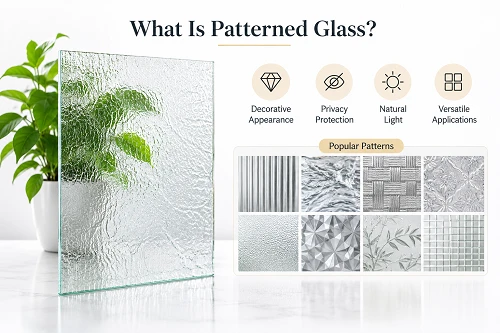
Common Characteristics of Patterned Glass
Decorative appearance: Textured surfaces introduce depth and visual interest to otherwise simple glass installations.
Light transmission: Most patterned glass allows natural or artificial light to pass through, although the amount varies by pattern and specification.
Visual screening: Patterns distort images behind the glass, helping reduce direct visibility.
Design variety: Different glass patterns are available in geometric, linear, organic, and nature-inspired styles.
Versatile applications: Patterned glass can be used in doors, windows, partitions, shower enclosures, cabinets, and decorative furniture.
It is important to understand that patterned glass does not automatically provide complete privacy. Some patterns obscure details more effectively than others, and visibility can change depending on lighting conditions and viewing distance.
Related Post: "Types Of Decorative Glass"
Some Classic Patterned Glass Designs
Patterned glass comes in a wide variety of textures, each creating a distinctive visual effect. From natural, flowing patterns to structured geometric designs, different textures can influence the appearance, light diffusion, and privacy of a space. Here are several classic patterned glass designs commonly used in architectural and decorative projects.
Click any image to explore the corresponding patterned glass product and view its detailed specifications.

1. Rain Pattern Glass

2. Reeded Textured Glass
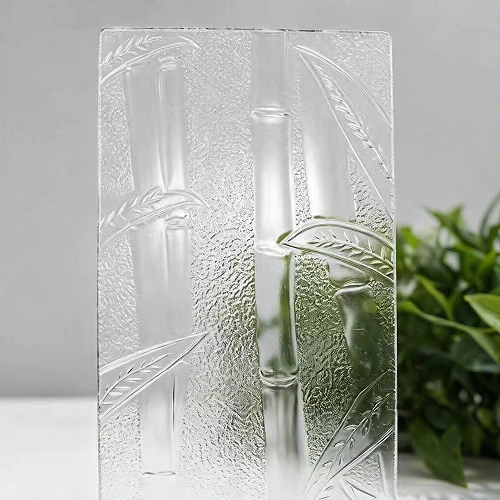
3. Bamboo Pattern Glass
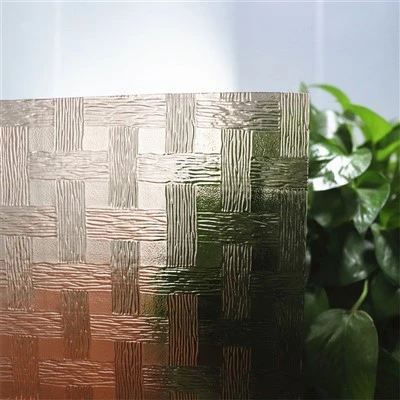
4. Basketweave Glass

5. Water Pattern Glass

6. Glue Chip Obscure Glass

7. Florentine Pattern Glass

8. Contora Pattern Glass
Related Post: "What Are Some Different Types Of Glass Patterns? "
How Is Patterned Glass Made?
Patterned glass is commonly produced through a rolled-glass manufacturing process. The pattern is formed while the glass is still hot and can be shaped.
The general production process includes the following stages:
Raw material preparation: Silica sand, soda ash, limestone, and other suitable materials are measured and mixed according to the required glass composition.
Melting: The prepared batch is heated in a furnace until it becomes molten glass.
Pattern forming: The molten glass passes through rollers, with a patterned roller transferring the required texture onto the surface.
Annealing: The formed glass moves through an annealing lehr, where it is gradually cooled to reduce internal stress.
Cutting and inspection: After cooling, the glass is cut to the required dimensions and inspected for appearance and quality.
The exact production process can vary depending on the manufacturing line, glass composition, and pattern design.
For projects requiring additional safety or performance characteristics, patterned glass may be considered for further processing, such as tempering or lamination, where the specific product and manufacturing process allow it. These treatments should be confirmed with the manufacturer before specifying the glass.
What Are the Main Benefits of Patterned Glass?
Patterned glass offers several practical and decorative advantages, making it a popular material in both residential and commercial architecture.
1. Improved Visual Privacy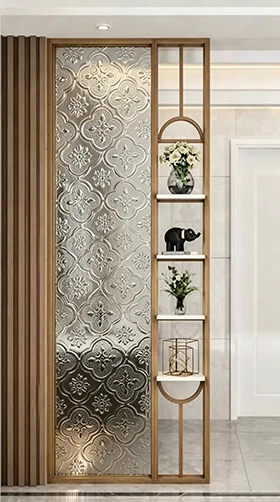
The textured surface distorts the view through the glass, making it more difficult to see objects clearly. This is useful in bathrooms, meeting rooms, office partitions, and other areas where some visual separation is desirable.
Different patterns provide different levels of screening. Fine linear textures may create a different privacy effect from deeper geometric or irregular patterns, so the intended application should guide the selection.
2. Decorative Flexibility
Patterned glass is available in a wide range of textures and designs. Architects and interior designers can use it to complement different interior styles, from traditional decorative spaces to modern commercial environments.
It can also serve as a design feature rather than simply a functional building material.
3. Natural Light Transmission
Many patterned glass products allow daylight to enter while softening the view through the panel. This makes them useful for spaces where maintaining a bright atmosphere is important.
However, the amount of transmitted light depends on the glass composition, thickness, color, and surface pattern.
4. Versatile Design Applications
Patterned glass can be incorporated into many architectural elements, including doors, windows, shower enclosures, cabinets, and partitions. Its adaptability makes it suitable for both small interior projects and larger commercial developments.
Related Post: "What Are The Benefits Of Patterned Glass?"
Where Is Patterned Glass Commonly Used?
Patterned glass is used in a wide range of residential and commercial settings. Its decorative texture and light-diffusing properties make it especially useful in spaces that need both visual separation and an attractive finish.
1. Residential Doors and Windows
Patterned glass can be installed in entrance doors, internal doors, and selected window applications. It provides a decorative appearance while reducing direct visibility into private areas.
For exterior doors and windows, the glass specification should also consider safety, weather exposure, thermal performance, and applicable building requirements.
2. Bathroom and Shower Enclosures
Textured glass is frequently used in bathroom environments because it can soften visibility while allowing light to pass through.
Applications include shower screens, bathroom partitions, and windows. patterned shower panels can create a distinctive appearance while helping separate wet and dry areas.
The glass must still meet the appropriate safety requirements for shower applications. Patterned appearance alone does not establish that a product is suitable for use as safety glazing.
3. Office Partitions and Meeting Rooms
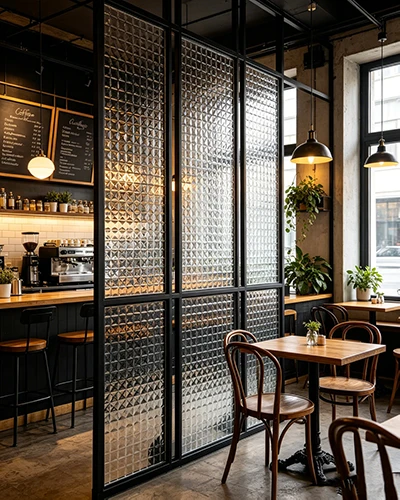
In commercial interiors, patterned glass can divide workspaces without creating the completely enclosed appearance of solid walls.
It is suitable for meeting rooms, reception areas, collaborative spaces, and private offices. Different patterns can help establish visual separation while maintaining a connection between adjacent areas.
4. Kitchen Cabinets and Furniture
Patterned glass is also used in kitchen cabinets, display cabinets, wardrobes, and furniture panels. It can partially obscure stored items while adding texture to the overall design.
For example, reeded or ribbed glass cabinet doors are often paired with wood, metal, or dark-colored frames to create a refined interior appearance.
5. Commercial and Hospitality Projects
Hotels, restaurants, retail stores, and other commercial spaces often use patterned glass for decorative partitions, doors, display areas, and interior features.
For large projects, the pattern, glass dimensions, thickness, and processing requirements should be coordinated with the overall architectural design.
Related Post: "Applications & Common Areas Of Use: Decorative Glass"
Patterned Glass Options from Luck Glass
Luck Glass provides decorative glass options for residential, commercial, and architectural applications. Patterned glass can be incorporated into interior doors, partitions, cabinets, shower enclosures, and other design features where texture and light diffusion are required.
As a glass panel supplier, Luck Glass can discuss available glass patterns, dimensions, thicknesses, and compatible processing options according to project requirements. Whether a project involves a single decorative feature or multiple panels for a commercial interior, the glass specification should be confirmed based on the intended application and installation conditions.
For buyers working with pattern glass suppliers or sourcing from chinese glass manufacturers, clear technical communication is important. Sharing drawings, panel dimensions, preferred patterns, and processing requirements helps establish a consistent product specification.
Frequently Asked Questions
1. Does patterned glass provide privacy?
Yes. Patterned glass can obscure objects and reduce direct visibility. However, the privacy level varies depending on the pattern, viewing distance, and lighting conditions. It should be tested in the intended environment when privacy is a priority.
2. Is patterned glass suitable for shower enclosures?
It can be suitable when the selected glass product meets the required safety glazing standards and is compatible with the shower enclosure system. The pattern alone does not determine whether the glass is safe for this application.
3. Can patterned glass be tempered?
Some patterned glass products can be tempered, depending on their composition, thickness, surface texture, and manufacturing compatibility. Confirm the available processing options with the manufacturer before specifying the product.
4. Does patterned glass block natural light?
Most patterned glass allows some natural light to pass through. However, light transmission varies according to the glass color, thickness, and pattern design.
5. Is patterned glass suitable for commercial buildings?
Yes. It is commonly used in offices, hotels, restaurants, retail spaces, and other commercial interiors for partitions, doors, cabinets, and decorative features. The selected product should meet the project's safety and performance requirements.
Final Thoughts
Patterned glass combines decorative texture, light transmission, and visual screening in one architectural material. From reeded and rain patterns to bamboo and geometric designs, different glass patterns offer designers a wide range of possibilities for residential and commercial spaces.
Choosing the right pattern requires considering the intended application, desired privacy level, glass dimensions, and safety requirements. With the appropriate specification, patterned glass can become both a functional building material and an important part of an interior design.