This question comes up on almost every project that uses patterned glass. Contractors stand in front of a shower door or a window opening, holding a panel of reeded or hammered glass, and wonder - which side faces the room? Does the textured side go in or out? The answer isn't one-size-fits-all. It depends on where the glass is going, how it will be cleaned, and what you want it to do. Getting the orientation right matters for both looks and longevity, so it's worth understanding before installation day.
The Short Answer: It Depends on the Application
There's no universal rule for patterned glass orientation, but there are strong conventions for different uses.  For most interior applications like shower doors and partitions, the textured side typically faces inward - toward the room or the wet area. For exterior windows, the textured side usually faces inward as well, with the smooth side exposed to the weather. But there are exceptions, and some installers prefer the opposite for specific reasons.
Why Orientation Matters
The textured side of patterned glass is more porous than the smooth side. Those grooves and dimples trap soap scum, dust and mineral deposits more readily, which means they need more frequent and more careful cleaning. If the textured side faces a wet area like a shower, it will get dirty faster. If it faces outward on an exterior window, it's exposed to rain, wind and pollution, which can also accelerate soiling.
Orientation also affects how the glass looks. The textured side scatters light differently depending on which direction the light is coming from. In some cases, having the texture face the viewer creates a more pronounced pattern effect; in others, the smooth side facing the viewer gives a softer, more subtle look.
The Two Sides of Patterned Glass
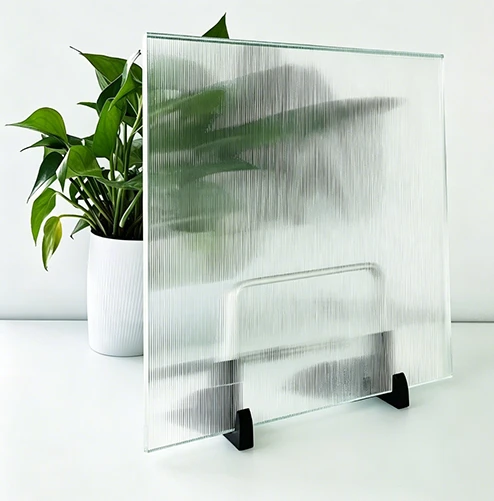
Patterned glass - sometimes called rolled glass or textured glass - is made by passing molten glass through rollers that imprint a pattern on one surface. The result is a panel with one textured side and one smooth side. The smooth side is easier to clean and more resistant to staining. The textured side is where the visual interest lives, but it's also where dirt likes to hide. Understanding this basic fact is the key to making the right orientation call for any installation.
Related p ost: "Can you see through reeded glass? Privacy, Light Transmission and Practical Guide"
Interior Applications: Pattern Side In or Out?
Interior patterned glass is where most of the confusion happens, because different rooms have different needs. Here's how the common applications break down.
Shower Doors and Bathrooms
For shower doors, the most common convention is to have the textured side face outward - toward the bathroom, away from the direct spray of water. This keeps the smooth side facing the inside of the shower, where water and soap hit most directly, making it easier to squeegee clean. The textured side facing the bathroom still gets humid, but it doesn't take the direct brunt of shampoo and body wash.
That said, some installers prefer the textured side facing into the shower for maximum privacy, because the water running down the textured surface enhances the blur effect. If you go this route, be prepared to clean the textured side more often with a soft brush to prevent soap scum buildup in the grooves.
Interior Doors and Partitions
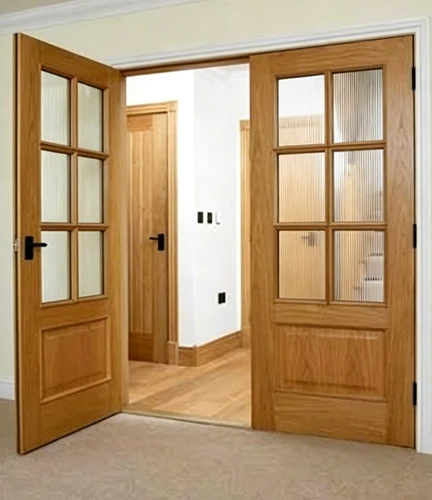
For interior doors and room partitions, orientation is mostly an aesthetic choice. Many designers prefer the textured side facing the main living area or the side where people will view it most often, because that's where the pattern effect is most visible. Others prefer the smooth side facing the main room for a cleaner, more minimalist look, with the texture visible only when you're up close.
There's no right or wrong here - it comes down to the design intent. The one practical consideration is cleaning: the textured side will show fingerprints and dust more readily, so if the door is in a high-traffic area, you might want the smooth side facing the traffic side.
Cabinets and Furniture
For glass-front cabinets and furniture, the textured side almost always faces inward - toward the contents of the cabinet. This keeps the smooth side facing out, which is easier to wipe clean and gives a more finished look from the outside. The texture facing inward still creates the privacy effect, blurring the contents of the cabinet while letting light through.
Related post: "What is the bumpy glass called? A Guide to Textured and Patterned Glass Types"
Exterior Applications: Which Side Faces Out?
Exterior installations have a clearer convention, driven by weather and maintenance concerns.
Windows and Facades
For exterior windows and curtain walls, the textured side almost always faces inward - toward the building interior. The smooth side faces outward, exposed to rain, wind and pollution. This is important for two reasons. First, the smooth side is easier to clean from the outside, which matters for high-rise buildings where exterior cleaning is expensive and difficult. Second, the smooth side sheds water more efficiently, reducing the risk of water staining and mineral deposits on the textured surface.
There's also a safety consideration. The smooth side is more resistant to scratching and abrasion, which matters when the glass is exposed to wind-driven dust and debris. Putting the textured side on the interior protects it from weathering and keeps the pattern looking crisp for longer.
Entry Doors
For entry doors with patterned glass inserts, the convention varies. Many door manufacturers put the textured side facing inward for the same weather-related reasons as windows. But some prefer the textured side facing outward for curb appeal, since the pattern is more visible from the street. If you go with texture facing out, be prepared for more frequent cleaning and potentially faster weathering of the pattern.
For security doors and storm doors, the smooth side should always face outward - it's stronger, more scratch-resistant and easier to maintain.
Related post: "What type of glass is best for a front door? Security, Style and Sourcing Guide"
Factors That Determine the Right Orientation
When you're deciding which way to orient a patterned glass panel, these are the factors that should drive the decision.
Cleaning and Maintenance
This is usually the deciding factor. The textured side traps dirt and needs more careful cleaning. Put it on the side that gets less direct dirt exposure - away from shower spray, away from exterior weather, away from high-traffic touch points. If both sides get equal exposure, put the textured side on the side that's easier to reach and clean.
Privacy and Light
The direction of light affects how the pattern reads. If light comes from behind the textured side, the pattern is more pronounced and privacy is enhanced. If light comes from behind the smooth side, the effect is softer. Think about where the primary light source is and which side you want the stronger privacy effect on.
Safety and Durability
The smooth side is more scratch-resistant and easier to keep in good condition. For high-traffic areas, exterior exposures and installations where the glass might get bumped or rubbed, the smooth side should face the hazard. The textured side is more vulnerable to chipping and scratching along the grooves, so protect it by facing it inward.
Here's a quick reference for common installations:
| Application | Textured Side | Smooth Side | Reason |
|---|---|---|---|
| Shower door | Outward (bathroom side) | Inward (shower side) | Smooth side easier to squeegee clean |
| Interior partition | Aesthetic choice | Aesthetic choice | No weather factor, design-driven |
| Cabinet door | Inward (content side) | Outward (room side) | Smooth side easy to wipe, clean look |
| Exterior window | Inward (building side) | Outward (weather side) | Smooth side sheds water, resists weathering |
| Entry door | Usually inward | Usually outward | Weather protection, easier exterior cleaning |
Related post: "Is reeded glass outdated? Why It's Still Trending in 2026 and Beyond"
Patterned Glass Texture: Quality and Consistency
Whatever orientation you choose, the quality of the Patterned Glass Texture itself matters more than which way it faces. Cheap patterned glass can have uneven pattern depth, wavy grooves or distortion that becomes obvious once the panel is installed and backlit. Quality patterned glass from reputable glass panel manufacturers maintains consistent texture depth and pattern spacing across the entire panel, which gives a clean, professional look regardless of orientation.
Pattern consistency is especially important when multiple panels are installed side by side - on a long partition wall or a run of windows, for example. If the pattern spacing varies from panel to panel, the seams become obvious and the installation looks patchwork. Good custom glass suppliers will ensure pattern matching across panels so the installation reads as one continuous surface.
If you're working on a commercial project, always request full-size samples rather than small swatches. A 100x100mm piece won't show you the pattern inconsistencies that appear in a 1200x2400mm panel. And if orientation matters for your project, ask the pattern glass suppliers to mark which side is which on each panel before shipping - it saves a lot of confusion on installation day.
Sourcing and Installation Tips
When you're sourcing patterned glass for a project, working with experienced glass panel manufacturers and  door glass suppliers gives you access to technical guidance on orientation, pattern selection and installation best practices. A good supplier won't just sell you glass - they'll help you specify the right pattern, thickness and orientation for each application.
For large commercial projects, wholesale glass manufacturers can offer competitive bulk pricing, but make sure they can deliver consistent pattern quality across the entire order. Custom glass suppliers are better for projects that require non-standard sizes, hole drilling, cutouts or special edge finishing. If your project includes reeded glass specifically, look for reeded glass manufacturers that run their own rolling and tempering lines - in-house production means better quality control and shorter lead times.
Custom textured glass is available in a wide range of patterns beyond the standard reeded - hammered, nashiji, karatachi, flora and many more. The orientation conventions apply to all of them, but some patterns are more directional than others. Reeded glass, with its vertical grooves, looks different depending on which side you view it from. More random patterns like hammered or nashiji are less orientation-sensitive, which gives you more flexibility.
Always confirm tempering and safety standards with your supplier. Patterned glass used in doors, showers and partitions should be tempered to meet ANSI Z97.1 (US) or EN 12150 (Europe) standards. Tempering works the same on patterned glass as on clear glass, but the pattern side can be more prone to surface damage during handling, so make sure the supplier uses proper protective packaging.
Related post: "What is the lifespan of toughened glass? Durability, Maintenance and Replacement Guide"
Luck Glass: Your Patterned Glass Partner
Luck Glass is a professional glass panel manufacturer specializing in Patterned Glass Texture, reeded glass, hammered glass, frosted glass, back painted glass, silk-screen printed glass, laminated glass and custom decorative glass products, serving global contractors, developers, building material traders and brand clients. The company runs advanced rolling, tempering and finishing production lines with an experienced technical team that keeps quality consistent and delivery on schedule.
Luck Glass offers patterned glass in a wide range of standard and custom patterns, with consistent texture quality across all panel sizes. All patterned glass can be tempered to meet EN 12150 and ANSI Z97.1 safety standards, with uniform pattern depth, stable edge quality and reliable strength. Full customization is supported across size, thickness, pattern selection, edge finishing, hole drilling and cutouts, with maximum panel sizes up to 3660mm x 2440mm and typical delivery within 25 working days.
Whether the project calls for patterned glass panels for a hotel bathroom, custom textured glass for an office fit-out, reeded glass for a retail interior, or bulk supply from wholesale glass manufacturers for a large-scale commercial project, Luck Glass delivers efficient, reliable solutions tailored to each project's specifications and budget. The technical team can also provide orientation guidance for every application, ensuring the glass is installed correctly for maximum durability and visual impact.
Frequently Asked Questions
Q: Does it matter which side of patterned glass faces out?
A: Yes, for practical reasons. The textured side traps dirt and is harder to clean, so it usually faces the side with less direct exposure to water, weather or high traffic. For exterior windows, the smooth side faces out. For shower doors, the smooth side usually faces the inside of the shower. For interior partitions, it's mostly an aesthetic choice.
Q: Can I install patterned glass with the texture facing either way?
A: Yes, patterned glass is not directional in a structural sense - it will work either way. The choice is about cleaning, durability and aesthetics, not structural integrity. Just be consistent across all panels in a run so the look is uniform.
Q: Which side is easier to clean?
A: The smooth side is significantly easier to clean. The textured side has grooves and dimples that trap soap scum, dust and mineral deposits, requiring a soft brush and more frequent cleaning. If maintenance is a concern, put the smooth side on the side that gets dirtiest.
Q: Does orientation affect privacy?
A: Slightly. When light comes from behind the textured side, the pattern is more pronounced and privacy is enhanced. When light comes from behind the smooth side, the effect is softer. For maximum privacy, orient the textured side toward the primary light source.
Q: How do I know which side is which on a delivered panel?
A: Run your hand across both sides - the textured side will feel rough or grooved, the smooth side will feel flat. If you're unsure, ask your pattern glass suppliers to mark the panels before shipping. Good suppliers will label each panel with the texture direction and installation orientation.
Final Thoughts
So does patterned glass go on the inside or outside? The honest answer is that it depends on where it's going and what you need it to do. For exterior windows and facades, the smooth side faces out and the texture faces in - that's the convention for weather resistance and easy cleaning. For shower doors, the smooth side usually faces the water and the texture faces the room. For interior partitions and cabinets, it's a design choice, though putting the smooth side on the high-traffic or high-touch side makes maintenance easier.
The most important thing is to be consistent and intentional. Pick an orientation for each application based on cleaning needs, light direction and durability, and stick with it across all panels in the project. And work with glass panel manufacturers and custom glass suppliers that can guide you on the right orientation for each specific pattern and application. With the right Patterned Glass Texture and the right installation orientation, you'll get a finished product that looks great and stays looking great for years.