Walk into any well-designed commercial space built in the last decade and you'll find decorative glass doing heavy lifting - partitioning offices, fronting retail displays, lining shower rooms, cladding kitchen walls. But "decorative glass" isn't one thing. It's a whole family of products, each made differently, each with its own look, privacy level and best-use scenario. Specifying the right type means understanding what's available, how they compare, and where each one actually performs. This guide walks through the major categories so you can match the glass to the job.
Understanding Decorative Glass: More Than Just a Pretty Surface
Decorative glass is any glass product that's been treated, textured or coated to serve an aesthetic purpose alongside its functional role. It's not just clear glass with a sticker on it - the decoration is built into the material itself, either during manufacturing or through post-processing.
How Decorative Glass Is Made
There are two broad manufacturing routes. The first is rolling - molten glass is passed through patterned rollers that imprint a texture directly into the surface while the glass is still soft. This is how reeded textured glass, ribbed glass seamless texture, hammered glass and most patterned varieties are made. The second route is post-processing - taking clear float glass and applying treatments like acid etching, sandblasting, ceramic frit printing, back painting or laminating with interlayers. Both approaches produce durable, long-lasting results, but they create different looks and have different cost structures.
What Makes It "Decorative"
A piece of glass earns the "decorative" label when its surface or interlayer does more than just transmit light. It scatters light for privacy, creates pattern and texture, adds color, or carries a printed design. The key distinction from ordinary clear glass is that the visual effect is intentional and integral - not something added after installation like a film or coating that can peel or wear off.
Related post: "What is the bumpy glass called? A Guide to Textured and Patterned Glass Types"
The Major Types of Decorative Glass
The decorative glass family is large, but most products fall into a handful of recognizable categories. Here's what's out there and what each one is good for.
Reeded and Ribbed Glass
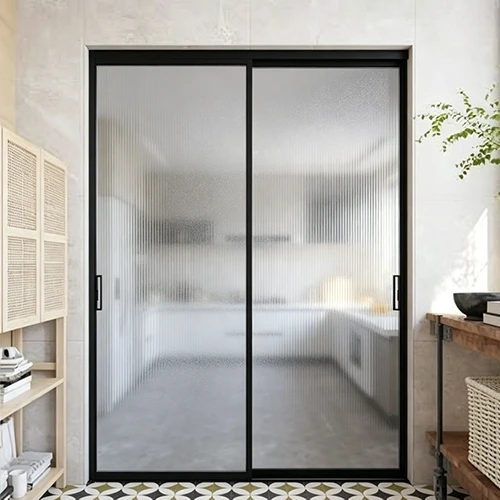
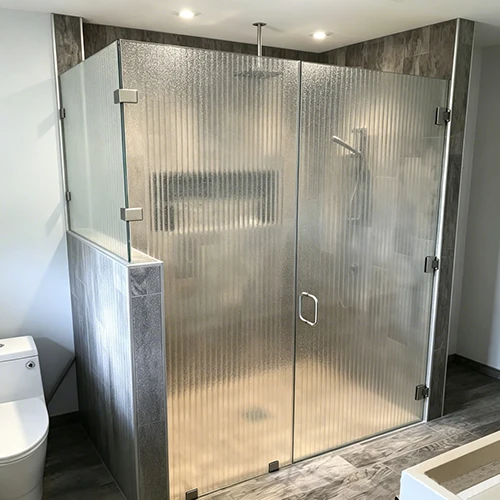
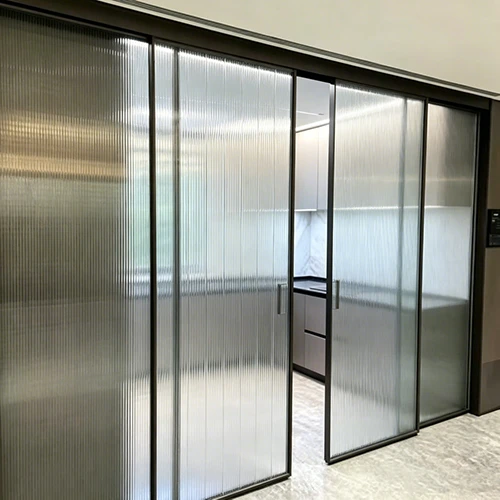
Reeded glass - also called ribbed or fluted glass - features fine vertical grooves rolled into one surface. It's the most popular decorative glass type right now, and for good reason: it blurs views while letting through 80-90% of available light, and the vertical stripes add a rhythmic texture that works in both modern and traditional settings. Reeded textured glass is widely used for shower doors, office partitions, cabinet fronts and entry doors. A reed glass company that runs its own rolling line can offer consistent groove spacing across large panel sizes, which matters for seamless installations.
Frosted and Acid-Etched Glass
Frosted glass has a smooth, matte surface that diffuses light uniformly. It's made either by acid etching or sandblasting clear glass. The result is a clean, minimalist look with high privacy - you'll see shapes and movement, but details are completely obscured. Frosted glass is the go-to for bathroom windows, office partitions and anywhere you want privacy without sacrificing light. The downside is that it shows fingerprints and smudges more readily than textured patterns, so it needs more frequent cleaning in high-touch areas.
Hammered and Pressed Glass
Hammered glass has an organic, dimpled surface that looks like it's been beaten with a hammer - hence the name. It's highly decorative and provides strong privacy, with light scattering in multiple directions across the uneven surface. Pressed glass manufacturers produce a range of patterned varieties beyond hammered, including nashiji (fine pebble), karatachi (prickly pear) and flora (botanical patterns). These types are popular for feature walls, bar fronts, cabinet doors and anywhere you want a more ornamental look than reeded or frosted can offer.
Back Painted and Lacquered Glass
Back painted glass is clear glass with a coat of paint applied to the back surface, creating a smooth, glossy, opaque color panel. It's available in virtually any color - white, grey, black, blue, brown and custom RAL matches. Lacquered glass is a similar product with a slightly different coating formulation. Both are used extensively for kitchen splashbacks, bathroom wall cladding, feature walls and cabinetry. The glass front protects the paint from moisture and wear, making it ideal for wet areas.
Silk-Screen Printed Glass
Silk-screen printed glass uses ceramic frit ink applied through a mesh screen, then fused to the glass during tempering. The result is a permanent, scratch-resistant pattern or solid color that can range from subtle gradients to bold geometric designs. It's popular for exterior facades, interior feature walls, balustrades and branded retail environments. Because the ink is fired into the glass, it won't fade, peel or wear off - even in exterior applications.
Laminated and Fabric Interlayer Glass
Laminated decorative glass sandwiches a decorative interlayer - fabric, mesh, metal weave, colored film or custom print - between two or more panes of glass. The interlayer is fully protected from moisture, UV and physical damage, which means delicate materials like silk, linen or metal mesh can be used in wet areas and high-traffic spaces. Fabric interlayer glass is especially popular in hotels, high-end residential and corporate lobbies, where it adds warmth and texture that pure glass can't achieve on its own.
Here's how the main types compare at a glance:
| Glass Type | Surface | Privacy Level | Light Transmission | Best For |
|---|---|---|---|---|
| Reeded/ribbed | Vertical grooves | Medium | High (80-90%) | Doors, partitions, cabinets |
| Frosted/etched | Smooth matte | High | Medium (60-75%) | Bathrooms, office walls |
| Hammered/pressed | Organic dimples | High | Medium-high (70-80%) | Feature walls, bar fronts |
| Back painted | Smooth glossy | Opaque | None (opaque) | Splashbacks, wall cladding |
| Silk-screen printed | Frit pattern | Variable | Variable | Facades, feature walls |
| Laminated fabric | Smooth, interlayer visible | Variable | Variable | Hotels, lobbies, high-end |
Related post: "Can you see through reeded glass? Privacy, Light Transmission and Practical Guide"
Choosing the Right Type for Your Project
With so many options, picking the right decorative glass comes down to three questions: where is it going, how much privacy do you need, and what's the budget?
By Application
The application usually narrows the field quickly. Shower doors and wet areas favor reeded glass because the grooves hide water spots and the light transmission keeps the space bright. Kitchen splashbacks and bathroom walls call for back painted glass, which is completely waterproof and easy to wipe clean. Office partitions work well with either reeded or frosted, depending on how much visual connection you want to maintain. Exterior facades and balustrades typically use silk-screen printed or laminated glass for durability and design flexibility.
By Privacy Level
If you need near-complete privacy - a bathroom window, a changing room, a confidential meeting room - frosted or hammered glass is the better choice. If you want partial privacy that still lets shapes and light through - a restaurant booth divider, a hotel bathroom door, a cabinet front - reeded or ribbed glass hits the sweet spot. If privacy isn't a concern and you want pure color or pattern, back painted or silk-screen printed glass gives you the most design freedom.
By Budget
Reeded glass price is generally the most accessible of the decorative types, because it's produced in high volume on standard rolling lines. Frosted and hammered glass sit in the middle range. Back painted and silk-screen printed glass cost more due to the additional coating or printing process. Laminated fabric interlayer glass is typically the most expensive, because it requires multiple glass panes, a custom interlayer and the lamination process. For large commercial projects, buying direct from pressed glass manufacturers or a ribbed glass supplier can bring per-unit costs down significantly through bulk pricing.
Related post: "Is reeded glass outdated? Why It's Still Trending in 2026 and Beyond"
Decorative Glass Texture: Quality and Consistency
Whatever type you choose, the quality of the Decorative Glass Texture itself is what separates a premium  installation from a mediocre one. For patterned glass like reeded or ribbed, that means consistent groove depth and spacing across the entire panel - no wavy lines, no uneven patterns, no distortion when backlit. Ribbed glass seamless texture with uniform pattern quality ensures that multiple panels installed side by side read as one continuous surface rather than a patchwork of mismatched pieces.
For frosted glass, quality means an even, consistent matte finish with no streaks or blotches. For back painted glass, it means uniform color coverage with no pinholes or thin spots. For laminated glass, it means the interlayer is perfectly centered with no bubbles, wrinkles or misalignment. Always request full-size samples before placing a large order - a small swatch won't reveal the consistency issues that show up in a 2400mm panel. And if you're installing multiple panels, confirm with your supplier that pattern matching or color matching is guaranteed across the entire batch.
A textured glass bathroom window, for example, needs to maintain consistent privacy performance across every pane in a multi-window installation. If one panel has slightly deeper grooves than the next, the difference in blur becomes obvious once they're side by side. Good decorative textured glass suppliers control for this by running all panels for a single project from the same production batch.
Related post: "Does patterned glass go on the inside or outside? Installation Orientation and Best Practices"
Sourcing and Pricing
When you're sourcing decorative glass for a commercial project, working directly with experienced manufacturers gives you the best combination of price, quality and technical support. A reed glass company that runs its own rolling and tempering lines can offer more consistent reeded textured glass quality and shorter lead times than a distributor sourcing from multiple factories. Pressed glass manufacturers similarly offer better pattern consistency and custom pattern development when you work with them directly.
Reeded glass price varies based on pattern, thickness, panel size and tempering. Standard reeded glass in common sizes is competitively priced; custom sizes, large panels and special edge finishing add to the cost. Ribbed glass seamless texture with premium pattern consistency may carry a slight premium, but for visible installations it's usually worth it. A ribbed glass supplier that offers in-house cutting, edging, hole drilling and tempering can also reduce handling damage and streamline the supply chain.
For projects that call for multiple decorative glass types - reeded for partitions, back painted for splashbacks, laminated for feature walls - consolidating with a single decorative textured glass supplier ensures consistent quality and simplifies logistics. Bulk orders from wholesale manufacturers bring per-unit rates down substantially, so it's worth consolidating your glass needs across the entire project rather than buying type by type from different sources.
Always compare total landed cost - packaging, shipping, insurance and any custom processing included - rather than just the per-square-meter number. And confirm that every product meets your local safety standards: ANSI Z97.1 in the US, EN 12150 in Europe for tempered glass, and relevant laminated glass standards for interlayer products.
Related post: "What is the lifespan of toughened glass? Durability, Maintenance and Replacement Guide"
Luck Glass: Your Decorative Glass Partner
Luck Glass is a professional decorative glass manufacturer specializing in Decorative Glass Texture, reeded textured glass, ribbed glass seamless texture, hammered glass, frosted glass, back painted glass, silk-screen printed glass, laminated fabric glass and custom decorative glass products, serving global contractors, developers, building material traders and brand clients. The company runs advanced rolling, tempering, painting, printing and lamination production lines with an experienced technical team that keeps quality consistent and delivery on schedule.
Luck Glass offers decorative glass in a wide range of standard and custom patterns, colors and interlayer options, with consistent texture quality across all panel sizes. All decorative glass can be tempered to meet EN 12150 and ANSI Z97.1 safety standards, with uniform pattern depth, stable edge quality and reliable strength. Full customization is supported across size, thickness, pattern selection, color matching, edge finishing, hole drilling and cutouts, with maximum panel sizes up to 3660mm x 2440mm and typical delivery within 25 working days.
Whether the project calls for reeded glass panels for a hotel bathroom, textured glass bathroom window for a residential development, back painted splashbacks for a commercial kitchen, laminated feature walls for a corporate lobby, or bulk supply from pressed glass manufacturers for a large-scale project, Luck Glass delivers efficient, reliable solutions tailored to each project's specifications and budget. The technical team can also provide guidance on type selection, orientation and installation for every application.
Frequently Asked Questions
Q: What is the most popular type of decorative glass right now?
A: Reeded and ribbed glass is currently the most popular, driven by its balance of privacy, light transmission and modern texture. It's used across residential and commercial projects for doors, partitions, cabinets and shower enclosures. Frosted glass remains a steady second for applications needing higher privacy.
Q: Can decorative glass be tempered?
A: Yes, almost all decorative glass types can and should be tempered for safety in doors, showers, partitions and balustrades. The tempering process works the same on patterned, frosted, back painted and printed glass as on clear glass, making it four to five times stronger. Confirm with your supplier that the specific product you want is available in tempered form.
Q: Is decorative glass more expensive than clear glass?
A: Yes, decorative glass typically costs more than clear float glass due to the additional rolling, etching, painting, printing or lamination process. Reeded glass is usually the most affordable decorative type, while laminated fabric interlayer glass tends to be the most expensive. Bulk ordering and direct-from-manufacturer sourcing can narrow the gap significantly.
Q: How do I clean different types of decorative glass?
A: Smooth surfaces like frosted and back painted glass wipe clean with a microfiber cloth and mild cleaner. Textured surfaces like reeded and hammered glass need a soft brush to get into the grooves. Avoid abrasive scouring pads and harsh chemicals on all decorative glass, as they can scratch the surface or damage printed/painted layers.
Q: Can I get custom patterns or colors?
A: Yes, most decorative glass manufacturers offer custom options. Pressed glass manufacturers can develop custom rolled patterns for large enough orders. Back painted glass can be color-matched to RAL or Pantone references. Silk-screen printed glass can reproduce custom logos, patterns and gradients. Laminated glass can incorporate custom fabrics, meshes or printed interlayers. Minimum order quantities usually apply for fully custom work.
Final Thoughts
Decorative glass isn't a single product - it's a toolkit of materials, each with its own personality, strengths and ideal applications. Reeded and ribbed glass bring texture and soft privacy. Frosted glass delivers clean, minimalist obscuring. Hammered and pressed patterns add ornamental character. Back painted and silk-screen printed glass offer bold color and design. Laminated interlayer glass brings warmth and tactile richness. The right choice depends on where it's going, how much privacy you need, and what you want the space to feel like.
What ties all these types together is quality. A cheap panel with inconsistent pattern or uneven finish will look dated in five years; a well-made Decorative Glass Texture from a reliable manufacturer will still look crisp and intentional in twenty. By understanding the options, specifying the right type for each application, and sourcing from experienced pressed glass manufacturers or a reputable ribbed glass supplier, you can create spaces that are both functional and genuinely beautiful - without settling for generic clear glass.