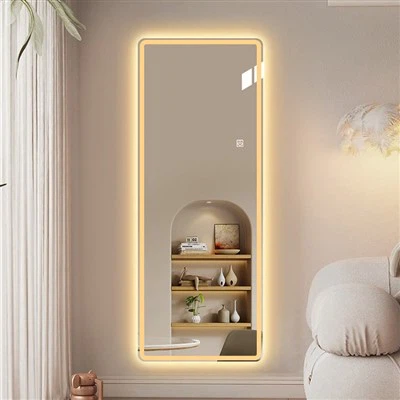
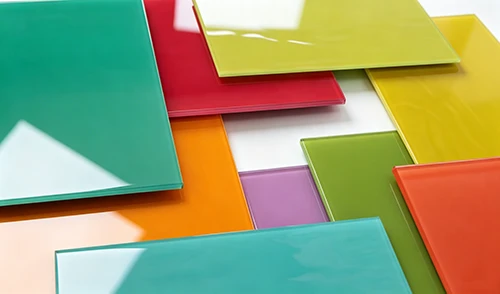
Back painted glass starts life as ordinary clear float glass. What makes it different is what happens on one side after the glass is cut and finished. A layer of opaque paint is applied to the back surface, which then becomes the visible face when the panel is installed. The result is a smooth, solid-colored surface that reads as one continuous piece - no grout lines, no texture, just a clean color.
The process sounds simple enough, but there is a reason commercial back painted glass is not the same as painting a sheet of glass in a garage. The coating has to bond properly, cure evenly, and survive years of cleaning and moisture exposure without peeling or fading. Let me walk through how it actually gets made in a factory setting.
Step 1: Glass Selection and Cutting
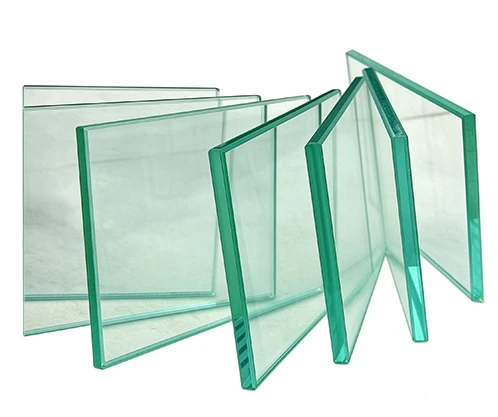
It all starts with the base glass. Most back painted glass uses clear float glass, though low-iron ultra-clear glass is sometimes specified for lighter colors where a green tint would be noticeable. The sheet is cut to size, edges are polished, and any holes or notches for taps and fittings are drilled before any paint goes on.
Once the glass is cut to the final dimensions, it goes through a washing cycle. This is critical - any dust, grease, or residue left on the surface will prevent the paint from adhering properly. The glass is washed with detergents, rinsed with deionized water, and dried in a clean environment.
Why edge work happens first
You cannot cut or drill glass after it has been painted. Any post-paint cutting would chip the coating along the edge and expose the clear glass underneath. So all edge work, holes, and notches must be completed before the coating process begins.
Do you know "What Is Back Painted Glass"(Related Post)
Step 2: Applying the Paint
There are a few ways the paint gets applied to the glass.
Roller coating
This is the most common method for production runs. The glass moves through a series of rollers that apply a uniform layer of paint to the back surface. Roller coating gives an even, consistent film thickness across the entire panel, which is important for color consistency from sheet to sheet.
Spray coating
Spray coating is used for custom colors or smaller batches. It can produce a smooth finish but requires more skill to avoid orange-peel texture or uneven coverage. In a controlled factory environment with automated spray booths, it can match the quality of roller coating.
What kind of paint is used
Commercial back painted glass uses either polyurethane coatings or specialized glass paints designed to bond to smooth glass surfaces. The paint needs to be flexible enough to move with the glass as it expands and contracts, and durable enough to resist yellowing, moisture, and cleaning chemicals.
| Application Method | Best For | Consistency |
|---|---|---|
| Roller coating | Production runs, standard colors | Very even |
| Spray coating | Custom colors, small batches | Good with automated booths |
| Curtain coating | Large panels |
Smooth but slower |
Step 3: Curing and Drying
After the paint is applied, the glass goes through a curing oven. The temperature and speed are carefully controlled so the paint dries evenly without bubbling or running. Curing time depends on the paint type and film thickness, but the goal is the same: a hard, bondable finish that will not peel.
Once cured, a secondary protective layer is sometimes applied over the paint. This extra coating shields the color from moisture and physical damage during installation and everyday use. It is especially important for panels going into kitchens or bathrooms, where steam and cleaning products are a regular part of life.
Learn More About Colored Glass Related post: "What Are The Different Types Of Colored Glass? Back Painted Glass Types And Sourcing Guide"
Step 4: Quality Control
Before the panel leaves the factory, it gets inspected. Technicians check for color consistency, coverage uniformity, edge quality, and any defects in the coating. Panels going into the same project are typically batched together so that the color matches across all sheets.
Thickness is another factor. Most back painted glass uses 6mm or 8mm panels, though thicker glass may be specified for large-format installations or areas where impact resistance matters.
How Back Painted Glass Compares to Other Surfaces
If you are choosing a wall or splashback material, you have probably compared back painted glass against tiles, painted drywall, or acrylic panels. Each option has its place, but they behave differently once installed.
Against tiles
Tiles are the traditional choice for kitchens and bathrooms. They offer a wide range of colors and textures, but the grout lines are the ongoing problem. Grout traps grease, soap residue, and mold, and it needs regular sealing and scrubbing. Back painted glass eliminates grout entirely - the surface is one continuous panel that wipes clean with a single cloth. It also reflects light, which makes a small kitchen or bathroom feel brighter than tiled walls.
The trade-off is that glass is a more precise material. Tiles can be cut and adjusted on site; glass panels are fabricated to exact measurements in the factory. If your measurements are off, you cannot trim a glass panel during installation.
Against painted drywall
Paint is the cheapest option up front, but it chips, scuffs, and yellows over time - especially in kitchens where grease and steam are constant. A painted wall behind a stove needs frequent touch-ups. Back painted glass acts as a protective layer over the wall itself. The glass surface takes the heat and splashes, while the drywall stays untouched. You get a smooth, glossy finish that is easy to clean and does not need repainting every few years.
Against acrylic panels
Acrylic is lighter and cheaper than glass, but it scratches easily and can warp under heat. It also has a slightly plastic look that does not read as premium. Back painted glass is more durable, more heat-resistant, and has a deeper color saturation because the paint sits on glass rather than on a plastic substrate. For commercial projects where the surface needs to hold up to daily use, glass is the better long-term choice.
| Back Painted Glass | Tiles | Painted Drywall | Acrylic | |
|---|---|---|---|---|
| Grout lines | None | Yes | None | None |
| Durability | High | Medium | Low | Medium |
| Heat resistance | Good | Good | Poor | Poor |
| Cost (installed) | Mid-range | Mid-range | Low | Low |
| Lifespan | 15+ years | 10-15 years | 3-5 years | 5-8 years |
Where Back Painted Glass Gets Used
The smooth, seamless finish makes back painted glass a popular choice in specific applications.
Kitchen splashbacks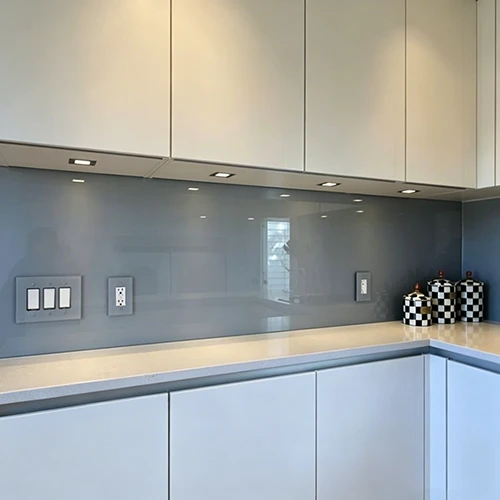
This is probably the most common use. A back painted glass splashback behind a stove or countertop creates a continuous, waterproof surface that wipes clean in seconds. No grout lines to scrub, no porous tiles to stain.
Bathroom walls and shower panels
In wet areas, back painted glass works as a wall cladding. The non-porous surface resists moisture and does not grow mold. It also reflects light, which helps smaller bathrooms feel brighter.
Commercial interiors
Offices, retail stores, and hospitality projects use back painted glass as feature walls, reception desk fronts, and elevator paneling. The ability to match a brand color exactly is a big reason it shows up in commercial fit-outs.
Cabinet doors and furniture
Some furniture manufacturers use back painted glass as door inserts or shelf surfaces. The solid color finish adds a contemporary look without the texture of wood or laminate.
Know More About Painted Glass Related post: "What Is Back Painted Glass? Production, Applications And Sourcing Guide"
How to Specify Back Painted Glass
If you are ordering panels for a project, there are a few details that make a difference.
Color matching
Tell the supplier if you need a specific RAL or Pantone color. Most factories can match standard color systems, but it helps to provide a physical sample if the color is critical.
Glass thickness
For splashbacks, 6mm is usually sufficient. For large wall panels or shower enclosures, 8mm or 10mm provides more rigidity.
Tempering
If the panel is going into a kitchen near a stove or a bathroom wet area, ask for tempered safety glass. The paint is applied before tempering so the coating survives the furnace process.
Luck Glass: Back Painted Glass Manufacturer
At Luck Glass, we produce back painted glass panels for architects, contractors, and trade buyers. Our range includes standard colors, custom RAL matching, and low-iron options for lighter shades. All panels are cut to size, edge-finished, painted, and inspected in-house before shipping.
We work on project-based orders rather than small retail quantities. Whether you need kitchen splashbacks for a residential development, feature wall panels for an office fit-out, or custom colored glass for a retail space, we can handle the color matching, tempering, and packaging requirements. Our team can also recommend the right glass thickness and finish based on your application.
If you are comparing suppliers, we can send color samples so you can see the finish in your own lighting. Talk to our team about your next project, or start by downloading our catalog to see the full range of colored glass options.
Related post: "How Does Back Painted Glass Work? Production, Performance And Applications Guide"
Common Questions
Is back painted glass the same as lacquered glass?
They are very similar. Both involve a painted or lacquered layer on the back of glass. The terms are often used interchangeably, though "lacquered glass" sometimes refers to a specific coating system used in Europe.
Can back painted glass be cut after painting?
No. All cutting, drilling, and edge work must be done before the paint is applied. Post-paint cutting would chip the coating and expose the clear glass underneath.
How do you clean back painted glass?
Use a soft cloth and non-abrasive cleaner. Avoid scouring pads or harsh solvents, which can damage the coating over time.
Does back painted glass fade?
When produced with quality coatings and properly cured, back painted glass is resistant to UV fading. Direct, prolonged sunlight over many years can affect lighter shades, which is why premium suppliers use UV-stable paints.
Related post: "Is Lacquered Glass Good For The Kitchen? Benefits, Cost And Sourcing Guide"
Final Thoughts
Back painted glass looks simple from the outside - just a sheet of solid color - but the process matters. The glass has to be clean enough for the coating to bond, the paint has to be applied evenly across large panels, and the curing has to be controlled so the finish lasts. Get any of those steps wrong, and you end up with peeling edges, uneven color, or a surface that yellows within a year.
For most residential and commercial projects, the key is to order from a factory that handles the whole process in-house - cutting, washing, coating, curing, and tempering - rather than a middleman who farms out the painting. That is how you get a consistent finish across all panels, and how you avoid the color mismatches that come when different batches are painted at different facilities.
Request a custom quote for your glass project