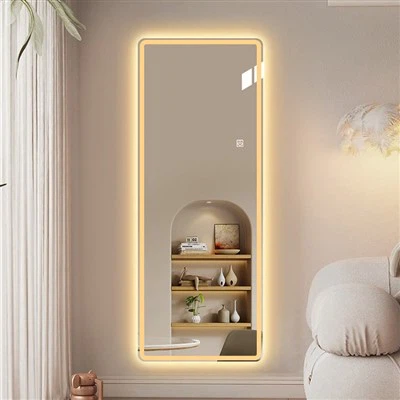
Short answer: decorative glass is any glass modified for appearance rather than just transparency, and it is commonly grouped into five families - acid-etched glass, frosted glass, painted glass, fabric glass and textured glass. Each changes light, privacy and surface character in a different way, so the right choice depends on where the panel goes and what it needs to do.
At Luck Glass these five families sit across our decorative and obscure ranges, and they are often combined - for example an acid frosted glass panel that is also a frosted glass panel. This guide walks through each type, how it is made, and where it fits best.
What Is Decorative Glass?
Decorative glass is glass whose surface, color or structure is changed to give it a designed look rather than plain clarity. The change may be a finish, a coating, an embedded layer or a rolled pattern. What unites the five types below is that they are chosen for how they look and behave, not just for letting light through.
Explore the pattern side ⇒ Related Post: "What Are Some Different Types Of Glass Patterns? "
The Five Main Types Of Decorative Glass
Acid-Etched Glass
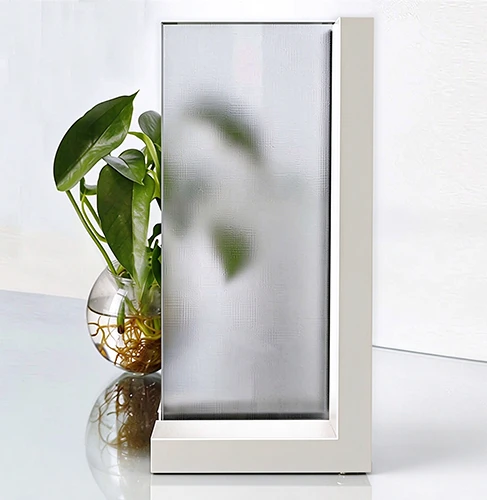
Acid-etched glass is produced by treating a cut and finished glass surface with a controlled acid solution, which leaves a smooth, even satin finish. The result reads as a uniform, non-reflective field that softens light without a visible pattern. It is a popular base for acid frosted glass, where the etched face gives both privacy and a clean, modern appearance. Acid-etched panels are often specified for office partitions, shower screens and cabinet fronts where a consistent finish matters more than texture.
A detailed introduction to acid-etched glass→ Related Post: "What Is Acid Etch Glass? Types, Applications And Selection Guide"
Frosted Glass
Frosted glass is the broad term for any semi-opaque glass that transmits light while hiding detail behind it. It can be made by acid etching, sandblasting or a rolled pattern, and a frosted glass panel is one of the most common forms used in doors, bathrooms and meeting rooms. The level of obscuration varies, so specifiers match the density to the location - a light frost for a hallway, a deeper one for a shower.
Learn more about frosted glass→ Related Post: "Is Frosted Glass Breakable? Types, Safety And Uses"
Painted Glass
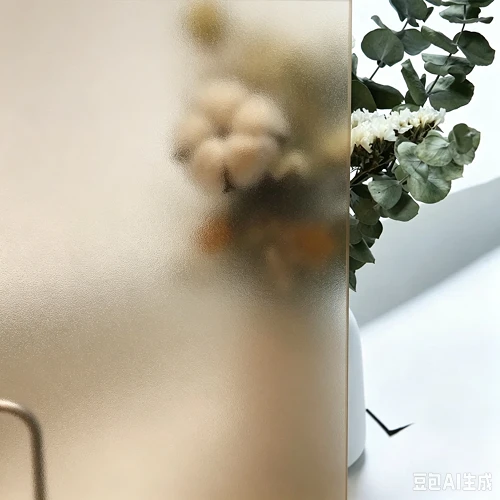
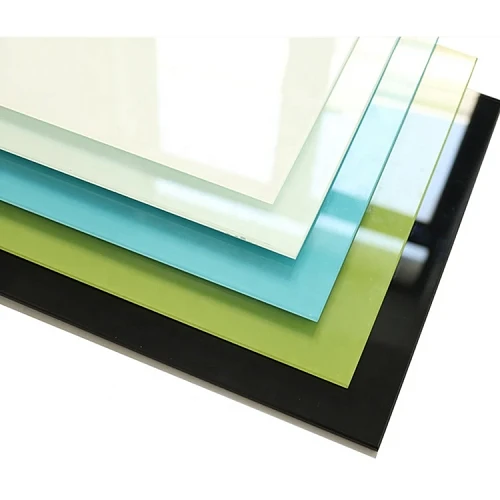
Painted glass - also called back painted glass or lacquered glass - has a durable color coating applied to the back face and cured, often during tempering. The front stays clear and glossy while the back carries a solid color, so the panel reads as a clean colored surface that still reflects light. It is widely used for kitchen splashbacks, furniture fronts and feature walls where an exact color is needed. Brown painted glass, for example, is a common splashback choice because it pairs well with wood and stone.
A detailed introduction to painted glass→ Related Post: "What Is Back Painted Glass? Production, Applications And Sourcing Guide"
Fabric Glass
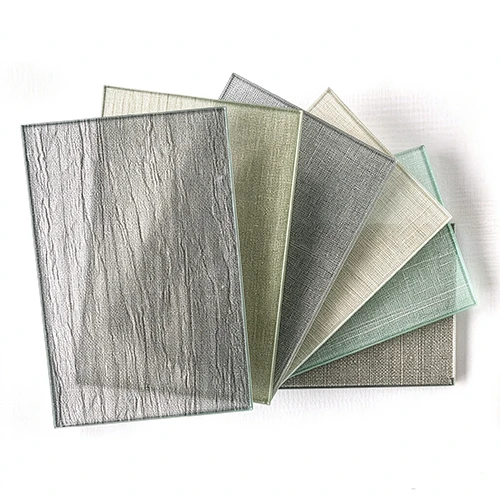
Fabric glass, or fabric laminated glass, bonds a layer of textile - woven cloth, mesh or metallic thread - between two sheets of glass, sealed with an interlayer such as PVB or EVA. The fabric stays visible and protected, giving a tactile, designed surface that plain glass cannot match. Because it is built as a laminate, it also carries safety behavior, which makes it suitable for doors, partitions and balustrades.
A detailed introduction to Fabric Glass→ Related Post: "What Is Fabric Glass"
Textured Glass
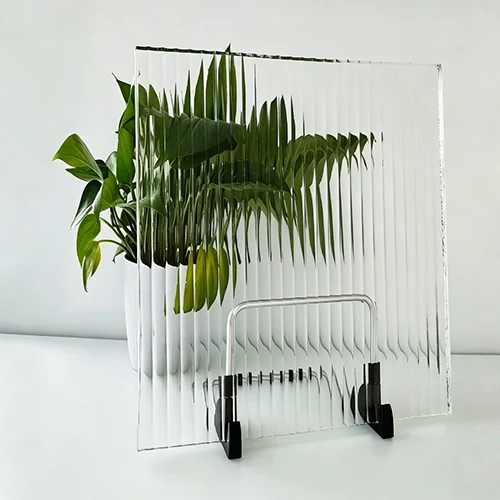
Textured glass carries a pattern embossed into the surface - reeded, rain, grid, diamond or other reliefs - that breaks up the path of light. Textured glass panels let daylight through while blurring what is behind them, and the pattern adds character that a flat frosted finish does not. They are a strong choice for doors, screens and any location where both privacy and a designed surface are wanted.
A detailed introduction to Textured Glass→ Related Post: "What Are The Different Types Of Textured Glass?"
Choosing The Right Type: Usage
The five types overlap, and many projects use more than one. The practical way to choose is by location and the job the glass must do - start from the room or the wall, then match the finish to the level of privacy, light and wear it will face.
Residential Uses
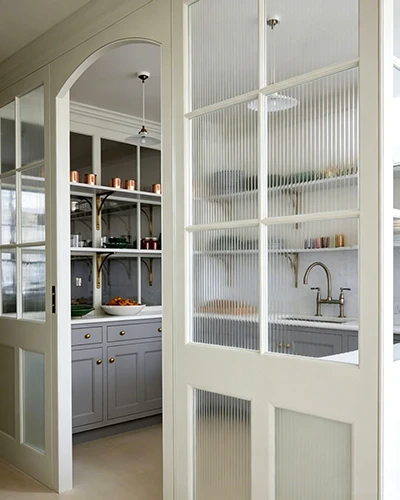
In homes, a residential glass company typically suggests frosted or acid-etched panels for bathrooms and bedroom doors, painted glass for kitchen splashbacks and furniture, and textured or fabric glass for feature partitions and cabinets. The goal is usually privacy plus natural light, with a finish that fits the interior palette.
Room by room, the logic stays consistent. Bathrooms and shower enclosures favor frosted glass panel or acid-etched glass because it softens the view while still letting daylight into small, often windowless spaces. Bedroom and study doors use the same finishes to keep a room quiet and private without blocking light. Kitchens lean toward painted glass - a colored panel splashback behind the hob wipes clean easily and can be matched to cabinetry, while a brown or neutral tone sits comfortably against stone and timber. Living areas and stair landings are wheretextured glass panels and fabric glass earn their place: a reeded or fabric partition divides the space, filters glare, and adds a tactile surface plain glass cannot. Cabinet and wardrobe fronts can take almost any of these finishes, so the choice there comes down mostly to color and cleaning access.
Across residential work, most panels are seen up close and touched often, so the finish should resist finger marks, stay easy to maintain, and read as part of the room rather than a separate statement.
Commercial Uses
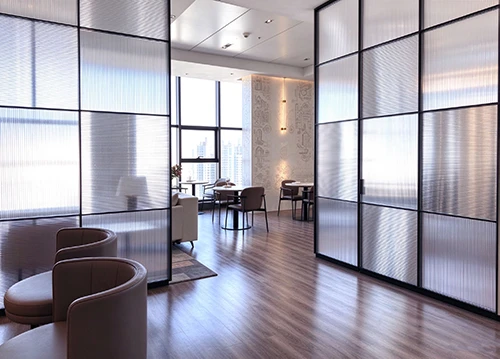
For offices, hospitality and retail, commercial glass manufacturers tend to specify acid-etched and textured glass for partitions and meeting rooms, painted glass for branding walls, and fabric glass for premium feature installations. Larger projects need consistent batches across many panels, so the manufacturing process and quality control matter as much as the appearance.
In an office, the priority is usually acoustic privacy and a calm visual field, which makes acid-etched partitions and meeting-room glazing common; textured glass panels add interest to reception screens without becoming a distraction. Hotels, restaurants and bars use painted glass for bar fronts and branding walls where an exact brand color is non-negotiable, and fabric glass for lobby feature walls that need depth and a sense of craft. Retail fits glass into displays, change rooms and frontages, where durability and cleanability matter alongside appearance. Healthcare and education specify obscured glazing for dignity and focus, with the same finish repeating identically across wings and floors.
Because commercial orders are rarely a single panel, the glass supply company you brief should demonstrate batch consistency and a documented quality process, not just one good sample. A colored sheet that matches in the showroom but drifts panel to panel will show across a long run of doors, so confirming repeatability up front protects the whole installation.
Plan thickness for the location ⇒ Related Post: "What Thicknesses of Glass Are Available? A Quick Guide"
Working With A Glass Supply Company
When you source decorative glass, the partner you choose affects both the result and the lead time. A reliable glass supply company should be able to explain how each finish is produced, show samples, and confirm safety treatment for your location. For ongoing or project work, decorative glass suppliers and obscure glass suppliers who handle acid-etched, frosted, painted, fabric and textured types under one roof save you from coordinating several mills. For larger contract jobs, commercial glass manufacturers with documented quality and batch consistency are the safer choice.
What To Send In A Brief
A clear brief speeds up sampling and quoting. Share the application, panel size, glass thickness, finish type for each panel, color if painted, safety requirement and the quantity. The more specific the brief, the closer the first sample will be to what the project needs.
Know your manufacturer's credentials ⇒ Related Post: "China's Leading Glass Manufacturers Updated 2026"
Finish, Safety And Care Notes
Most decorative glass specified for doors, low walls and balustrades is supplied as safety glass. Frosted and acid-etched finishes are usually applied to glass that has already been tempered, while fabric glass and several painted builds are laminates by construction. The right safety route is set by the location and the applicable glazing code, and it must be decided before production - every cut, drill and edge polish is completed on the annealed glass first, because a tempered or laminated panel cannot be reworked afterwards.
Cleaning And Maintenance
Care varies with the finish, but none of the five types needs a special coating. Acid-etched and frosted faces are cleaned like ordinary glass, though they show fingerprints and water marks more readily, so a soft cloth with a standard glass cleaner is the routine. Painted glass is wiped on the clear front face only. Textured and fabric panels look as though they would trap dust, but the relief is easy to wipe and should be cleaned gently rather than scrubbed so the pattern stays crisp. In busy commercial and residential settings this low-maintenance behavior is a large part of the appeal.
Pairing Types In One Project
Mixing types within one scheme is normal and often the best result. A bathroom might pair a frosted shower panel with a painted splashback; an office might run acid-etched partitions beside a fabric feature wall. The aim is to keep the obscuration level and color temperature aligned so the different finishes read as one designed language instead of a mismatch. When the same project draws on several finishes, confirm that batch consistency holds across all of them before delivery.
Discuss your project requirements with our team
Frequently Asked Questions
What are the different types of decorative glass?
The five main types are acid-etched glass, frosted glass, painted glass, fabric glass and textured glass. Each changes appearance, light and privacy in a different way, and they are often combined in a single project.
What is the difference between acid-etched and frosted glass?
Frosted glass is the broad category for any semi-opaque finish; acid-etched glass is one way to make it, using a controlled acid treatment for a smooth satin surface. Acid frosted glass therefore describes an etched frosted panel.
Is painted glass the same as back painted glass?
Yes. Painted glass, back painted glass and lacquered glass are the same product family - a colored coating on the back face, cured (often during tempering) for a durable finish.
What is fabric glass made of?
Fabric glass bonds a textile layer - woven cloth, mesh or metallic thread - between two glass sheets with a PVB or EVA interlayer, so the fabric is permanently sealed inside.
Which decorative glass gives the most privacy?
Textured and deeper frosted finishes hide the most detail, while acid-etched and light frosted panels soften without fully screening. The right level depends on the location and lighting.
How do I choose a decorative glass supplier?
Look for a glass supply company that explains each process, provides samples, confirms safety treatment, and can supply multiple types consistently for larger projects.