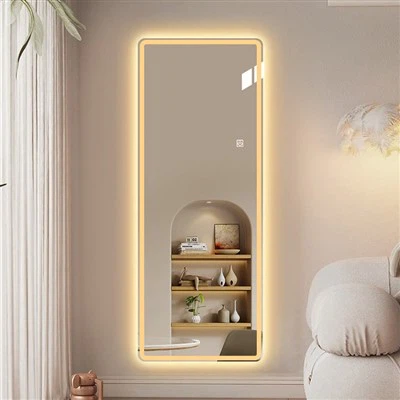
Stand in front of a museum painting behind ordinary glass, and you'll see the artwork - but you'll also see yourself, the ceiling lights, and the room reflected back at you. Step in front of the same painting behind anti-reflective glass, and the reflection disappears. The painting seems to hang there with no glass between you and it. That difference - that feeling of the glass stepping aside - is what separates anti-reflective glass from normal glass. They're both transparent, they're both made of silica, and they both do the basic job of letting light through. But once you look past the surface, they perform in fundamentally different ways. Here's what actually changes when you switch from normal glass to anti-reflective glass.
The Most Obvious Difference: Reflection
The first thing anyone notices is the reflection. Ordinary clear glass reflects about 8% of incoming light - 4% from each surface - which is enough to create a mirror-like image under bright lighting. That's why windows show your reflection on a sunny day, why display cases compete with the room, and why picture frames under gallery lights turn into framed mirrors.
Anti-reflective glass cuts that reflection dramatically. Through a multi-layer thin-film coating, residual reflection drops to under 1% per surface, and in high-end configurations like AR Reflection Free Glass, to under 0.5%. At that level, the reflection is so faint that most people don't notice it at all - the glass appears to vanish, and the object behind it becomes the only thing the eye registers.
What Causes the Reflection Difference
Normal glass reflects light because of the difference in optical density between air and glass. When light crosses that boundary, some of it bounces back. Anti-reflective coating introduces nanometer-thin layers between the air and the glass, each with a carefully controlled refractive index. Light reflecting off the top of the coating and light reflecting off the bottom travel slightly different distances, arrive out of phase, and cancel each other out through destructive interference. The result isn't a glass that absorbs or blocks light - it's a glass that lets more light pass through because less is bounced back.
Related post: "Is anti-reflective glass worth it? Long-Term Value, Applications and Art Glass Performance"
Light Transmission and Clarity
Because less light is reflected, more light passes through anti-reflective glass. Ordinary clear glass transmits roughly 85-90% of visible light, with the remaining 10-15% lost to reflection and absorption. AR coated glass pushes transmission to 97-99%, which means the object behind it appears brighter, more vivid and more detailed.
That difference matters a lot in display contexts. A painting behind normal glass looks slightly dimmed and washed out by glare. The same painting behind anti-reflective glass shows its true colors, its deep blacks and its fine brushwork. A product in a retail case behind normal glass competes with reflections of the store interior. Behind anti-reflective glass, the product stands on its own. The extra few percent of light transmission isn't just a number on a spec sheet - it's the difference between a view that's good enough and a view that's genuinely clear.
Color Accuracy and Edge Tint
Normal float glass has a subtle green edge tint caused by iron impurities in the silica. On thin panes it's barely noticeable, but on thicker glass or at edges it gives everything a slightly greenish cast. Anti-reflective glass is often produced on low-iron glass substrates specifically to eliminate that tint, so colors come through neutrally. For art display, color accuracy is critical - a painting that looks slightly green behind the wrong glass isn't being presented as the artist intended. AR Reflection Free Glass uses low-iron substrates combined with the anti-reflective coating to deliver neutral color across the full visible spectrum.
Related post: "What Is AR Coated Tempered Glass? Anti-Reflective Coating, Safety Strength And Applications"
Discuss your project requirements with our team
Appearance and Visibility
Walk past a normal glass storefront on a sunny day and you'll see a mix of what's inside and what's reflected outside. The window acts like a partial mirror. Walk past an anti-reflective glass storefront and the interior is fully visible - the merchandise, the layout, the lighting - with almost no reflection of the street or the sky. That's not a stylistic choice; it's the optical difference between 8% reflection and 0.5% reflection.
How They Behave Under Different Lighting
Under bright direct light, the difference is most dramatic. Normal glass turns into a near-mirror, and seeing through it is frustrating. Anti-reflective glass stays clear, because the light that would have bounced back is instead transmitted through. Under diffuse indoor lighting, normal glass is perfectly usable - you can see through it, there's just some soft reflection. Anti-reflective glass still looks better, but the gap narrows. At night, the roles reverse: normal interior windows reflect the warm interior light, while anti-reflective windows still transmit the exterior view more clearly. This is why museums and galleries - where lighting is controlled and critical - specify anti-reflective glass as standard, while ordinary exterior windows get by with normal glass.
Durability and Maintenance
Normal glass is tough, predictable and easy to clean. It's been made the same way for over a century, and everyone knows how to maintain it. Anti-reflective glass adds a surface coating that requires a bit more care. The coating is durable - bonded to the glass at the molecular level, it doesn't peel or wear off under normal use - but it can be scratched by abrasive cleaners or scouring pads, and harsh chemicals can degrade it over time.
In practice, anti-reflective glass is cleaned the same way as normal glass: soft cloth, standard glass cleaner, no abrasive pads. The difference is that you wouldn't use a scourer or a solvent-based cleaner on either, and anti-reflective glass is simply a bit more sensitive. Well-made AR glass includes a protective top layer that handles regular cleaning without issue, and in museum and commercial installations that follow proper maintenance protocols, anti-reflective panels stay clear for decades.
UV Protection
Normal glass blocks some UV radiation - roughly 75% of UVB and very little UVA - which is partial protection but not enough for sensitive artwork. Anti-reflective glass designed for museums and art display adds integrated UV-blocking layers that filter up to 99% of ultraviolet radiation. That's a significant difference for protecting paintings, works on paper, textiles and photographs from light-induced fading. It's also why non reflective museum glass is specified not just for clarity but for conservation.
Related post: "Is there glass that doesn't reflect? Non Reflective Tempered Glass for Safety and Clarity"
A Side-by-Side Comparison
When you stack the two materials next to each other, the differences are clear across every performance dimension.
| Characteristic | Normal Glass | Anti-Reflective Glass (AR Reflection Free) |
|---|---|---|
| Surface reflection | ~8% total (4% per side) | Under 0.5% per side |
| Light transmission | ~85-90% | 97-99% |
| Appearance under bright light | Mirror-like reflection | Nearly invisible |
| Color accuracy | Slight green edge tint | Neutral, low-iron substrate |
| UV blocking | Partial (~75% UVB) | Up to 99%+ (museum grade) |
| Scratch resistance | Excellent | Good (avoid abrasives) |
| Best for | Windows, barriers, general use | Art, museums, retail, display |
| Safety options | Tempered, laminated available | Tempered, laminated, UV options |
The table makes the trade-off clear: normal glass is the default, the affordable, the proven choice. Anti-reflective glass is the upgrade for when the glass is in front of something people actually need to see.
Related post: "Is there a way to make glass non-reflective? Methods, Applications and Bronze Anti Sun Glass Guide"
Luck Glass: Your Anti Reflective Glass and Glass Supply Partner
Luck Glass is a professional architectural and decorative glass manufacturer producing a full range of anti-reflective and standard glass products, including AR Reflection Free Glass, Anti Reflective Art Glass, non reflective museum glass, AR coated tempered glass, anti-glare tempered glass, Bronze Anti Sun Glass, dichroic glass, laminated glass, reeded glass, frosted glass, back painted glass and more. The company supplies global anti reflective glass company networks, commercial glass suppliers, chinese glass manufacturers, glass supply company partners, building material traders and brand clients, with advanced vacuum coating, tempering, laminating and finishing production lines.
Luck Glass produces AR Reflection Free Glass with multi-layer anti-reflective coatings on low-iron substrates, delivering residual reflection as low as 0.3% per surface and light transmission up to 99%. Museum-grade configurations include 99%+ UV blocking for artwork conservation. All anti-reflective glass can be tempered for safety, laminated for added security, or produced with both-side coating for maximum clarity. Full customization is supported across thickness (4mm-12mm), panel size, edge finishing, hole drilling and cutouts, with maximum panel sizes up to 3660mm x 2440mm.
Whether the project calls for AR Reflection Free Glass for museum display cases, non reflective museum glass for a gallery exhibition, anti-reflective storefront glass for a luxury retail brand, or bulk supply from a glass supply company for a large-scale cultural development, Luck Glass delivers consistent coating quality, technical support on optical performance and conservation requirements, and reliable lead times for both sample orders and full-container shipments.
Frequently Asked Questions
Q: What is the main difference between anti-reflective glass and normal glass?
A: The main difference is surface reflection. Normal glass reflects about 8% of incoming light, creating visible mirror images. Anti-reflective glass uses a multi-layer thin-film coating to reduce reflection to under 1%, making the glass nearly invisible and letting more light through to the object behind it.
Q: Is anti-reflective glass just normal glass with a coating?
A: It is normal glass with a precision multi-layer coating, but the coating is engineered to nanometer tolerances and applied in a vacuum chamber. The result is a glass that behaves optically very differently from uncoated float glass - with much lower reflection, higher transmission and better color accuracy, especially when paired with a low-iron substrate.
Q: Can anti-reflective glass be tempered?
A: Yes. Anti-reflective glass can be fully tempered for safety applications, including museum display cases, storefronts and partitions. The coating must be formulated to survive tempering temperatures, and a reputable manufacturer will validate the process to ensure both optical and safety performance.
Q: Does anti-reflective glass block UV?
A: Standard anti-reflective glass reduces visible-light reflection but doesn't automatically block UV. Museum-grade Anti Reflective Art Glass adds integrated UV-blocking layers that filter up to 99% of ultraviolet radiation. If UV protection is needed for art or sensitive displays, specify a configuration that includes it.
Q: Is anti-reflective glass worth the difference?
A: It depends on the application. For art display, museum cases, high-end retail and any situation where people are actively looking through the glass at something that needs to be seen clearly, anti-reflective glass is worth it. For ordinary windows, privacy applications and functional glazing, normal glass is usually sufficient.
Final Thoughts
Normal glass and anti-reflective glass are both glass - they're both transparent, both solid, both made from the same basic raw materials. But the experience of looking through them is completely different. Normal glass does its job and gets out of the way, but under bright light it reminds you it's there, with reflections of the room, the lights and yourself. Anti-reflective glass goes further: it actually disappears. The reflection drops to a fraction of a percent, the colors come through neutral, and the thing behind the glass - the painting, the artifact, the product - is what you see. That's not a marginal improvement. It's a different category of material. Normal glass is the default. Anti-reflective glass is what you specify when the glass is not the point - the thing behind it is.
Related post: "The Top 10 Glass Manufacturers in China For 2026: A B2B Buyer's Guide"