The recommended interlayer thickness for laminated glass depends on the glass construction, panel dimensions, intended application, and required safety performance. Common PVB interlayer thicknesses include 0.38 mm, 0.76 mm, 1.14 mm, and 1.52 mm.
For many conventional laminated glass products, 0.38 mm and 0.76 mm are commonly used options. However, applications such as glass railings, overhead glazing, and structural glazing may require thicker or specialized interlayers.
Choosing the right thickness is important because the interlayer helps bond the glass sheets together, retain broken glass fragments, and contribute to the overall performance of the laminated glass assembly. This guide explains the available thicknesses and how to select an appropriate option for different applications.
1. What Is the Interlayer in Laminated Glass?
Laminated glass consists of two or more glass sheets bonded together with an interlayer.  This interlayer is typically made from a polymer material, such as Polyvinyl Butyral (PVB), Ethylene Vinyl Acetate (EVA), or an ionoplast material.
The interlayer is positioned between the glass sheets and bonded to them through a controlled manufacturing process. If the glass breaks, it helps hold the fragments together and reduces the risk of broken pieces falling away.
Common interlayer materials include:
PVB (Polyvinyl Butyral): A widely used interlayer for architectural laminated glass, offering glass adhesion and fragment retention.
EVA (Ethylene Vinyl Acetate): Used in decorative and specialty laminated glass, including certain applications involving fabrics, meshes, and other inserts.
Ionoplast Interlayer: A stiffer interlayer option used in applications requiring enhanced structural performance.
The appropriate material depends on the intended application, environmental conditions, processing requirements, and performance specifications.
For more information about decorative glass options, see our related article.
Related Post: "Five Types Of Decorative Glass"
2. Common Interlayer Thicknesses for Laminated Glass
Laminated glass interlayers are available in different thicknesses. The following are common PVB options used in architectural and decorative glass production.
| Interlayer Thickness | General Description |
|---|---|
| 0.38 mm | Common standard option for conventional laminated glass |
| 0.76 mm | Frequently used where a thicker interlayer is specified |
| 1.14 mm | Used in selected applications requiring a thicker interlayer |
| 1.52 mm | Commonly specified for certain demanding safety and architectural applications |
| 2.28 mm and above | Used in selected specialized or engineered glass constructions |
These values are common nominal thicknesses rather than universal recommendations. Actual availability and suitability depend on the interlayer manufacturer and the complete glass construction.
2.1 0.38 mm Interlayer
A 0.38 mm PVB interlayer is a common option for conventional laminated glass. It is used in various architectural applications where the specified glass construction meets the relevant safety and performance requirements.
It may be suitable for certain interior glazing, windows, and decorative glass products. However, the panel dimensions, glass thickness, and applicable safety standards must still be considered.
2.2 0.76 mm Interlayer
A 0.76 mm PVB interlayer is another widely used option. Compared with a single 0.38 mm layer, it provides a thicker bonding layer and may be specified for applications with more demanding post-breakage or design requirements.
It is commonly encountered in architectural laminated glass constructions, including certain doors, partitions, and railing systems.
2.3 1.14 mm and 1.52 mm Interlayers
Thicker interlayers, such as 1.14 mm and 1.52 mm, are used when the project specification calls for a different laminated glass construction.
They may be considered for larger panels, particular safety requirements, or applications where additional interlayer thickness is required by the design. However, a thicker interlayer does not automatically make every laminated glass assembly stronger or safer. The glass type, interlayer material, bonding performance, and structural design all matter.
For specialized applications, the required interlayer should be confirmed through technical calculations and the relevant product specifications.

3. How to Choose the Right Interlayer Thickness
There is no single interlayer thickness suitable for every laminated glass project. The following factors should be evaluated before production.
3.1 Glass Thickness and Panel Dimensions
The thickness of the glass sheets and the overall panel dimensions influence the design of a laminated glass assembly.
Larger panels, longer unsupported spans, and different glass configurations may require a different interlayer specification. The final selection should be based on the complete glass make-up rather than interlayer thickness alone.
3.2 Application and Installation Location
Different applications have different performance requirements.
For example, decorative interior glass panels may have different requirements from glass railings, overhead glazing, or exterior architectural installations.
The installation location also matters. Exposure to moisture, temperature changes, wind loads, and other environmental conditions can influence the choice of interlayer material and glass construction.
3.3 Safety and Structural Requirements
Laminated glass is often selected for safety-related applications because the interlayer helps retain broken glass fragments.
However, the required level of safety depends on the application and applicable building regulations. For structural glazing, balustrades, and overhead installations, the complete glass assembly must be evaluated against the relevant design loads and safety standards.
3.4 Interlayer Material
PVB, EVA, and ionoplast interlayers have different properties and processing requirements.
For example, ionoplast interlayers are generally stiffer than conventional PVB, which can be important in certain structural applications. EVA is also used for decorative laminates and specialty products.
The material and thickness should be selected together rather than treating thickness as the only deciding factor.
4. Recommended Interlayer Thickness for Different Applications
Although the final specification must be determined by the project requirements, the following overview explains how interlayer selection varies across common applications.
| Application | Interlayer Selection Considerations |
|---|---|
| Interior laminated glass | 0.38 mm or 0.76 mm PVB may be considered, depending on the design |
| Decorative glass door panels | PVB or EVA, depending on the decorative design and processing requirements |
| Decorative interior glass panels | PVB or EVA, depending on the glass construction and decorative inserts |
| Fabric mesh laminated glass | Interlayer material and thickness must suit the mesh, bonding, and lamination process |
| Laminated glass railing | Requires project-specific structural design and an appropriate interlayer system |
| Overhead laminated glass | Requires a complete safety and structural assessment, including post-breakage performance |
These are general selection considerations, not approved thickness specifications for individual projects.
4.1 Laminated Glass for Doors and Interior Partitions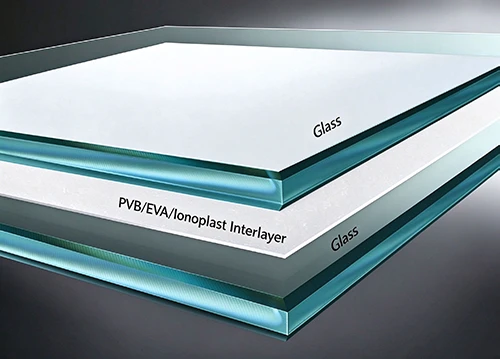
Laminated glass is commonly used in interior doors, office partitions, and decorative glass installations.
For these applications, the interlayer selection depends on the glass thickness, panel size, required safety performance, and whether the glass includes decorative materials.
When designing decorative glass door panels, it is important to consider both the visual appearance and the compatibility of the interlayer with the selected glass and inserts.
4.2 Fabric Mesh Laminated Glass
Fabric mesh laminated glass combines glass sheets with a decorative mesh or fabric layer enclosed between them.
Unlike conventional clear laminated glass, this product requires additional consideration of the insert material, its thickness, surface characteristics, and compatibility with the interlayer.
EVA is used in some decorative laminating processes involving fabrics and other inserts, although the suitable material depends on the specific product and manufacturing method.
Before production, manufacturers should evaluate the mesh material, bonding performance, visual requirements, and lamination conditions. Sample production and testing may be necessary to confirm the final result.
4.3 Laminated Glass Railings
Laminated glass railings are used in balconies, staircases, terraces, and other architectural spaces.
Because these panels may serve as protective barriers, their design requires careful attention to structural loads, support conditions, glass dimensions, and post-breakage behavior.
A thicker interlayer or a specialized structural interlayer may be specified in some railing systems. However, the required thickness cannot be determined by a general rule. It must be established through project-specific structural calculations and applicable building regulations.
For railing applications, always confirm the complete glass make-up and installation details with qualified engineers and experienced manufacturers.
For more information about decorative glass applications in different spaces, explore our related article.
Related Post: "Applications & Common Areas Of Use: Decorative Glass"
5. Does a Thicker Interlayer Make Laminated Glass Stronger?
A thicker interlayer does not automatically mean that the entire laminated glass panel is stronger.
Interlayer thickness can influence the behavior of the laminated assembly, including its post-breakage performance and load-sharing characteristics. However, the overall performance also depends on several other factors:
Glass Type: Annealed, heat-strengthened, and tempered glass have different mechanical properties and breakage patterns.
Glass Thickness: The thickness and number of glass sheets affect the stiffness and load-bearing capacity of the assembly.
Interlayer Material: PVB, EVA, and ionoplast have different stiffness, adhesion, and temperature-dependent properties.
Panel Size and Support: The dimensions, span, edge support, and fixing method influence structural performance.
Environmental Conditions: Temperature and moisture exposure may affect the performance and suitability of certain interlayer systems.
Therefore, the best approach is to select the complete laminated glass construction according to its intended use rather than simply increasing the interlayer thickness.
For a broader introduction to the advantages of decorative glass, you can also read:
Related Post: "What Are The Benefits Of Patterned Glass?"
6. What Should You Confirm Before Ordering Laminated Glass?
When working with laminated glass suppliers or decorative glass manufacturers, it is useful to provide detailed project information before requesting production.
Consider confirming the following specifications:
Glass Composition: Number and thickness of the glass sheets.
Interlayer Type: PVB, EVA, ionoplast, or another specified material.
Interlayer Thickness: The required nominal thickness based on the project design.
Panel Dimensions: Width, height, and overall glass thickness.
Processing Requirements: Cutting, polishing, drilling, tempering, or other required processes.
Application: Whether the glass is intended for doors, partitions, railings, decorative panels, or another use.
Applicable Standards: Required safety classifications, structural performance, and local building regulations.
For decorative products, it is also important to confirm the appearance of the finished glass, especially when incorporating fabric mesh, printed designs, or other decorative materials.
Clear specifications help manufacturers assess production feasibility and recommend a suitable laminated glass construction.
For additional inspiration on decorative glass designs, take a look at this guide.
Related Post: "What Are Some Different Types Of Glass Patterns? "
7. Frequently Asked Questions
What Is the Most Common PVB Interlayer Thickness?
Common PVB interlayer thicknesses include 0.38 mm, 0.76 mm, 1.14 mm, and 1.52 mm. Among these, 0.38 mm and 0.76 mm are widely used in conventional architectural laminated glass products.
Is 0.76 mm PVB Better Than 0.38 mm PVB?
Not necessarily. A 0.76 mm interlayer is thicker, but whether it is more suitable depends on the glass construction, application, and required performance. A thicker interlayer should not be considered a universal upgrade.
What Interlayer Is Used for Laminated Glass Railings?
PVB and ionoplast interlayers are among the options used in laminated glass railing systems. The final selection depends on the structural design, support conditions, glass configuration, and applicable safety requirements.
Can EVA Be Used for Fabric Mesh Laminated Glass?
Yes. EVA is used in certain decorative laminated glass processes involving fabric, mesh, and other inserts. However, compatibility depends on the specific materials and manufacturing process. Testing may be needed to verify adhesion and finished appearance.
Does Interlayer Thickness Affect the Total Glass Thickness?
Yes. The interlayer contributes to the overall thickness of laminated glass.
For example, a construction consisting of two 4 mm glass sheets and a 0.76 mm interlayer has a nominal total thickness of approximately 8.76 mm, excluding any additional coatings or surface treatments.
Conclusion
The recommended interlayer thickness for laminated glass depends on the intended application, glass construction, and required safety performance. Common PVB options include 0.38 mm, 0.76 mm, 1.14 mm, and 1.52 mm, with thicker or specialized interlayers available for selected applications.
For decorative glass door panels, interior partitions, and fabric mesh laminated glass, the interlayer must be compatible with the decorative materials and manufacturing process. For laminated glass railings and other structural applications, the complete glass assembly should be evaluated by qualified professionals.
As an experienced glass manufacturer, Luck Glass provides decorative and architectural glass solutions for different project requirements. Contact our team to discuss your laminated glass specifications and explore suitable options for your next project.