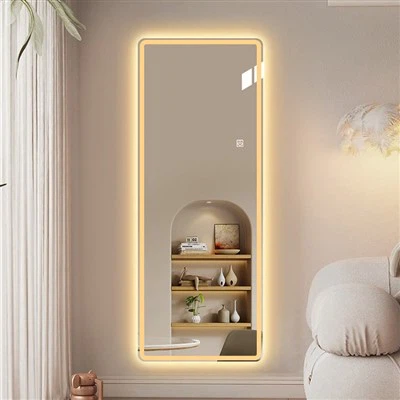
Yes, glass can be made non-reflective, but not to the point of being invisible. A thin film deposited under vacuum cancels much of the light that would otherwise bounce off the surface, so the pane transmits more and reflects far less. The result is sold in many catalogues as Anti Reflective Art Glass, and it is the reason a framed work or a shop display can read without the room reflected over it. "Non-reflective" is a useful shorthand, not a promise of zero reflection - a small residual gleam always remains. The wider family of decorative glass includes several surface treatments, and this one is a coating rather than an etch, which decides both what it can do and where it will fail.
How the coating actually removes reflection
Thin films that cancel light
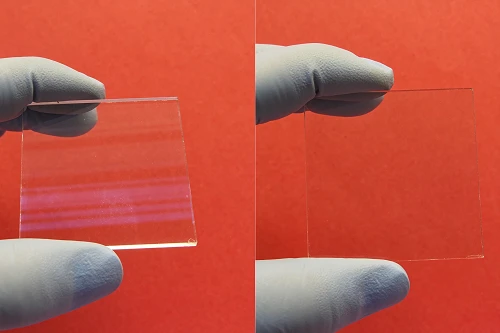
An Anti Reflective glass sheet carries a stack of extremely thin layers, deposited under vacuum, with carefully chosen thicknesses and refractive indices. Light reflecting from one layer meets light reflecting from the next and the two partly cancel each other, so less energy leaves the surface and more passes through. The effect is optical, not cosmetic: nothing is painted onto the glass, and the surface stays smooth and clear. That is why the finish does not soften the view the way an etched or sandblasted pane does.
Where the opposite surface treatment is used instead. ⇒ Related Post: What are the disadvantages of anti-glare glass? Trade-Offs
What "non-reflective" really means
No coating removes reflection completely. A well-built AR pane cuts it to a low residual level, which reads to the eye as almost absent under normal light. Under a strong lamp or a dark room behind the glass, some gleam still appears, and that is expected rather than a defect. Buyers who expect a mirrorless surface in every lighting condition will be disappointed. Write the outcome as "low residual reflection" in the specification, and agree how it will be judged - under which light, at which angle - before the sample is approved.
Why the base glass still matters
The coating changes the surface, but the body of the pane does the rest. A low-iron base lets more light through and keeps the colour of what is behind it neutral; an ordinary clear base adds a faint green tint at the edges. The film also behaves differently on different bases, so a supplier should confirm which combinations they have actually made. Anti Reflective Art Glass is defined by the pairing of coating and base, not by the coating alone.
Discuss your project requirements with our team
What it can and cannot do
Where it works well
The finish earns its place when seeing through the pane is the purpose: gallery frames, museum cases, high-end vitrines, precision displays and the occasional interior partition where glare would break the view. In these settings an Anti Reflective glass sheet lowers reflection without introducing haze, so the object behind it stays sharp. It suits daylit rooms and bright retail spaces especially well, where an untreated pane would throw a second image of the lights across the display.
For how the coated pane compares with the scattering alternative. ⇒ Related Post: Which is better, anti-glare or anti-reflective? How To Choose
Where it falls short
It does not provide privacy. A coated pane stays clear, so anyone on the other side can be seen; where screening is required, a separate frosted or textured element is needed. It is also more delicate than an etched surface. The film sits on the glass and can be damaged by grit, dry wiping or harsh cleaners, so the coated face must be identified and protected through cutting, edging and handling. A buyer who needs a robust high-traffic surface should weigh that before choosing this finish.
How far the effect holds up
The coating does not fade like a printed pattern, but its working life depends on how it is built and maintained. A film sealed on the inner face of a laminated or sealed unit is shielded from daily handling and keeps its performance far longer than one left exposed. An Anti Reflective glass sheet with the coating on the outer face can be marked in months in a busy public area. Ask for the face position and the protection method in writing, along with the cleaning regime the supplier assumes.
What shortens a coating's life and how to check a claim. ⇒ Related Post: How long do anti-reflective coatings last? Lifespan And Care

Can it be combined with safety processing
Tempering and laminating are possible
The coating can be combined with tempering or laminating, but the order matters. A film must either withstand the heat of tempering or be applied after it, and once the pane is coated it cannot be cut again. A Non reflective Tempered Glass panel is therefore a specific build, not a standard sheet with a new name. The same applies within the wider laminated glass family, where the film's face position changes what the finished unit can do. Confirm the full sequence for your exact size and thickness before the order is placed, because not every combination is available from every fabricator.
When the pane also has to meet a safety rating. ⇒ Related Post: Is there anti-reflective tempered glass? Coating And Buyer Checks
What the specification should say
A useful order states the outcome, the base glass, which face carries the coating, the safety treatment and how the coated face will be protected. "Low reflection, maximum transmission" is a better starting line than a catalogue name, because it tells the supplier what the pane must achieve. If the order also calls for strength, name Non reflective Tempered Glass explicitly rather than assuming a standard sheet. Two quotations built against the same written specification - same Anti Reflective glass sheet, same build - can then be compared fairly, instead of comparing a protected sealed unit with a bare exposed pane.
What drives the price
Why the figures differ
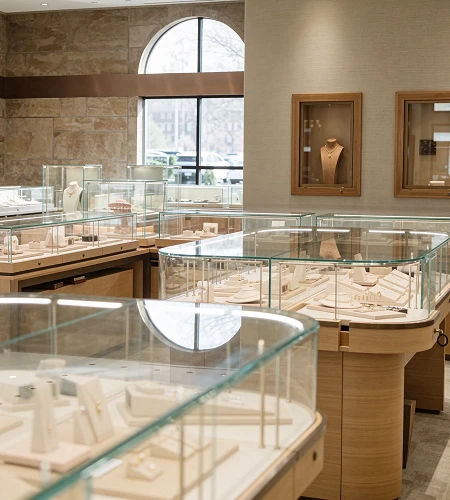
An Anti reflective glass price reflects more than the coating itself. Base glass, panel size, one or two coated faces, edge work, tempering and protective handling all move the number. A build that keeps its optical performance in service costs more than a simpler pane that will be marked early, and that difference is the cost of the result rather than a premium. Any Anti reflective glass price should be read against the build behind it, not as a figure for a name. Compare like for like: ask each supplier to quote against the same specification and the same approved sample before looking at totals.
For the buyer's side of sourcing and comparing quotes. ⇒ Related Post: Where Can I Buy Float Glass? A B2B Buyer's Guide
The sample is the final check
Approve a full-size sample of the exact build and view it under the light of the real space. Check the coated face, the edges and the level of residual reflection at the viewing angle that matters. An Anti Reflective Art Glass sample that looks perfect under a showroom spotlight can show a distracting gleam under a bright office ceiling, so test it where it will actually hang. Once the sample is agreed, keep it as the reference for the whole order.
FAQ
Is non-reflective glass the same as anti-glare glass?
No. A non-reflective pane uses a thin film to reduce the amount of light reflected while keeping the view clear. Anti-glare glass roughens the surface to scatter reflections, which softens them but adds haze. One preserves detail, the other sacrifices some of it. Name the function you need rather than treating the two descriptions as synonyms.
Can glass be completely non-reflective?
No. Even a good AR coating leaves a small residual gleam, most visible against a dark background or under a strong light. The practical goal is low reflection and high transmission, not zero reflection in every condition. Hold an Anti Reflective glass sheet under the lighting it will actually meet and agree how the residual gleam will be judged, so both sides share the same definition of acceptable.
Does the coating wear off?
A deposited inorganic film does not peel or fade like a print, but it can be damaged. Grit, dry wiping, strong solvents and abrasive cleaners can mark the coated face and read as a loss of performance. A film on a protected inner face lasts far longer than an exposed one. Put the cleaning routine in the handover documents for whoever maintains the glass later.
Is it suitable for bathrooms or privacy screens?
Not on its own. A coated pane stays clear, so it does not obscure the view. For a bathroom or any space where privacy is the point, use a frosted or heavily textured glass instead, or combine the clear coated pane with a separate screening layer. Choose the finish for the function the opening actually needs.
Can it be cut or drilled on site?
No. Once the film is applied, cutting, drilling and edge work will damage the coated face. All fabrication must be completed before coating, or the coated face must be protected through every remaining step. This is especially true of Non reflective Tempered Glass, where tempering and coating each fix the next step. Give the fabricator the final dimensions and edge specification up front, and confirm who is responsible for each stage of the build.
A Chinese Glass Supplier For Decorative Projects: Luck Glass
Luck Glass is a glass processing manufacturer focused on the deep-processing of decorative and obscure glass for both residential and commercial projects. Across our ranges we produce acid-etched, frosted, painted, fabric and textured glass, supplied as cut-to-size panels with the finish, color and safety treatment each project needs - tempered, laminated, or a combination of both. Our multiple deep-processing lines support consistent batches across large orders, and we work with distributors, contractors and brands in many countries worldwide. From a private bathroom partition to a multi-floor commercial fit-out, our fabrication is cut-to-size and matched to project drawings.
For a wider view of the supplier landscape behind a coated pane. ⇒ Related Post: A 2026 Outlook On China's Decorative Glass Suppliers And The Rise Of Innovation Leaders
Summary
Glass can be made non-reflective through a vacuum-deposited AR coating, but never perfectly so - the realistic goal is low residual reflection and high transmission. Anti Reflective Art Glass suits galleries, vitrines and displays where a clear view matters more than privacy. It is a coating rather than an etch, so it must be identified, protected and specified by outcome, base, face position and safety treatment. Non reflective Tempered Glass is possible, but the order of coating and tempering is fixed. Judge an Anti reflective glass price against one written specification and a full-size sample under real light.