Anti-glare glass reduces reflections by scattering light at a treated surface, and that same mechanism is the source of every real disadvantage. Non glare glass trades a little sharpness and contrast for a calmer view, so the honest question is not whether it has drawbacks but whether they matter in your setting. The main costs are a softer image, a surface that can show oils and fingerprints, and a finish that varies between batches if it is not tightly controlled. None is a reason to avoid it - each is a reason to specify it with the right expectations.
The Optical Trade-Off At The Heart Of It

Almost every downside follows from one fact: anti glare glass removes glare by spreading reflected light instead of letting it bounce back in one direction.
Softer images and reduced contrast
The surface texture that breaks up reflections also scatters some of the light carrying fine detail. The result is a slightly softer image than clear glass, with lower contrast on fine lines and small text. On a bright reception screen behind non glare glass this is welcome; on a display where crisp detail sells the product it can be a problem. Always judge the effect on a sample held against the actual content, not on an empty panel under showroom lights.
Haze and a slight loss of clarity
Related to softness is haze - a faint milkiness that becomes noticeable when looking through several panels or at a dark background. Non glare glass is not opaque, but it is not optically neutral either. Where a view must stay genuinely sharp, a coated anti-reflective product is usually the better fit; the two solve similar complaints by very different means. That difference is reflected in an anti reflective glass price, which should be compared on its own build.
The two approaches are often confused, and the difference is worth pinning down ⇒ Related Post: "What is reflective glass? Coating, Types And Buyer Checks"
How The Surface Behaves In Daily Use
Optical softness is only half the story. The treated face changes how the glass feels and how it ages in real hands.
Fingerprints, oils and visible marks
A slightly textured surface holds skin oils more readily than polished glass. On constantly touched panels - cabinet fronts, lift interiors, touchscreen surrounds - an etched panel can show fingerprints faster than expected, and cleaning may need to be more frequent. The marks are easier to wipe from a quality surface than from a poor one, so ask the supplier how the finish seals and cleans.
Coated surfaces age differently, and the failure modes are worth knowing ⇒ Related Post: "Does glass paint peel off? Causes And Prevention"
Cleaning and abrasion limits
Textured or etched finishes cannot be treated like ordinary window glass. Abrasives, harsh powders and aggressive pads wear the surface unevenly and can leave shiny patches where the texture has been polished flat. Use a soft cloth and a neutral cleaner, and accept that a matt surface will always need gentler handling. This is the most common source of complaints after installation, and it is almost always a care issue rather than a product failure.
Colour and batch consistency
Because the finish is a surface treatment, small differences in texture depth show up as differences in haze and brightness. Panels from separate runs can look subtly different when fitted side by side. Approve one physical sample and keep a single order within one batch where possible - particularly on a multi-panel wall or a run of doors.
Finish consistency is a recurring theme across decorative glazing ⇒ Related Post: "What Do You Call Patterned Glass?"
Where The Disadvantages Matter Most
The same property that helps in one location works against you in another.  Matching the finish to the setting removes most regret.
Good fits where glare is the real problem
Reception screens, control rooms, framed artwork and brightly lit retail displays all benefit from a surface that kills the hot spot. In these settings a little softness is a fair exchange for legibility, and non glare glass earns its place. Our decorative glass overview groups the surface-treated ranges so the finish can be chosen alongside the base glass.
Poor fits where sharpness is essential
Shopfronts whose job is to display goods, high-resolution signage and premium retail vitrines usually need clarity over glare control. Here an anti glare glass sheet can make the merchandise look dull behind a veil. If reflections are also a problem, a coated low-reflection build is worth comparing before committing to an etched surface.
Wet rooms and high-touch public areas
Bathroom mirrors and shower enclosures are occasionally specified with a matt finish, but the texture traps water spots and shows drying marks more than polished glass. In busy public areas the same surface shows every touch. Neither is a reason to rule it out, but both need a cleaning plan that everyone understands before fit-out. Our patterned glass range is supplied cut-to-size with the finish stated on the drawing, the same approach a matt surface needs.
Framed and display applications have their own conventions worth reviewing ⇒ Related Post: "What is back-painted glass?"
Judging A Sample And A Price Honestly
The final step is to make the trade-offs visible before an order, so the finish is judged on its real behaviour rather than a brochure.
Test against real content and light
Hold the sample in front of the actual display, artwork or facade condition it will serve. Look at it under the lighting level of the finished space and from the angles people will use. A panel that looks excellent in a showroom can haze badly against a bright window, and only a site-like test reveals that.
Judging a finish on site applies to every decorative pane ⇒ Related Post: "Does Textured Glass Face In Or Out?"
Read the specification, not the name
Ask what is actually being supplied: the treatment method, the base glass, the thickness, the edge work and any safety processing. Names alone are unreliable, because an anti glare glass sheet and a coated low-reflection panel can be described with the same words by different suppliers. Our frosted glass range is specified in the same way, with the finish stated on the drawing.
What moves the price
An anti reflective glass price, or a quote for the matt etched equivalent, depends on the base glass, the treatment, panel size, quantity, edge work and safety build. Two quotes only compare if the scope is identical. Request the same written specification from each source and hold one sample as the reference; the lower number is better only when it covers the same finish and the same approved piece.
Sourcing the right fabricator is what makes like-for-like quotes possible ⇒ Related Post: "Where can I buy float glass? A B2B Buyer's Guide"
FAQ
Does anti-glare glass make everything look blurry?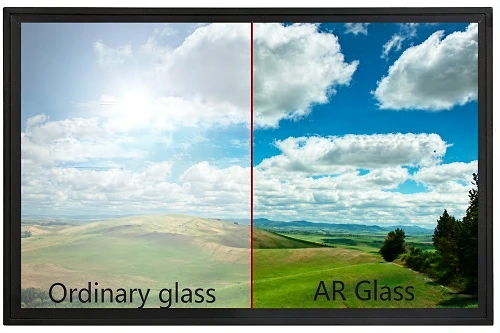
Not blurry, but softer. The treatment scatters light to reduce glare, and that also softens fine detail and lowers contrast slightly. The effect is usually welcome on screens and artwork, but can be a drawback where crisp detail matters. Judge it on a sample in front of the real content.
Is anti glare glass the same as frosted glass?
No. Frosted glass diffuses light strongly for privacy and reads milky. Anti glare glass keeps a clear view while cutting the reflected hot spot, so its haze is far milder. Both are surface-treated, but they solve different problems and should not be substituted for one another.
Does the anti-glare finish wear off?
A proper surface treatment is part of the glass and does not peel like a film. What can happen is uneven polishing from abrasive cleaners, which removes the texture locally and leaves shiny patches. Gentle cleaning with a soft cloth and neutral cleaner keeps the finish even over time.
Can anti glare glass be used on a door?
Yes, provided the build is right. A handled door should be tempered or laminated after all cutting and edging, and the treated face should be specified so the fabricator protects it. Check how the finish reacts to frequent contact, since an anti glare glass sheet shows oils more readily than polished glass.
Door panels have their own thickness and build considerations ⇒ Related Post: "How thick should a glass partition be?"
Why do quotes for this finish vary so much?
Because the underlying scope differs. Base glass, treatment method, thickness, size, quantity, edge work and safety processing all change the figure. Ask each supplier to quote against one written specification and the same retained sample, and an anti reflective glass price becomes a number you can actually compare.
Your Decorative Glass Partner: Luck Glass
Luck Glass is a glass processing manufacturer focused on the deep-processing of decorative and obscure glass for both residential and commercial projects. Across our ranges we produce acid-etched, frosted, painted, fabric and textured glass, supplied as cut-to-size panels with the finish, color and safety treatment each project needs - tempered, laminated, or a combination of both. Our multiple deep-processing lines support consistent batches across large orders, and we work with distributors, contractors and brands in many countries worldwide. From a private bathroom partition to a multi-floor commercial fit-out, our fabrication is cut-to-size and matched to project drawings.
Summary
Anti-glare glass reduces reflections by scattering light, and that same mechanism creates its disadvantages: a softer image, mild haze and a surface that shows oils and fingerprints more readily than polished glass. The finish also demands gentle cleaning and tight batch control to keep haze consistent across panels. It is a strong choice for screens, artwork and bright interiors where glare is the real problem, but a weaker fit where sharp clarity is essential. Test a sample against real content, specify the treatment and base glass in writing, and compare like-for-like quotes. Understood as a set of trade-offs rather than a flaw, non glare glass is easy to specify well.