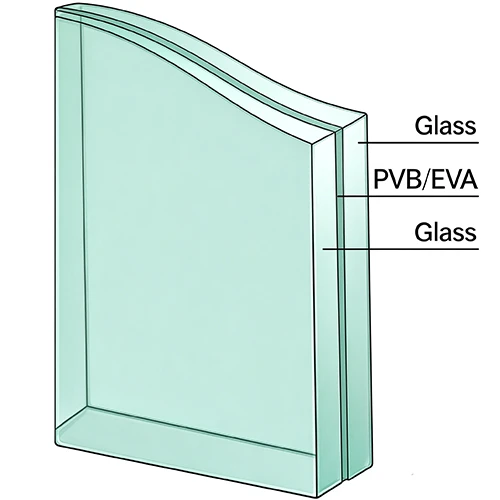
Short answer: fabric glass is made by capturing a layer of textile - woven fabric, mesh or thread - between two sheets of glass with an interlayer such as PVB or EVA, then bonding the assembly under heat and pressure so the layers fuse into one durable panel. The result is glass with a fabric interlayer that keeps the textile permanently suspended, visible and protected.
At Luck Glass, fabric glass sits in our decorative laminated range alongside other interlayer products. This guide walks through what the material is, exactly how it is produced, how it differs from fiberglass, where it is used, and what to check before you order.
What Is Fabric Glass?
Fabric laminated glass - often shortened in conversation to "fabric glass" -  is a safety glass built from two or more glass layers with a decorative textile captured in between. Because the fabric is sealed inside, it cannot fray, discolor or be touched, yet it stays fully visible through the glass. The same idea appears under several names: glass with fabric interlayer, sandwich fabric glass and fabric sandwich glass all describe the same construction, and you will see them used interchangeably by different mills.
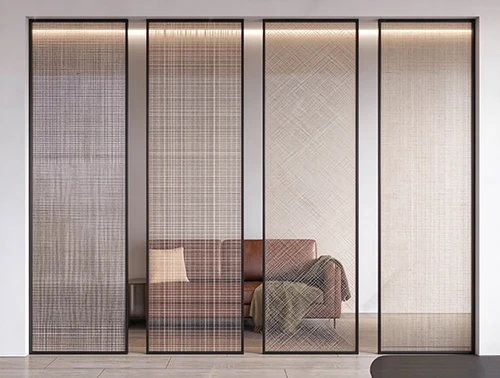
The look is defined by the interlayer. A fine silk weave reads as a soft, almost translucent field; a metal mesh gives a crisp grid; a bold textile creates a strong patterned panel. Colors run from white and cream through grey and beige to deep black, so the material works in both pale minimalist interiors and darker feature walls. The weave, not the glass, is the design.
See the range of interlayer textures ⇒ Related Post: "What Are Some Different Types Of Glass Patterns? A Guide to Textures, Privacy And Various Glass Patterns"
Fabric Laminated Glass vs Fiberglass
A quick clarification, because the terms get mixed up. A fiber glass plate (fiberglass) is a different material altogether: it is made from glass fibers set in resin, and it is opaque, lightweight and used for boards, panels and industrial parts. Fabric laminated glass, by contrast, is real glass - two glass sheets with a textile layer inside. If you need a translucent, glass-faced panel that still shows the weave, you want fabric laminated glass, not a fiber glass plate. Keeping the two separate matters for specifiers, because they meet different codes and perform very differently on site.
How Is Fabric Glass Made?
The production route is a laminating process, not a coating or etching process. Here is the walkthrough from raw sheet to finished panel.
Step 1 - Selecting And Preparing The Glass
Production starts with clear or ultra-clear flat glass, cut to the project size. The surfaces are washed and inspected so no dust or defect is trapped under the interlayer later. Any tempering required for safety is completed at this stage, because a laminated panel is built from already-finished glass - the glass cannot be cut or drilled once it is bonded.
Step 2 - Choosing And Placing The Fabric Interlayer
The defining step is selecting the textile. The fabric - woven cloth, mesh, silk or metallic thread - is laid precisely between the glass layers. Its position sets the final appearance, so alignment and centering are checked before assembly. This is also where a fabric sandwich glass build differs from a plain laminate: the textile is the design, not an afterthought, and the choice of weave drives both the look and the level of visual screening.
Step 3 - Assembly And Cleaning
Glass, interlayer film (PVB or EVA) and the fabric are stacked in a clean room to avoid contamination. The stack is carefully positioned so the weave sits exactly where the drawing specifies, with even margins at the edges. Small alignment errors here become obvious once the panel is fused, so this step gets the most attention on the line.
Step 4 - Lamination Under Heat And Pressure
The assembly goes into a laminating furnace or autoclave. Heat softens the interlayer and pressure pushes it into every gap, bonding the glass and fabric into one solid panel. The fabric is now locked permanently between the layers - it cannot shift, crease or degrade, and it is shielded from moisture, handling and UV on both faces.
Step 5 - Cooling, Inspection And Cutting To Size
After lamination the panel cools under controlled conditions, then is inspected for bubbles, alignment and clarity. Edgework is polished, and the panel is trimmed to the final dimension. Because lamination happens after the glass is already sized and tempered, all cutting and drilling must be finished beforehand.
Understand the base material first ⇒ Related Post: "How Is Glass Made?"
Glass With Fabric Interlayer: Materials And Looks
The character of a glass with fabric interlayer panel comes almost entirely from the textile chosen. Fine weaves give an even, semi-translucent surface that softens light while staying bright. Coarser weaves and meshes read as stronger patterns and provide more visual screening. Metallic-thread fabrics add a reflective highlight that changes with the angle of light, which makes them popular for reception backdrops and feature walls.
Because the interlayer is protected, the design stays sharp for the life of the installation - unlike an applied film or printed surface, there is nothing on the outside to scratch or peel. This is a key reason specifiers choose fabric laminated glass for high-traffic and public locations.
Compare with frosted options ⇒ Related Post: "What Are The Five Types Of Decorative Glass?"
Where Fabric Glass Is Used
Because it is laminated, fabric glass carries the safety behavior of laminated glass: if it is struck, the interlayer holds the fragments together rather than letting them fall. That makes it suitable for locations where people pass close by.
Residential Applications
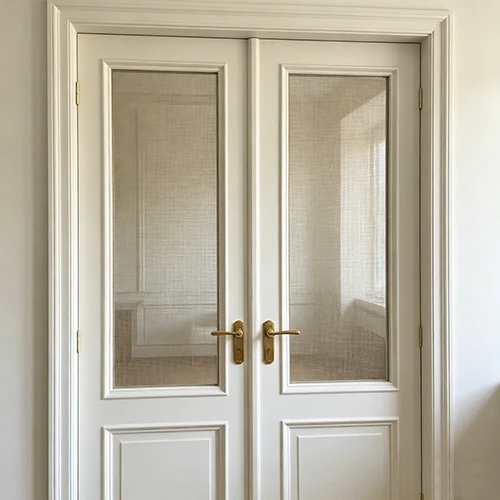
In homes, fabric glass appears in interior partitions, bathroom screens, entry doors and cabinet fronts. A panel in a front door or room divider lets light travel through while adding a tactile, designed surface that plain clear glass cannot offer. It also hides clutter behind a display cabinet without closing the room off.
Commercial And Hospitality
Offices, hotels and retail spaces use it for meeting-room walls, reception backdrops and balustrades. The textile gives branding and warmth without blocking daylight, and the laminated construction meets the safety expectations of public spaces. In hospitality it reads as a premium, custom finish rather than a standard glazing product.
Plan thickness for the location ⇒ Related Post: "What Thicknesses of Glass Are Available? A Quick Guide"
Thickness, Tempering And Safety
Fabric glass is supplied as laminated safety glass. Where codes require safety glazing - doors, low walls, balustrades - the glass is tempered before lamination so the panel meets the relevant standard. Thickness is chosen by the panel size and the support conditions; larger or more exposed panels call for heavier builds. All edgework and any holes are completed before the glass is laminated, because the finished panel cannot be reworked.
Compare with other safety options ⇒ Related Post: "Which Is Better, Tempered Glass Or Laminated Glass?"
Fabric Glass Price: What Affects Cost
Buyers often ask about fabric glass price, and the answer depends on several variables rather than a single number. The type of fabric is the first driver: a standard weave costs less than a rare silk or metallic-thread interlayer. Glass thickness and whether the glass is tempered add to the build. Custom panel sizes, special edgework and low-iron ultra-clear glass each move the price, as does order volume - project quantities are typically priced differently from a single sample panel. The honest approach is to share your application, dimensions, glass thickness and quantity with a supplier and request a project quote, because the combination decides the final cost.
Choosing A Laminated Glass Factory
When you source this product, work with a laminated glass factory that can show how the interlayer is bonded and how consistency is held across a run of panels. Reliable decorative glass suppliers will explain the difference between fabric laminated glass and a fiber glass plate, provide samples so you can judge the weave in your own lighting, and confirm the safety treatment for your location. For contract and public projects, commercial glass suppliers should be able to document compliance and support larger, matched batches so adjacent panels read as one continuous surface.
Know your manufacturer's credentials ⇒ Related Post: "China's Leading Glass Manufacturers Updated 2026: Trends, Quality, And Global"
See more decorative uses ⇒ Related Post: "What Are Frosted Glass For? Design Applications & Buying Guide"
Frequently Asked Questions
What is fabric glass?
Fabric glass is laminated glass made of two glass layers with a textile interlayer - woven fabric, mesh or thread - captured and permanently bonded between them. It is also called fabric laminated glass or glass with fabric interlayer.
How is fabric laminated glass made?
Two cut and (if needed) tempered glass sheets are stacked with the fabric and an interlayer film such as PVB or EVA, then bonded under heat and pressure in a laminating furnace. The result is a single durable panel with the textile sealed inside.
Is fabric glass the same as fiberglass?
No. A fiber glass plate is glass fibers in resin - an opaque composite. Fabric laminated glass is real glass with a textile layer inside. They look and perform differently, and fabric glass keeps the translucent, glass-faced appearance.
Is fabric glass safety glass?
Yes. Because it is built as a laminate, the interlayer holds the glass together if the panel is broken, which is why it is used in doors, partitions and balustrades.
Can fabric glass be tempered?
The glass is tempered before lamination, not after. All cutting, drilling and edgework must be finished first, because a laminated panel cannot be reworked once bonded.
What affects fabric glass price?
Fabric type, glass thickness, tempering, panel size, edgework, ultra-clear glass and order volume all influence cost. A supplier quotes based on your specific combination of these factors.