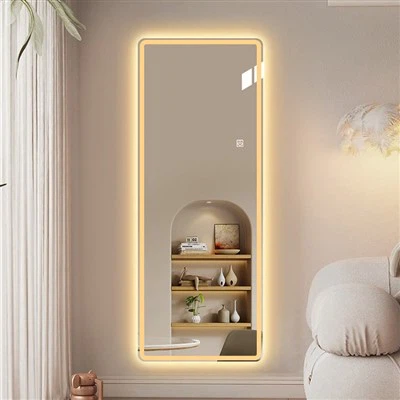
You can tell if a panel is one-way glass by comparing the brightness on both sides: the side facing the brighter room sees a reflection, while the darker side can look through the panel. A true 1 way mirror glass is a half-coated panel that reflects part of the light and transmits part of it, so its privacy depends on lighting conditions rather than an etched or frosted surface. The most reliable check is to darken the room you are standing in and see whether the glass turns transparent.
What one-way mirror glass actually is
A half-mirror that depends on light
A one-way mirror, also called single side view glass or a two-way observation panel, has a thin reflective coating on one face. It returns part of the light toward the brighter side and passes the rest toward the darker side, so people in the bright room see a mirror while observers in the dark room see through.
The panel does not block sight from one side for good. If the darker room becomes brighter than the observation room, the reflection reverses and the people being watched can be seen. A standard mirror reflects most light, clear glass transmits most of it, and one-way mirror glass sits between the two.
Often confused with solar-control coatings, but a different job. Related post: "Three Types Of Reflective Glass"
The different names all describe one coated pane
Buyers meet several labels for the same product: 1 way mirror glass, single side view glass, one-way vision glass, and sometimes the wider reflective glass family. One name points to the mirror-like reflection from the bright side, another to the clear view from one side, but none describe a different material. What changes between offers is the base pane, the coating face, and whether the glass is tempered or laminated.
For how the coating itself works. Related post: "Principle Of One-way Glass And Its Application"
How it differs from frosted privacy glass
Buyers often confuse one-way mirror glass with frosted glass, but the two solve privacy differently. Single side view glass relies on coating and light contrast, so its performance changes with lighting. It suits observation booths, showroom partitions, office meeting pods, and photography rooms.
Frosted, acid-etched, or patterned glass scatters light through a matte surface and keeps a consistent level of obscuration whichever room is brighter, which makes it the predictable choice for shower enclosures, bathroom windows, and entry doors. Tinted or back-painted glass is a third route, reducing transparency through body colour without any two-way effect.
Not the same job as anti-reflective glass. Related post: "Differences In The Application Of Anti-reflective Glass, One-way Glass And Two-way Glass"
Field tests you can do on site
Compare both sides, then darken your room
Stand on each side of the panel and note the room lighting. If your side is bright and the other room is dark, the panel looks reflective; if your side is dim and the far side is bright, it turns more transparent. When both rooms are lit alike, it may read as ordinary smoked glass.
A clear window shows similar transparency from both sides; a half-coated panel shifts noticeably when one room is darkened. To confirm it, turn off or block the lights on your side.
If the panel becomes clearly transparent, you were on the brighter, reflective side.
If it still looks like an opaque mirror with your side dark, it is more likely a conventional mirror or a heavily coated panel.
If it stays only partly clear, a bright light on the opposite side may still be overpowering your room.
This matters most for observation rooms, interview booths, showroom partitions, and changing areas, and it explains why a panel that looks private by day may fail once the lights are on.
Night is where it catches people out. Related post: "Is one-way Glass See Through at Night? Privacy Explained"
Check the finger reflection and any double image
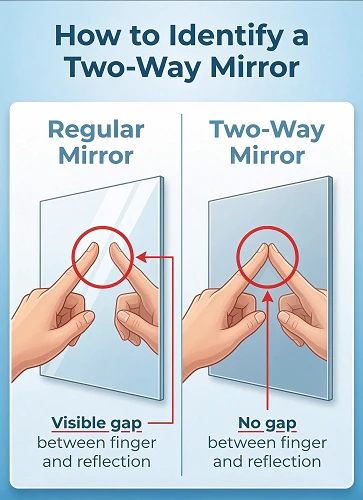
Press a fingertip against the glass. On a normal mirror the coating sits behind the glass, so there is a visible gap between your finger and its reflection. On a one-way coated panel the reflection appears to touch the fingertip, which also shows which face carries the coating and must look onto the bright room.
Then tilt your head while looking at a ceiling light or window. A single dominant reflection points to one coated surface. A second, fainter image offset from the first means light is reflecting from two surfaces, which happens when a coating sits on the wrong face of a laminated build.
Inspect the coating edge
Look at the exposed edge or frame channel. One-way mirror glass often shows a faint grey, bronze, or smoky tint and a slight metallic sheen along the uncovered edge, while a conventional mirror has an opaque silver or copper backing. On a loose sample, a supplier can measure reflectance and transmittance under controlled light.
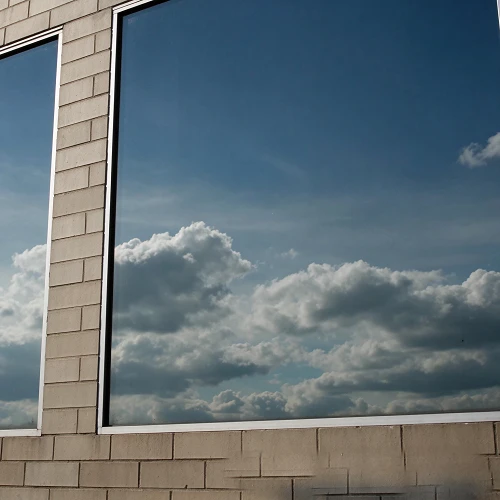
1 way mirror glass from Luck Glass: specifications
Luck Glass supplies 1 way mirror glass as cut-to-size panels for observation rooms, showroom partitions, meeting pods, retail displays, and selected bathroom screens. Each panel starts from clear, bronze, or grey float glass, and one face receives a thin semi-reflective coating that returns part of the light and passes the rest.
The coated face is marked on every panel so the installer places it toward the brighter room. Panels are cut, edged, and drilled to drawing before tempering or lamination, so holes and notches are confirmed before production. For wet areas and public buildings the same panel can be supplied tempered or as laminated glass, with the coating protected inside the build.
Because the effect depends on light contrast, Luck Glass reviews room layout and lighting with the buyer before recommending this product over frosted privacy glass, and can send a sample from the production run to test in the real room.
| Item | Options |
|---|---|
| Base glass | Clear, blue, green, gray, bronze |
| Thickness | 2, 3, 4, 5, 6, 8, 10, 12, 15, 19, 22 mm |
| Coating | Half-mirror reflective layer on one face, marked for installation |
| Light performance | Partial reflectance with partial transmittance, confirmed per coating lot |
| Processing | Cut to size, polished edges, holes and notches finished before tempering |
| Safety build | Tempered or laminated on request |
| Standards | ISO 9001 factory system, CE marking |
| Customisation | Panel sizes, shapes, edge work, and laminate build |
These panels suit sites where daytime separation matters more than all-hour privacy: reception walls facing a street, meeting rooms beside a brighter corridor, retail display windows, and observation rooms.
Where bathroom one way glass can and cannot be relied on
Bathroom one way glass is sometimes proposed for shower screens, spa partitions, and changing rooms, but it needs careful evaluation. A one-way panel works only when the bathroom remains the darker side relative to the space beyond it. In a typical home bathroom the light is on while the hallway outside is dim, so the person outside sees a mirror-like surface. If the hallway is brightly lit and the bathroom light is low, visibility can reverse.
For wet areas, builders usually prefer obscure or frosted glass because privacy then does not depend on who turns on the light. A coated bathroom panel should also be assessed for condensation, cleaning, tempered safety requirements, and durability in humid air.
A shower screen is its own decision. Related post: "Type Of Glass Commonly Used in Bathrooms"
What to ask a one way glass manufacturer
A supplier's answer to a few direct questions tells you mor e than a product photo. This is where a one way glass manufacturer proves whether it controls the process or simply resells a name.
Coating method and fabrication order
Ask whether the reflective layer is deposited under vacuum or applied as a film, and which face must look onto the bright room. A deposited layer is part of the glass surface and cannot peel; a film is a separate layer with its own care requirements. Cutting, edging, and drilling happen before tempering, so order cut-to-size panels to the final drawing and ask for the coating face to be marked on every piece.
Safety treatment and batch consistency
Confirm whether the glass meets the tempered or laminated safety standard the project requires, because the coating does not make glass stronger or weaker. Then request a sample from the same run as the order and view it under project lighting. A manufacturer that can describe how it checks reflection level and coating face batch to batch is talking from experience.
How Luck Glass prepares one-way and privacy panels
Luck Glass is a glass processing manufacturer focused on deep-processing decorative and obscure glass for residential and commercial projects. Our ranges cover acid-etched, frosted, painted, fabric, and textured glass, supplied cut to size with the finish and safety treatment each project needs. Multiple deep-processing lines support consistent batches across large orders, and we work with distributors, contractors, and brands in many countries.
For one-way and privacy panels, production covers base glass selection, cutting, edge treatment, coating or lamination, and inspection for coating uniformity, edge quality, and dimensions.
Comparing factories, not just products? Related post: "Top 10 Glass Manufacturers & Suppliers in China: An In-Depth B2B Guide"
FAQ
How can I tell one-way glass from an ordinary mirror?
Can one-way mirror glass be seen through at night?
Yes, if lighting changes. One-way glass transmits light from the brighter side toward the darker side, so when interior lights are on and the exterior is dark, the interior may become visible from outside. Privacy depends on keeping the intended brightness ratio between the two rooms.
Which side of bathroom one way glass should face the bright room?
The coated, reflective side should face the brighter room, while the darker observation or display side looks through the panel. Confirm the orientation with the manufacturer before ordering, because coating placement and the glass base change how light and reflection behave in the finished room.
Does one-way glass guarantee shower or changing-room privacy?
Not by itself. If lighting reverses, silhouettes or movement can become visible, and a humid bathroom adds cleaning and durability concerns. For guaranteed privacy, architects usually select frosted, etched, or laminated privacy glass that stays obscured even when the room behind is lit.
Do the different product names mean different glass?
Usually no. Terms built around the view or the mirror effect describe the same partly reflective coated pane. The real differences between offers are the base glass, the coating method, the coating face, and any safety treatment, so compare those lines instead.
One-way glass is identified by behaviour, not appearance: a partly reflective coating plus a light difference makes the lit side mirror-like and the dim side clear. The different names describe the same pane; what changes between offers is the base glass, coating face, and safety treatment. Test any sample under the room's real lighting, and judge a one way glass manufacturer by how clearly it explains its process.