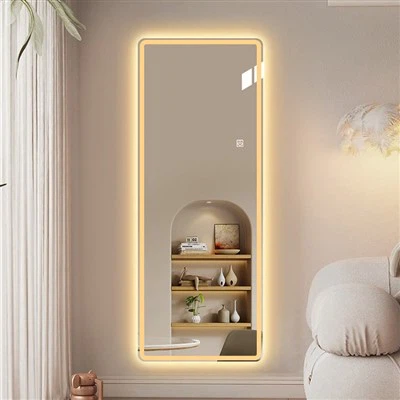
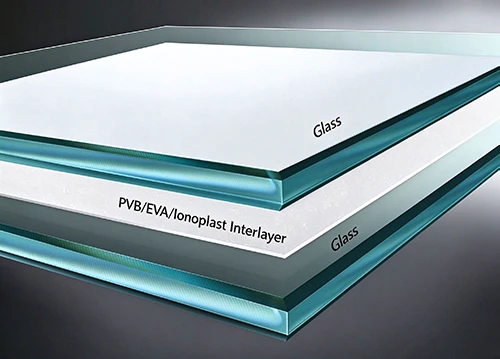
Fabric laminated glass is exactly what it sounds like: two sheets of clear glass bonded together with a layer of fabric sandwiched in between. The fabric - linen, silk, woven mesh, even metal gauze - never floats loose inside. It is sealed between two PVB or EVA interlayer films, pressed flat, and fused in an autoclave until the whole thing becomes one solid panel.
Walk up to one of these panels and the first thing you notice is the texture: a fine woven pattern visible through smooth, flat glass. It reads like fabric behind glass, not paint on glass, not embossed on the surface. That combination - glass on the outside, textile on the inside - is what architects keep using for feature walls, room dividers, and furniture inserts.
How Fabric Laminated Glass Is Made
The process starts with two clear float glass sheets, cut to size and edge-finished before anything else happens. A chosen fabric is laid flat between two sheets of PVB or EVA interlayer film - one film below the fabric, one above it. The stack goes into the autoclave, where heat and pressure squeeze out every air bubble and fuse the layers permanently.
The glass itself stays smooth and flat. The fabric is locked in the middle, protected on both sides. Because the textile is inside the laminate rather than on the surface, it never frays, never fades, and never collects dust the way exposed fabric would. It also stays transparent enough to let light through, while hiding what is behind it. Tempering can be added before the lamination step for safety-critical installations, which means the same panel can be used for doors, shower enclosures, and overhead glazing.
Want to see how the layers actually stack up? Related post: "What Is Sandwich Glass? Fabric Laminated Glass Explained For Commercial Projects"
How It Compares to Other Glass Types
| Fabric Laminated Glass | Clear Laminated Glass | Patterned Glass | |
|---|---|---|---|
| Visual effect | Fabric texture inside | Clear, no pattern | Raised surface texture |
| Surface feel | Smooth flat glass | Smooth flat glass | Textured to the touch |
| Light transmission | Diffused, decorative | Clear | Diffused |
| Acoustic privacy | Good | Good | Moderate |
| Safety when broken | Stays stuck to interlayer | Stays stuck to interlayer | Shards can detach |
The key difference from patterned glass is surface versus inside. Reeded, water, and bamboo pattern glass have the texture pressed into the glass itself. Fabric laminated glass has a perfectly smooth face, and the texture is hidden between two sheets. That smooth face is easier to clean, and it cannot be scratched off over time.
Common Fabric Choices
Natural woven fabrics
Linen, cotton, and jute produce a soft, matte, neutral texture. These are the most common choices for residential interiors because they read warm and quiet. A light linen weave diffuses light gently and works well against white walls and timber.
Silk and sheer fabrics
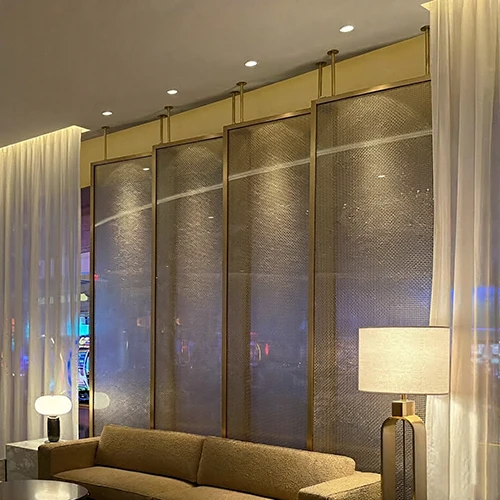
Silk interlayers give a finer, more luminous finish. Light catches the weave differently, which makes the panel feel almost glowing from behind. These are often specified for hospitality lobbies, boutique retail, and feature walls where a subtle luxury tone matters.
Metal mesh and wire
Brass, copper, and stainless steel mesh produce a more industrial, graphic look. The metal carries its own color and weight, which makes the panel read as a design element rather than just a privacy screen. These show up in restaurants, bars, and modern commercial fit-outs.
Colored fabrics
The textile can be dyed almost any tone you want - ochre, charcoal, sage, rust. Because the color comes from the fabric itself, it stays even and translucent, not opaque like back painted glass.
Related post: "What Is Glass Fabric Used For? Fabric Sandwich Glass Applications And Sourcing Guide"
How to Choose the Right Fabric Interlayer
Picking the fabric is half the specification. The same glass base can feel completely different depending on which textile goes inside, and there are a few practical trade-offs worth knowing before you commit.
Density vs privacy
A tightly woven fabric - think dense cotton or metal mesh - gives strong privacy and a more opaque look, but it lets less light through. A loose, open weave keeps the room bright but offers softer privacy. For a bathroom or changing area, go denser. For a living-room divider where the goal is separation rather than secrecy, a lighter weave keeps the space from feeling closed off.
Color that lasts
The fabric color does not fade because it is sealed inside, so you can choose bolder tones than you would on an exposed surface. That said, dark fabrics make a small room feel heavier, while pale linens and sheers read as an extension of the wall. If the panel is large, test the tone in daylight and in artificial light - warm LED can shift a grey weave toward beige, and cool light can make it feel green.
Layering two fabrics
For projects that need more depth, two textiles can be stacked inside the same laminate - a sheer over a linen, or a metal mesh behind a lighter weave. This is how suppliers achieve that layered, almost brushed-bronze look you see in high-end lobbies. It also pushes the price up, so it is usually reserved for feature walls rather than full runs of partitions.
Sample before you order
Fabric looks very different inside glass than it does as a swatch on a table. The PVB film slightly saturates the color and softens the texture, so always ask for a sealed sample panel - not just a fabric sample - before approving a large order.
Where It Gets Used
Residential interiors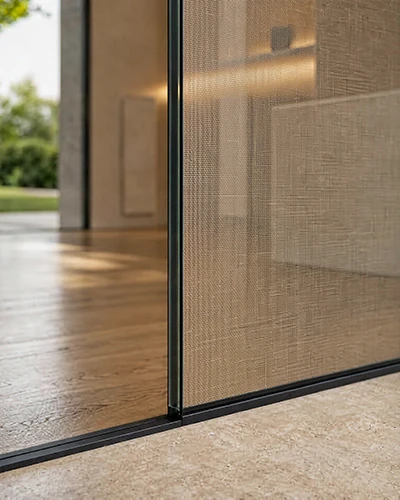
Homeowners use fabric laminated glass for room dividers, wardrobe doors, shower screens, and feature panels beside a bed or staircase. The fabric texture gives privacy without killing light, which solves the problem of small rooms that need separation but cannot handle a solid wall. In an open-plan living area, a floor-to-ceiling divider separates the kitchen from the lounge while still letting natural light travel through; in a bedroom, a wardrobe front with a linen weave hides hanging clothes without making the room feel like a storage unit. It also works well as an inset panel beside a freestanding bathtub, where a fully clear glass feels too cold but a tiled wall feels too heavy.
Commercial spaces
Offices, hotels, restaurants, and retail stores use fabric laminated glass for meeting-room partitions, lobby feature walls, bar fronts, and elevator backdrops. Because the panel can be made to size and the fabric chosen to match a brand palette, it works as both a divider and a design statement. A hotel lobby, for example, might use a bronze metal mesh panel behind the reception desk to add depth without covering the wall; a restaurant might line the private dining room with a sheer linen weave to soften sound and create intimacy. In offices, it solves the problem of open-plan glare: staff get visual privacy, but daylight still reaches the back of the floor.
Furniture and cabinetry
Table tops, shelf inserts, cabinet doors, and display cases take fabric laminated glass well. The smooth top surface is easy to wipe, while the fabric layer underneath adds depth that plain glass cannot. It is a popular choice for coffee tables, retail display counters, and wardrobe doors where the client wants something more distinctive than solid laminate.
Healthcare and education
It is also specified for corridors, nurse stations, and classroom windows where glare reduction and privacy matter, but the space still needs to feel open and clean. The smooth, non-porous face is easy to sanitize, which is a practical advantage over exposed fabric wall coverings.
Wondering how strong the panel actually is? Related post: "How Strong Is Laminated Glass? Strength, Impact Resistance And Sourcing Guide"
Safety and Performance
Like all laminated glass, fabric laminated glass holds together when it breaks. The shards stick to the interlayer film instead of showering the floor, which is why it is approved for doors, shower enclosures, and overhead glazing. It also dampens sound better than monolithic glass of the same thickness, because the fabric and interlayer absorb vibration.
Acoustic performance is one of the quieter benefits: a fabric core laminated panel reduces outside noise noticeably compared with a single sheet of clear glass. That matters in open-plan offices, beside busy streets, and in bedrooms near main roads.
Luck Glass: Fabric Laminated Glass Manufacturer
At Luck Glass, we produce fabric laminated glass panels for architects, contractors, and trade buyers. Our range covers natural woven fabrics, silk sheers, metal mesh, and custom-colored textiles, all sandwiched between two clear glass sheets and autoclaved to order. We can temper the outer layers for safety-critical installations, cut panels to exact dimensions, and match the fabric to your design palette.
We work on project volumes rather than single retail sheets, which means every panel comes off the same line with consistent clarity and no trapped bubbles. If you are comparing laminated glass suppliers or need to buy glass in bulk for a fit-out, we can send sample swatches so you can judge the weave and tone under your own lighting. Talk to our team about your project, or start by downloading our catalog to see the full fabric range.
Not sure when to specify laminated vs other options? Related post: "When Should Laminated Glass Be Used? Application Scenarios, Safety Benefits And Sourcing Guide"
Common Questions
Is fabric laminated glass see-through?
It is semi-transparent. Light passes through, but the fabric layer blurs fine detail, so it provides privacy while keeping the space bright.
Can the fabric get wet or moldy?
No. The textile is fully sealed between glass and interlayer film, with no air or moisture reaching it.
How do you clean it?
Like any glass: a soft cloth and mild glass cleaner. Abrasive scrubs are not needed and can damage the smooth face.
Is it suitable for bathrooms?
Yes, when the outer glass is safety-laminated and the edges are properly sealed. It is a popular choice for shower screens and vanity walls.
Related post: "What Is The Difference Between Monolithic Glass And Laminated Glass? Strength, Safety And Sourcing Comparison"
Final Thoughts
Fabric laminated glass sits in a sweet spot that neither plain glass nor painted glass can reach. It is smooth and wipe-clean on the outside, textured and warm on the inside, and it keeps light flowing while protecting privacy. For a residential divider or a commercial feature wall, it is less a glass product and more a material choice - one that happens to be made of glass.