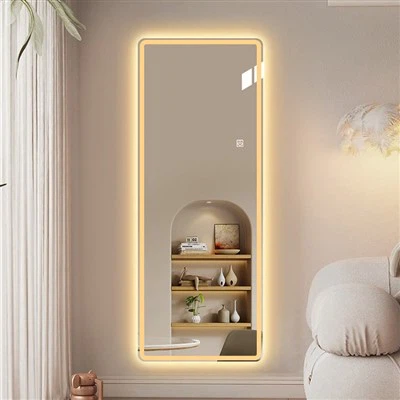
A color mirror is a mirror with a colored appearance, such as bronze, gray, gold, blue, green, or rose. Unlike a conventional silver mirror, which typically provides a neutral reflection, a colored mirror introduces a distinct tint that influences both the reflected image and the overall appearance of an interior. It can serve as a functional mirror while also acting as a decorative surface in residential, commercial, and hospitality spaces.
Colored mirror glass is available in a variety of tones, finishes, and specifications, making it suitable for applications ranging from wardrobe doors and furniture panels to feature walls, hotel interiors, and retail displays. The right color depends on the desired design style, surrounding materials, lighting conditions, and functional requirements.
For architects, interior designers, contractors, and project buyers, understanding the different colored mirrors available helps identify a material that balances appearance, practicality, and project specifications.
What Is Colored Mirror Glass?
Colored mirror glass is mirror glass with a distinctive tint or color effect.  Depending on the product, the color may come from the glass itself, the reflective coating system, or a combination of materials and manufacturing processes.
Some products feature a relatively uniform color, while others combine a tinted surface with decorative treatments or specialized finishes. The final appearance depends on the product's construction, the glass specification, the lighting environment, and the angle from which it is viewed.
Colored mirrors differ from ordinary mirrors primarily in their visual effect. A standard silver mirror is generally selected when a neutral reflection is preferred. A colored mirror, by contrast, adds a deliberate tone that can coordinate with furniture, metal finishes, wall coverings, stone, and other interior materials.
For example, bronze mirrors can complement warm wood and brass, while gray mirrors may suit minimalist interiors with concrete, stone, or black metal. Blue and green mirrors can introduce a more distinctive accent into contemporary spaces.
It is important to remember that colored mirrors are not necessarily opaque decorative panels. They remain reflective products, although the tint can influence perceived brightness and color accuracy. Their suitability for a particular application should be assessed using the actual product sample.
Related Post: "Colored Mirrors: The Magic Of Lighting Up Space"
What Are the Different Colored Mirrors Available?
There are many different colored mirrors on the market. Each color creates a different visual effect, and the best option depends on the design concept rather than color preference alone.
1. Bronze Mirror
Bronze mirror glass has a warm brown or bronze tone. It works particularly well with natural wood, beige finishes, warm lighting, and brass or copper details. Common applications include wardrobe doors, decorative wall panels, furniture inserts, hotel interiors, and restaurant feature walls. Bronze mirrors are often considered for projects seeking a sophisticated, warm, or vintage-inspired appearance.
2. Gray Mirror
Gray mirror glass offers a neutral, understated appearance. Depending on its tone, it may look charcoal, smoky, or light gray. It is often suitable for contemporary apartments, office interiors, retail displays, and commercial spaces that use monochromatic color schemes. Gray mirrors can complement black metal, polished stone, concrete-look finishes, and cool-toned furniture.
3. Gold Mirror
Gold mirror glass introduces a strong decorative accent. Its appearance may range from subtle champagne tones to more pronounced gold finishes. Designers may use it for feature panels, furniture details, decorative niches, reception areas, and selected hospitality interiors. Because gold can become visually dominant, it is often most effective when coordinated with a restrained palette.
4. Blue Mirror
Blue mirror glass adds a cool, distinctive tone that can become a focal point in a room. Depending on the shade, it may create a subtle contemporary accent or a more dramatic decorative effect. Potential applications include retail interiors, hospitality spaces, furniture panels, and decorative wall installations. Designers should assess the shade under the project's lighting conditions, as artificial and natural light can change the perceived color.
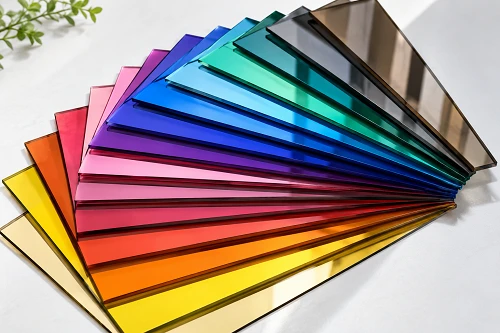
5. Green Mirror
Green mirror glass can coordinate with botanical colors, natural stone, wood, and other organic materials. It may be used in contemporary interiors, boutique retail spaces, restaurants, and decorative furniture. The exact visual effect depends on whether the green is pale, muted, or saturated. Samples help determine how the mirror interacts with nearby materials.
6. Rose or Pink Mirror
Rose and pink mirrors provide a softer decorative appearance. They can be considered for fashion retail, beauty spaces, furniture accents, and selected residential interiors. These colors are often most successful when their intensity is balanced with neutral finishes, such as cream, light gray, or warm white.
7. Black or Dark-Toned Mirror
Dark mirror glass creates a dramatic appearance and may produce a more subdued reflection than a lighter mirror, depending on its specification. It can be used in contemporary reception areas, furniture panels, bar interiors, and decorative wall applications. Buyers should confirm the intended reflectivity and color characteristics before specifying it for functional mirror applications.
Comparison of Common Colored Mirror Options
| Mirror color | General appearance | Suitable design directions | Potential applications |
|---|---|---|---|
| Bronze | Warm brown or bronze | Warm, classic, sophisticated | Wardrobes, hotels, furniture |
| Gray | Neutral or smoky | Minimalist, contemporary | Offices, retail, wall panels |
| Gold | Decorative golden tone | Luxury-inspired, expressive | Reception areas, furniture |
| Blue | Cool and distinctive | Contemporary, artistic | Feature walls, retail interiors |
| Green | Natural or muted | Organic, contemporary | Restaurants, decorative panels |
| Rose | Soft pink or rose tone | Modern, fashion-led | Beauty spaces, furniture |
| Black | Dark and dramatic | Minimalist, high contrast | Bars, reception areas, wall panels |
Actual colors and reflective properties vary by product. Always confirm the available specifications with the manufacturer.
Related Post: "What Color Mirror Is Suitable For A White Dresser?"
How Is Colored Mirror Glass Made?
The manufacturing method depends on the type of colored mirror being produced. Some products use tinted glass as the substrate, while others achieve their color through a specialized reflective coating or additional surface treatments. Although the details vary, several factors influence the finished product.
Glass Substrate
The base glass contributes to the overall appearance and technical characteristics of the mirror. Its thickness, dimensions, and color can affect how the finished product looks and performs.
Reflective Coating System
A mirror's reflective layer creates its mirror function. In colored products, the coating system and its interaction with the glass can influence the final color and reflection. The precise construction varies by product, so buyers should request product-specific technical information rather than assume all colored mirrors use the same structure.
Color and Surface Finish
The final appearance may be uniform or may include a particular sheen or decorative effect. Color consistency is especially important when several panels will be installed together.
Backing Protection and Processing
The mirror backing and edge treatment should be appropriate for the intended application. Cutting, polishing, drilling, and other fabrication operations must be confirmed according to the selected product and its manufacturing limitations. For large commercial projects, buyers should approve samples before production and clarify acceptable color variation, dimensions, processing requirements, and inspection criteria.
Related Post: "How Colored Glass Works"
Where Are Colored Mirrors Used?
Colored mirror glass is used in both residential and commercial interiors. Its decorative value comes from the combination of reflection and color, which can help connect different finishes within a design scheme.
Residential Interiors
In homes, colored mirrors can be incorporated into wardrobe doors, dressing areas, living-room feature walls, decorative cabinets, and furniture. Bronze and gray are common choices for understated schemes, while blue, green, or rose tones may be selected when a more distinctive accent is required. The mirror color should complement the room's permanent finishes and the intended function of the space.
Hotels and Hospitality Projects
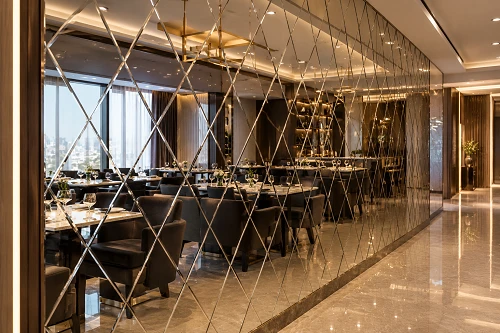
Hotels, restaurants, lounges, and bars often use decorative materials to establish a recognizable interior identity. Colored mirrors may be specified for reception backgrounds, decorative wall panels, furniture, and selected feature areas. The material should be reviewed under representative lighting because reflected light can influence the perceived color and atmosphere of the space.
Retail and Showroom Interiors
Retail stores and showrooms may use colored mirrors to support product displays, reinforce a brand's visual identity, and create visual contrast between display zones. For these applications, designers should consider how the tint affects the appearance of merchandise and reflected colors.
Offices and Commercial Buildings
Colored mirror glass can be incorporated into reception areas, meeting spaces, decorative partitions, and selected wall installations. Gray and bronze tones may be particularly useful when the design calls for a restrained palette. For any partition or architectural installation, the glass construction, support system, safety requirements, and local building regulations must be evaluated separately from the decorative finish.
Furniture and Cabinetry
Colored mirror panels can add depth and visual interest to cabinet doors, display units, and furniture elements. Before fabrication, confirm panel dimensions, edge finishing, mounting methods, and compatibility with the furniture structure.
Related Post: "The Use Of Colored Mirrors"
How to Choose the Right Colored Mirror for Your Project
Selecting colored mirror glass requires consideration of appearance, technical requirements, fabrication, and supply arrangements.
1. Match the Color to the Design Concept
Start with the surrounding materials and the intended visual effect. Warm colors such as bronze may work well with wood and brass, while gray and black can complement more restrained contemporary palettes. For more distinctive colors, request samples and compare them against the actual finishes planned for the project.
2. Evaluate Reflection and Lighting
A colored mirror can affect perceived brightness and color reproduction. Review the product under natural and artificial lighting and consider how it will look from typical viewing positions. If the mirror is intended for dressing or grooming, confirm that its reflective properties are appropriate for that function.
3. Confirm Dimensions and Thickness
The required size and thickness depend on the installation, fabrication method, support structure, and applicable safety requirements. For large panels, verify the maximum available dimensions and transportation limitations before finalizing the design.
4. Check Fabrication Requirements
Confirm whether the selected product supports the required cutting, edge polishing, drilling, shaping, or other processing. Not every mirror specification is suitable for every fabrication method. Providing drawings and installation details early can help the supplier assess feasibility.
5. Review Color Consistency Across Multiple Panels
For projects using several mirrors, establish a sample approval process and clarify expectations for color and appearance. This is especially important for large walls, continuous installations, and repeated furniture components. Ask the supplier how production batches are checked and how panels will be identified and packed for the project.
Working with a Decorative Mirror Manufacturer
Choosing a reliable decorative mirror manufacturer is important for maintaining product consistency and coordinating technical requirements throughout a project.
For architects, contractors, wholesalers, and interior design companies, supplier evaluation should include more than the available color range. Relevant factors include product specifications, processing capabilities, sample approval, quality-control procedures, packaging, and communication during production.
A professional supplier should be able to clarify the available mirror colors, substrate options, thicknesses, dimensions, edge treatments, and limitations of the selected product. Buyers should also establish how the finished panels will be inspected and protected during transport.
When comparing colored mirror suppliers, request product-specific documentation and actual samples where available. Confirm that the selected material matches the approved design and that its construction is suitable for the planned application.
For projects requiring several colors or different panel sizes, it is useful to provide a consolidated specification list and drawings. This helps clarify the required quantities, processing details, packaging expectations, and delivery arrangements before production begins.
Luck Glass supports customers exploring decorative glass solutions for architectural and interior projects. If you are considering colored mirror glass, share your preferred color, panel dimensions, application, and fabrication requirements with the team to discuss suitable available options.
Related Post: "The Top 10 Glass Manufacturers in China For 2026: A B2B Buyer's Guide"
Frequently Asked Questions
1. What is a color mirror called?
It is generally called a colored mirror or colored mirror glass. Depending on the tint, it may also be described as a bronze mirror, gray mirror, gold mirror, blue mirror, or another color-specific name.
2. Do colored mirrors reflect like regular mirrors?
Yes, colored mirrors are reflective, but their tint can influence the brightness and color of the reflected image. The exact effect depends on the product's construction and color.
3. What are colorful decorative mirrors used for?
They can be used for feature walls, furniture panels, wardrobes, reception areas, retail displays, and hospitality interiors. The appropriate product depends on the design and technical requirements.
4. Can colored mirror glass be customized?
Available customization depends on the manufacturer's product range and capabilities. Buyers should confirm color options, dimensions, thickness, edge processing, and other requirements with the supplier.
5. How do I choose a commercial colored mirror supplier?
Review the supplier's product specifications, sample approval process, fabrication capabilities, quality-control procedures, packaging methods, and ability to meet the project's technical requirements.
Final Thoughts
A color mirror combines the reflective function of a mirror with a distinctive tint that contributes to an interior's visual identity. From bronze and gray to blue, green, gold, and rose, different colored mirrors offer designers a range of ways to coordinate materials, create contrast, and develop distinctive decorative surfaces.
For successful project selection, compare actual samples, verify reflective properties, and confirm the glass specifications and fabrication requirements before ordering. Working with an experienced glass supply company can help ensure that the selected material is suitable for both the design concept and the installation.
Related Post: "What Are The Different Types Of Colored Glass?"