Textured glass is private without becoming a wall. It lets daylight and color through but breaks up the detail behind it, so someone on the other side sees a soft, lit glow rather than faces, screens or objects. In practice it sits between clear window glass and a solid panel - private enough for bathrooms, doors and partitions, yet still bright. Exactly how private it feels depends on the depth of the pattern, any tint in the glass, and how strongly the space behind it is lit.
How Private Is Textured Glass, Really?
The honest answer is "mostly." Textured glass is described as translucent, not transparent. Stand in front of a panel and you will see that the room beyond is occupied and lit, and you may catch broad shapes, color and movement. What you will not see is a readable image: no faces, no text, no sharp edges. That is the whole point of the material - it trades a clear view for daylight and a sense of openness.
For most homes and offices, that level of privacy is more than enough. A bathroom with a textured shower screen reads as private the moment the light is on, even though the room is not dark. A partitioned office keeps a floor plate feeling open while stopping passers-by from reading a whiteboard. The glass does the hiding, so you rarely need a blind on top of it.
To see where the "can you see through it" question lands in practice, the sibling guide is useful ⇒ Related Post: "Is Textured Glass See Through? Privacy & Light Explained"
What Changes The Privacy Level?
Not all textured glass hides equally. Four factors decide how much you can actually see through a given panel.
Pattern depth
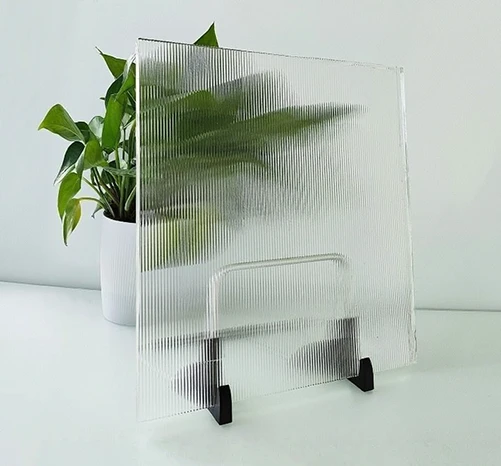
A deep, bold relief - a heavy reeded, grid or diamond design - scatters light far more than a fine satin field. The deeper the pattern, the more the view collapses into a uniform glow. A light ripple or a barely-there etch, by contrast, keeps more of the scene visible while still softening it.
Tint and color
Color does quiet work. A bronze, grey or blue tint dulls what sits behind the glass, adding a layer of privacy that pattern alone does not give. A clear reeded panel is open and bright; the same reeded pattern in a warm bronze tint reads noticeably more closed-off while still transmitting daylight.
Distance and viewing angle
The closer you stand and the more directly you look, the more detail leaks through. From across a room, or at a glancing angle, even a light texture hides plenty. This is why a textured panel works so well on a door or a partition - the natural standoff distance keeps the view vague.
Lighting contrast
A bright object directly behind the glass is easier to make out than a dim one. Judge any pattern under the actual lighting of the install location, not a showroom. A texture that looks private under sales lights can reveal more next to a sunlit window.
Pattern choice drives most of this; the wider pattern family is worth a look ⇒ Related Post: "What is a patterned glass?"
Textured Privacy Glass - Light In, Eyes Out
The phrase textured privacy glass describes the exact job most buyers want done: keep the light, lose the view. The distorted surface hides direct sightlines, which is why it is everywhere in bathrooms, shower enclosures and front-door inserts. You get a brighter room than a curtain or a solid panel would allow, without sacrificing the privacy those spaces demand.
A useful mental model is "eyes out, light in." From inside, you still enjoy a glowing, daylit surface; from outside, you mostly read a soft, featureless panel. For a street-facing entry this means a welcoming pool of light in the hallway without a clear window into the home. For a shower it means no curtain needed, and the textured face also hides water spots better than flat clear glass.
Texture is one route to a private glazing; the broader obscure-glass approach covers the rest ⇒ Related Post: "Can You See Through Obscure Glass? A Privacy Guide"
Textured Glass Panels
Textured glass panels are the workhorse form: large sheets cut and processed to size for walls, screens and infill panels. In offices they form meeting-room partitions that keep a floor feeling open while stopping people from reading a board. In homes they turn a solid hallway into a light-filled passage and give a kitchen backsplash a crafted, dimensional surface instead of a flat one.
Because the panels are supplied cut-to-size, the same pattern can run from a small cabinet front to a full-height wall, tying a room together. Pairing the texture with a light tint or a colored interlayer opens more looks - still textured, but warmer or cooler to suit the scheme. For higher-traffic and wet locations, the integral pattern also wins over an applied film, which would be the weak point in the assembly.
For a named frosted texture you can specify by pattern, Minster is a handy reference ⇒ Related Post: "What Is Minster Glass? A Guide to the Minster Frosted Pattern"
Textured Glass Doors
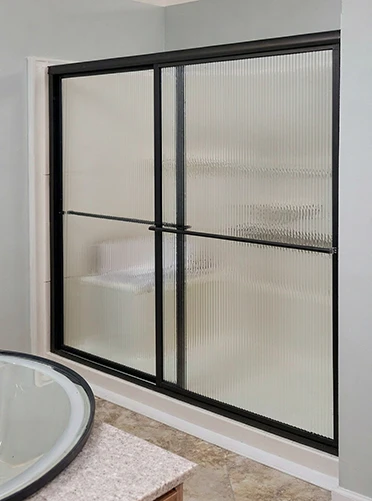
Textured glass doors are one of the most common specifications, and the privacy case is especially strong here. A textured insert in a bedroom, bathroom or entry door lets daylight travel between rooms while keeping the interior hidden - solving the "solid door feels closed off" problem without going fully clear. In a shower enclosure the textured face also resists the water-spot glare you get on flat clear glass, cutting cleaning frequency.
For an entry door, a textured panel turns a windowless facade into a source of daylight while screening the hallway from the pavement. Interior doors gain the same benefit between rooms - a home office behind a reeded door stays quiet and private yet still feels connected to the house. Where safety matters, the panel can be specified as tempered textured glass, keeping both the pattern and the rating.
The full decorative family this sits in is mapped here ⇒ Related Post: "What are the different types of decorative glass? Types and usage"

Decorative Textured Glass - Choosing A Pattern
Decorative textured glass is the category that carries a visible, repeating pattern rather than a flat uniform blur. The common families are reeded (fine vertical or fluted ribs), frosted or acid-etched (an even matte satin), and pressed patterned (waves, florals, geometric grids). Each gives a different level of privacy and a different visual character, so the "right" pattern is the one that matches both the look you want and the privacy the room needs.
A good way to judge a sample is to hold it where the glass will actually sit. A bronze-tinted reeded panel, for instance, shows fine vertical flutes over a warm translucent tone; it reads softer and a little more private than the same clear reeded glass, while still letting the garden or hallway glow through. Pattern, tint, thickness and edge finish can all be matched to the project drawing, so the panel arrives ready to fit rather than "close enough."
For what the surface itself looks like up close, the companion piece covers it ⇒ Related Post: "What does textured glass look like? - Privacy & Door Panels"
Textured Glass vs Clear And Frosted
The quick comparison most buyers need is against the two neighbors:
|
Glass type |
Can you see through? |
Privacy |
Light |
|
Clear glass |
Fully, sharply |
None |
Maximum |
|
Textured glass |
Blurred shapes only |
Good |
High |
|
Frosted glass |
Not clearly |
High |
Soft, even |
Textured glass is the middle option - more private than clear, brighter and more designed than frosted. If you need complete separation, deepen the pattern or add a tint; if you only want to soften a view, a light texture is enough.
For doors and screens where impact safety also matters, the safety route is worth knowing ⇒ Related Post: "What is the difference between laminated glass and normal glass? A Practical Comparison"
About Luck Glass
Luck Glass is a glass processing manufacturer focused on the deep-processing of decorative and obscure glass for both residential and commercial projects. Across our ranges we produce acid-etched, frosted, painted, fabric and textured glass, supplied as cut-to-size panels with the finish, color and safety treatment each project needs-tempered, laminated, or a combination of both. Our multiple deep-processing lines support consistent batches across large orders, and we work with distributors, contractors and brands in many countries worldwide. From a private bathroom partition to a multi-floor commercial fit-out, our fabrication is cut-to-size and matched to project drawings.
FAQ
How private is textured glass?
Textured glass is mostly private. It is translucent rather than transparent, so light and color pass through but faces, text and sharp edges stay blurred. You see that the other side is lit and occupied, not what is on it.
Can you see through textured glass at all?
Yes, but only loosely. Broad shapes, movement and brightness come through; clear detail does not. The further away you stand and the softer the light behind it, the more private the panel appears.
Does a tint make textured glass more private?
Yes. A bronze, grey or blue tint dulls whatever sits behind the glass, adding privacy on top of the pattern. The same reeded design reads more closed-off in a warm bronze tint than in clear glass, while still letting daylight through.
Is textured glass good for bathroom and shower privacy?
Textured privacy glass is one of the simplest ways to get bathroom privacy without losing light. The distorted surface hides direct sightlines, and on a shower screen it also hides water spots better than flat clear glass.
Are textured glass doors private enough for a front door?
A textured glass door gives a street-facing entry daylight while screening the hallway from outside view. For higher privacy, choose a deeper pattern or a tint; for safety, specify tempered textured glass so the panel keeps both its look and its rating.
What is the difference between textured, frosted and clear glass for privacy?
Clear glass shows everything; frosted glass hides the view with an even matte; textured glass sits between them, blurring detail while staying bright and adding a visible design pattern. Textured is the choice when you want privacy plus character and light.