Durability is the quiet question behind every decorative glass specification. You can love the way a textured panel looks in a showroom, but if it scratches easily, stains permanently or cracks under normal use, that beauty becomes a maintenance headache. Pressed glass - the category that includes reeded, hammered, nashiji, square textured and dozens of other rolled patterns - has a reputation for being both decorative and practical. But how durable is it, really? The answer depends on whether it's tempered, how it's installed, and what you expect it to survive. This guide breaks down the numbers and the real-world performance so you can specify with confidence.
The Short Answer: Yes, Pressed Glass Is Durable
Pressed glass is fundamentally the same material as clear float glass - it's just been passed through patterned rollers while molten to imprint a texture on one surface. That means its base strength, hardness and chemical resistance are identical to clear glass of the same thickness and type. The texture doesn't weaken the panel; in most cases, it actually hides minor scratches and wear better than smooth glass because the irregular surface disguises imperfections.
What "Durable" Means for Pressed Glass
Durability in glass isn't one number - it's a combination of factors. Impact resistance tells you whether it survives a knock. Scratch resistance tells you how it handles daily contact and cleaning. Chemical resistance tells you whether soap, hard water and cleaning products leave permanent marks. Lifespan tells you how many years it stays looking good. Pressed glass performs well on all four counts, especially when tempered, but there are nuances worth understanding before you write the specification.
How It Compares to Other Glass Types
Clear glass is the baseline - smooth, easy to clean, but shows every fingerprint and scratch. Frosted glass has a softer surface that can be more prone to marking if not properly sealed. Back painted glass is durable on the glass side but vulnerable if the paint layer gets damaged. Pressed glass sits in a strong middle position: the rolled surface is as hard as clear glass, the texture hides wear, and there's no coating or interlayer to degrade. When tempered, it becomes four to five times stronger than annealed glass and breaks into safe, blunt fragments rather than sharp shards.
Related post: "What are the different types of decorative glass? A Complete Guide to Patterns, Applications and Sourcing"
Strength and Impact Resistance
The single biggest factor in pressed glass durability is whether it's tempered. Annealed pressed glass is fine for low-risk applications like cabinet inserts and decorative panels, but anywhere people might bump into it - doors, partitions, shower enclosures - tempered is the right call.
Tempered vs. Annealed Pressed Glass
Tempering heats the glass to around 620°C and then quenches it with rapid cooling, creating compressive stress on the surface and tensile stress inside. This process makes the glass four to five times more resistant to impact and thermal stress. For pressed glass, tempering works exactly as it does for clear glass - the pattern doesn't interfere with the process. The result is a panel that can survive a hard knock from a shoulder, a falling bottle or a slammed door without cracking.
Annealed pressed glass, by contrast, will break into sharp, dangerous shards on impact. It's cheaper, but it's not suitable for high-traffic or safety-critical installations. Most building codes require tempered glass in doors, shower enclosures, balustrades and any panel within 24 inches of a door swing or walking surface.
Real-World Impact Performance
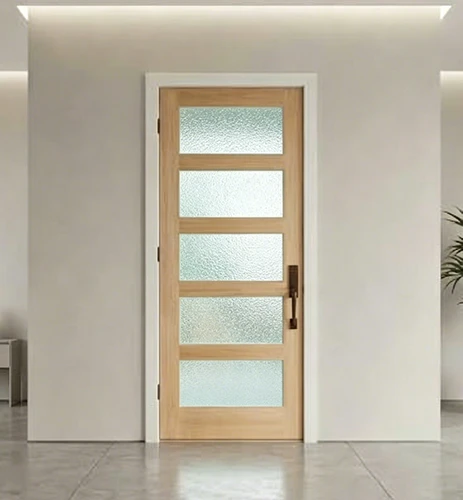
In everyday use, tempered pressed glass is remarkably tough. A sliding door with a Square Textured Glass panel can handle years of daily use - people bumping into it, objects leaning against it, kids running past - without cracking. The texture actually helps here: a patterned surface distributes impact energy slightly differently than a smooth one, and minor surface chips are less visible in the grooves than they would be on clear glass.
The main failure mode for tempered pressed glass is spontaneous breakage from nickel sulfide inclusions, a manufacturing defect that can cause tempered glass to shatter without warning years after installation. Quality decorative glass manufacturers control for this through heat soak testing, which accelerates the process and catches defective panels before they ship. If you're specifying for a high-value project, ask your glass panel manufacturers whether heat soak testing is available.
Related post: "Does frosted glass break easily? Safety, Strength and Applications"
Discuss your project requirements with our team
Scratch and Abrasion Resistance
Glass is one of the hardest common building materials - around 5.5 to 7 on the Mohs scale,  depending on composition. That means it resists scratches from most everyday objects. But it's not scratch-proof, and the textured surface of pressed glass changes the equation in interesting ways.
Why the Textured Surface Matters
A smooth clear glass panel shows every fine scratch as a bright, shiny line that catches the light. On pressed glass, those same scratches fall into the grooves and valleys of the pattern, where they're far less visible. A cabinet door that would look badly scuffed after five years in clear glass might still look nearly new in a decorative textured glass finish. This is one of the underrated advantages of pressed glass - it ages more gracefully than smooth glass in high-contact applications.
That said, the grooves can trap abrasive particles like sand and grit, which can scratch the surface if you wipe the glass with a dirty cloth. The fix is simple: rinse or blow off loose dirt before wiping, and use a clean microfiber cloth rather than a scrub brush or abrasive pad.
Cleaning and Wear Over Time
Pressed glass needs slightly more careful cleaning than clear glass because the texture holds soap scum and mineral deposits. In a shower, hard water can leave chalky deposits in the grooves that become harder to remove over time. A squeegee after each shower and a weekly wipe with a mild, non-abrasive cleaner prevents most buildup. Avoid scouring powders, steel wool and harsh acidic cleaners - they can etch the surface and permanently dull the pattern.
With proper care, pressed glass maintains its appearance for decades. Commercial installations in hotels and offices routinely last 15-20 years or more with only routine cleaning, even in high-traffic areas.
Related post: "What is the lifespan of toughened glass? Durability, Maintenance and Replacement Guide"
Chemical and Moisture Resistance
Glass is inherently inert - it doesn't react with most chemicals, doesn't absorb moisture, and doesn't support mold or bacterial growth. This makes pressed glass an excellent choice for wet areas, but there are still some caveats.
Wet Area Performance
Pressed glass is widely used in shower enclosures, bathroom windows and kitchen splashbacks precisely because it handles moisture so well. Unlike drywall, wood or even some metals, glass doesn't warp, rot, rust or degrade in humid environments. The rolled surface is just as moisture-resistant as clear glass. The only concern is mineral deposits from hard water, which are a cosmetic issue rather than a structural one.
For commercial glass suppliers specifying for high-humidity environments like spas, pool areas and industrial washrooms, pressed glass is one of the most durable options available. It won't delaminate (a risk with some laminated products) and won't peel or bubble (a risk with coated or filmed glass).
Cleaning Products and Chemicals
Most household and commercial glass cleaners are safe for pressed glass. The ones to avoid are hydrofluoric acid-based cleaners (sometimes used for heavy mineral deposit removal) and highly abrasive scrubs, which can etch or scratch the surface. Mild dish soap diluted in warm water is actually one of the best cleaners for pressed glass - it cuts through soap scum without damaging the surface.
Here's how pressed glass stacks up on key durability metrics:
| Durability Factor | Annealed Pressed Glass | Tempered Pressed Glass | Notes |
|---|---|---|---|
| Impact resistance | Moderate | 4-5x stronger | Tempering is critical for doors and partitions |
| Scratch resistance | High | High | Texture hides minor scratches better than clear |
| Moisture resistance | Excellent | Excellent | No warping, rotting or delamination |
| Chemical resistance | Good | Good | Avoid HF acid and abrasive scrubs |
| Breakage safety | Sharp shards | Blunt fragments | Codes require tempered in most wet areas |
| Expected lifespan | 20+ years | 20+ years | With proper cleaning and maintenance |
Related post: "Does patterned glass go on the inside or outside? Installation Orientation and Best Practices"
Lifespan and Long-Term Performance
Glass is one of the longest-lasting building materials in existence - ancient Roman glass is still intact after 2,000 years. Architectural pressed glass won't last that long in a commercial interior, but with reasonable care it can easily outlast the renovation cycle.
What Degrades Pressed Glass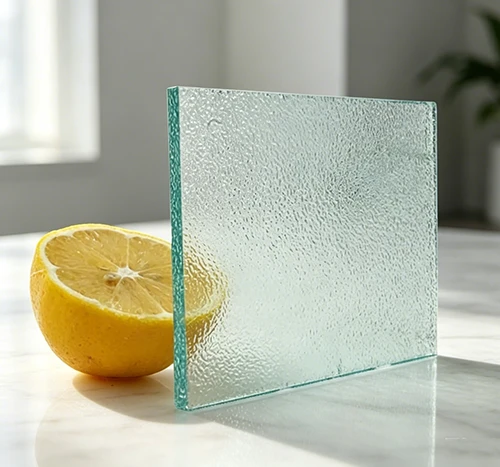
Pressed glass doesn't degrade from age alone. What shortens its functional life is usually one of three things: accidental breakage (a hard impact that cracks the panel), permanent staining (hard water or chemical etching that can't be removed), or changing design tastes (the pattern falls out of favor). None of these are inherent failures of the material - they're external factors. Quality decorative textured glass from reputable glass panel manufacturers will remain structurally sound and visually consistent for decades.
The one manufacturing-related risk is inconsistent pattern quality. Cheap pressed glass can have uneven groove depth, wavy patterns or surface defects that become more noticeable over time as light hits them at different angles. This isn't a durability issue in the structural sense, but it affects how long the installation looks premium. Specifying from experienced decorative glass manufacturers ensures consistent pattern quality that stays looking good.
Square Textured Glass: Quality and Consistency
Square Textured Glass - a pressed pattern with a grid-like or square-based texture - is a good example of how pattern quality affects long-term appearance. A well-made square pattern has uniform cell size, consistent depth and clean lines that stay crisp even in large panel sizes. A cheap version might have uneven squares, distorted lines or pattern drift that becomes obvious when panels are installed side by side. For commercial projects using multiple panels, pattern consistency from a reliable decorative textured glass supplier is what keeps the installation looking intentional rather than patchy.
Related post: "Can you see through reeded glass? Privacy, Light Transmission and Practical Guide"
Sourcing and Installation Tips
Durability starts at the source. A well-made, properly tempered, correctly installed pressed glass panel will outlast a cheap, poorly handled one by years. Here's what to look for when sourcing.
First, confirm tempering. Any panel in a door, shower, partition or balustrade should be tempered to meet ANSI Z97.1 (US) or EN 12150 (Europe) standards. Reputable commercial glass suppliers will provide test certificates and mark each panel with a tempering stamp. Second, ask about heat soak testing for high-value or high-risk installations - it catches spontaneous breakage defects before shipping. Third, check pattern consistency across panels, especially for large runs from wholesale window glass suppliers where multiple batches might be involved.
Installation matters too. Pressed glass should be installed with proper clearance around all edges - typically 2-3mm minimum - to allow for thermal expansion and prevent edge contact with hard surfaces that can cause cracking. A glass partition supplier experienced with textured glass will know the correct clearances, hardware and sealing methods. Poor installation - too-tight fits, missing gaskets, uneven weight distribution - is a leading cause of premature glass failure, even when the panel itself is well-made.
For projects combining multiple glass types - pressed glass partitions, clear windows, back painted splashbacks - consolidating with a single source simplifies quality control and logistics. A glass partition supplier that also manufactures decorative textured glass can ensure consistent tempering quality, pattern matching and delivery timing across the entire project. Bulk orders from commercial glass suppliers bring per-unit costs down, but always compare total landed cost - packaging, shipping, insurance and custom processing included - rather than just the per-square-meter price.
Related post: "Is reeded glass outdated? Why It's Still Trending in 2026 and Beyond"
Luck Glass: Your Pressed Glass Partner
Luck Glass is a professional decorative glass manufacturer specializing in Square Textured Glass, reeded glass, hammered glass,frosted glass, back painted glass, silk-screen printed glass, laminated glass and custom decorative textured glass products, serving global contractors, developers, building material traders and brand clients. The company runs advanced rolling, tempering and finishing production lines with an experienced technical team that keeps quality consistent and delivery on schedule.
Luck Glass offers pressed glass in a wide range of standard and custom patterns, with consistent texture quality across all panel sizes. All pressed glass can be tempered to meet EN 12150 and ANSI Z97.1 safety standards, with uniform pattern depth, stable edge quality and reliable strength. Heat soak testing is available for high-risk applications. Full customization is supported across size, thickness, pattern selection, edge finishing, hole drilling and cutouts, with maximum panel sizes up to 3660mm x 2440mm and typical delivery within 25 working days.
Whether the project calls for Square Textured Glass panels for a hotel bathroom, decorative textured glass for an office fit-out, wholesale window glass suppliers for a residential development, or bulk supply from commercial glass suppliers for a large-scale project, Luck Glass delivers efficient, reliable solutions tailored to each project's specifications and budget. The technical team can also provide guidance on tempering requirements, installation clearances and maintenance protocols for every application.
Products Description
So is pressed glass durable? Absolutely - it's one of the most practical decorative materials you can specify for commercial interiors. It's as strong as clear glass, four to five times stronger when tempered, highly scratch-resistant, impervious to moisture, and chemically inert. The textured surface hides wear better than smooth glass, meaning it stays looking good longer in high-traffic areas. With proper tempering, correct installation and routine cleaning, a quality pressed glass panel will outlast most other finishes in the room.
The real variable is quality. Cheap pressed glass from unreliable sources can have inconsistent patterns, surface defects and tempering issues that undermine its natural durability. Working with experienced decorative glass manufacturers and glass panel manufacturers - and specifying from a reputable decorative textured glass supplier - ensures you get panels that perform as well as they look. Pressed glass isn't just a pretty face; it's a workhorse material that earns its place in any commercial specification.