Walk through any modern commercial building - a hotel lobby, a co-working office, a restaurant, a boutique retail store - and you'll find obscure glass doing quiet, important work. It divides spaces, softens light, protects privacy, and adds texture. But with dozens of patterns available, which one actually gets specified most often? The answer isn't just about looks - it's about the sweet spot where privacy, light transmission, availability and price all line up. This guide breaks down the top patterns, why they're popular, and how to choose the right one for your next project.
The Short Answer: Reeded Glass Leads the Pack
If you count up specifications across residential and commercial projects over the last five years, reeded glass - also called ribbed or fluted glass - is the clear number one. Its fine vertical grooves blur views while letting through 80-90% of available light, and the pattern works equally well in a minimalist office and a traditional hotel bathroom. That versatility is why it's pulled ahead of older favorites like frosted and nashiji.
Why Reeded Is Number One
Reeded glass didn't become popular by accident. It solves a problem that designers and owners care about deeply: how do you get privacy without making a space feel dark and closed off? Frosted glass gives great privacy but dims the room. Clear glass is bright but offers zero privacy. Reeded sits in the middle - you see movement and shapes, but details disappear. That balance is hard to beat.
The pattern itself also has broad aesthetic appeal. Vertical stripes feel contemporary without being trendy, they add rhythm to a flat surface, and they complement everything from black steel frames to warm wood doors. Unlike more decorative patterns like hammered or flora, reeded doesn't fight with other design elements - it enhances them.
The Rise and Rise of Textured Privacy Glass
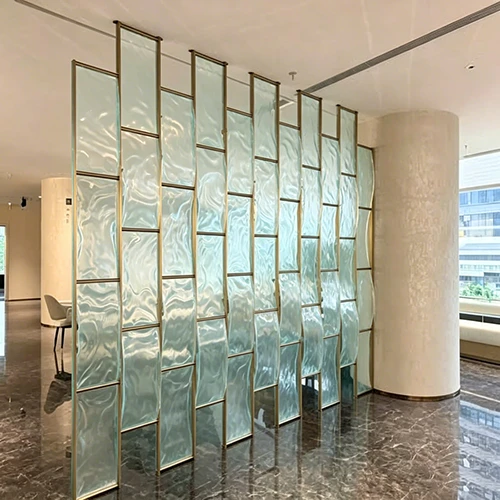
The broader trend driving reeded's popularity is the shift away from flat, all-glass, all-transparent interiors. Designers and owners want texture, warmth and definition in their spaces, and obscure glass patterns deliver all three. A clear glass partition is functional but forgettable. The same partition in a decorative textured glass pattern becomes a design feature - something people notice and remember.
Related post: "What are the different types of decorative glass? A Complete Guide to Patterns, Applications and Sourcing"
The Top Obscure Glass Patterns, Ranked
Popularity shifts over time, but these five patterns consistently show up in commercial specifications. Here's how they compare and where each one works best.
1. Reeded / Ribbed Glass
The current leader. Fine vertical grooves create a soft, streaked blur that preserves light while obscuring details. Used everywhere from shower doors to office partitions to cabinet fronts. Its strength is versatility - it works in modern and traditional settings, with metal or wood frames, in residential and commercial spaces. Pressed glass manufacturers produce it in high volume, which keeps pricing competitive and lead times short.
2. Frosted / Acid-Etched Glass
The longtime standard. A smooth, uniform matte surface that diffuses light evenly and provides strong privacy. Frosted glass is the go-to for bathroom windows, office walls and anywhere you want clean, minimalist obscuring. Its weakness is that it shows fingerprints and smudges more readily than textured patterns, so it needs more frequent cleaning in high-touch areas.
3. Hammered Glass
The decorative option. An organic, dimpled surface that looks like hand-beaten metal, hammered glass provides strong privacy and a rich, textured appearance. It's popular for feature walls, bar fronts, cabinet doors and anywhere you want the glass itself to be a focal point. It's less common for large partition runs because the heavy pattern can feel overwhelming at scale.
4. Nashiji Glass
The understated classic. A fine, pebble-like texture that's subtler than hammered and more organic than reeded. Nashiji has been used for decades in bathroom windows and cabinet doors, and it's experiencing a quiet resurgence as designers look for alternatives to the ubiquitous reeded pattern. It provides good privacy with a softer, less directional look.
5. Satin / Obscure Glass
The budget-friendly workhorse. A light, uniform texture that provides moderate privacy at an accessible price point. Satin glass is widely used in residential windows, basic shower enclosures and cost-sensitive commercial projects. It's not as decorative as the other patterns, but it gets the job done reliably.
Here's how the top patterns compare at a glance:
| Pattern | Privacy Level | Light Transmission | Best For | Popularity Trend |
|---|---|---|---|---|
| Reeded/ribbed | Medium | High (80-90%) | Doors, partitions, cabinets | Rising, currently #1 |
| Frosted/etched | High | Medium (60-75%) | Bathrooms, office walls | Steady, classic |
| Hammered | High | Medium-high (70-80%) | Feature walls, bar fronts | Growing in hospitality |
| Nashiji | Medium-high | High (80-85%) | Bathroom windows, cabinets | Quiet resurgence |
| Satin/obscure | Medium | High (80-88%) | Budget windows, basic showers | Steady, value-driven |
Related post: "Can you see through reeded glass? Privacy, Light Transmission and Practical Guide"
What Makes a Pattern "Popular"?
A pattern doesn't become the most specified by being the prettiest. It becomes popular because it checks multiple boxes at once - and the patterns that lead the market are the ones that balance performance, aesthetics and practicality.
Privacy vs. Light
This is the foundational trade-off. The most popular patterns are the ones that give you meaningful privacy without killing the light. Reeded and nashiji both transmit 80% or more of available light while still obscuring details - that's why they lead. Patterns that block more light, like heavy frosted or deeply hammered, are more specialized and get used in specific applications rather than across the board.
Aesthetic Versatility
A pattern that only works in one design style will never be the most popular. Reeded glass works with industrial black steel, warm oak, minimalist white, and traditional brass. It doesn't impose a style - it adapts. That adaptability is why it shows up in boutique hotels and suburban homes alike. More distinctive patterns like hammered or flora are beautiful but narrower in their design compatibility.
Availability and Cost
Popularity feeds on itself. The most specified patterns are produced in the highest volume by commercial glass manufacturers, which means they're available from more suppliers, in more sizes, at lower prices, with shorter lead times. That makes them even easier to specify, which makes them even more popular. It's a self-reinforcing cycle - and it's why breaking into the top tier requires both a great pattern and serious production capacity from pressed glass manufacturers.
Related post: "Is pressed glass durable? Strength, Lifespan and Maintenance Guide"
Choosing the Right Pattern for Your Project
The most popular pattern isn't always the right pattern for every job. Here's how to match the pattern to the project.
By Application
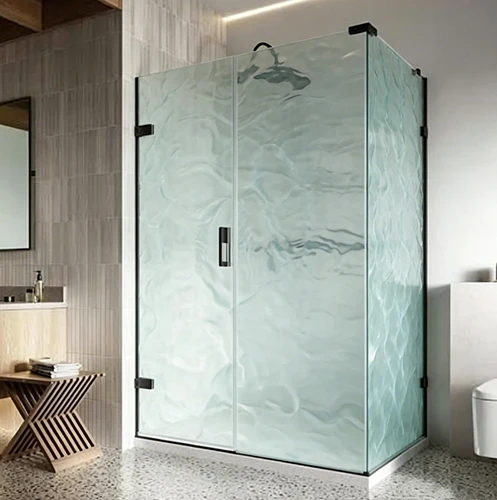
The application usually narrows the field quickly. Shower doors and wet areas favor reeded glass because the grooves hide water spots and the light transmission keeps the space bright. Office partitions work well with either reeded or frosted, depending on how much visual connection you want to maintain. Feature walls and bar fronts call for more decorative patterns like hammered. Bathroom windows are where nashiji and satin really shine. Textured glass panels for doors need to balance privacy with durability - reeded and frosted are the safest choices.
By Design Style
The overall aesthetic of the space should guide the pattern choice. Minimalist and industrial interiors pair beautifully with reeded glass in black steel frames. Traditional and classic spaces work well with nashiji or satin patterns in wood frames. Luxury hospitality and high-end residential projects can carry more decorative patterns like hammered or custom-printed glass. The key is to let the pattern support the design, not compete with it.
Related post: "Does patterned glass go on the inside or outside? Installation Orientation and Best Practices"
Discuss your project requirements with our team
Decorative Glass Patterns: Quality and Consistency
Whatever pattern you choose, quality is what separates a premium installation from a mediocre one. Decorative Glass Patterns from reputable manufacturers have consistent texture depth, uniform pattern spacing and clean edges - details that become obvious once the panels are installed and backlit.
Cheap patterned glass panels can have wavy patterns, uneven texture depth or surface defects that show up in certain lighting conditions. For commercial projects with multiple panels, pattern consistency across the entire order is critical - if one panel has slightly deeper grooves than the next, the difference becomes visible when they're installed side by side. Experienced decorative glass manufacturers control for this by running all panels for a single project from the same production batch.
Always request full-size samples before placing a large order. A small swatch won't reveal the pattern inconsistencies that appear in a 2400mm panel. And if you're installing multiple patterned glass panels for doors or partitions, confirm with your supplier that pattern matching is guaranteed across the entire batch.
Related post: "What is the bumpy glass called? A Guide to Textured and Patterned Glass Types"
Sourcing and Specification Tips
When you're sourcing obscure glass for a commercial project, working directly with experienced commercial glass manufacturers gives you the best combination of price, quality and pattern selection. A manufacturer that runs its own rolling, tempering and finishing lines can offer more consistent quality and shorter lead times than a distributor sourcing from multiple factories.
For projects that call for multiple patterns - reeded for partitions, frosted for bathroom windows, hammered for a feature wall - consolidating with a single source simplifies quality control and logistics. Commercial glass suppliers that carry a full range of decorative textured glass can ensure consistent tempering quality, pattern matching and delivery timing across the entire project. Bulk orders bring per-unit costs down substantially, so it's worth consolidating your glass needs rather than buying pattern by pattern from different suppliers.
Always confirm tempering and safety standards. Any panel in a door, shower, partition or balustrade should be tempered to meet ANSI Z97.1 (US) or EN 12150 (Europe) standards. Reputable commercial glass manufacturers will provide test certificates and mark each panel with a tempering stamp. And compare total landed cost - packaging, shipping, insurance and custom processing included - rather than just the per-square-meter price.
Related post: "Is reeded glass outdated? Why It's Still Trending in 2026 and Beyond"
Luck Glass: Your Decorative Glass Partner
Luck Glass is a professional decorative glass manufacturer specializing in Decorative Glass Patterns, reeded glass, frosted glass, hammered glass, nashiji glass, back painted glass, silk-screen printed glass, laminated glass and custom decorative textured glass products, serving global contractors, developers, building material traders and brand clients. The company runs advanced rolling, tempering and finishing production lines with an experienced technical team that keeps quality consistent and delivery on schedule.
Luck Glass offers obscure glass in a wide range of standard and custom patterns, with consistent texture quality across all panel sizes. All patterned glass panels can be tempered to meet EN 12150 and ANSI Z97.1 safety standards, with uniform pattern depth, stable edge quality and reliable strength. Full customization is supported across size, thickness, pattern selection, edge finishing, hole drilling and cutouts, with maximum panel sizes up to 3660mm x 2440mm and typical delivery within 25 working days.
Whether the project calls for reeded textured glass panels for doors, frosted glass for office partitions, hammered glass for a hotel feature wall, or bulk supply from commercial glass suppliers for a large-scale development, Luck Glass delivers efficient, reliable solutions tailored to each project's specifications and budget. The technical team can also provide guidance on pattern selection, orientation and installation for every application.
Frequently Asked Questions
Q: What is the most popular obscure glass pattern right now?
A: Reeded glass - also called ribbed or fluted glass - is currently the most popular obscure glass pattern in both residential and commercial specifications. Its balance of privacy, light transmission and aesthetic versatility has made it the go-to choice for doors, partitions, cabinets and shower enclosures.
Q: Is frosted glass still popular?
A: Yes, frosted and acid-etched glass remains a steady, classic choice, especially for applications needing higher privacy like bathroom windows and office walls. It's not growing as fast as reeded, but it's a reliable standard that never really goes out of style.
Q: What's the difference between reeded and ribbed glass?
A: They're the same thing - different names for the same vertical-groove pattern. "Reeded" is more common in the US and UK, while "ribbed" and "fluted" are used in other markets. The pattern and performance are identical regardless of the name.
Q: Can I get custom obscure glass patterns?
A: Yes, many pressed glass manufacturers offer custom pattern development for large enough orders. Custom patterns are common for brand-specific retail projects, hotel chains and high-end residential developments. Minimum order quantities usually apply, and lead times are longer than for standard patterns.
Q: How do I choose between patterns for a commercial project?
A: Start with the application - shower doors favor reeded, office walls can use reeded or frosted, feature walls call for hammered or custom. Then consider the design style and budget. Always request physical samples and view them in the actual lighting conditions of the space before making a final decision.
Final Thoughts
So what is the most popular obscure glass pattern? Right now, it's reeded glass - and it earned that position by being the best all-around option: enough privacy to feel intentional, enough light to keep spaces bright, enough versatility to work in any design style, and enough production volume to be readily available at competitive prices. But "most popular" doesn't mean "best for every project." Frosted glass still wins for maximum privacy, hammered for decorative impact, nashiji for understated classic appeal.
The real skill in specifying obscure glass is matching the pattern to the application, the design style and the budget - and then sourcing it from commercial glass manufacturers that deliver consistent quality across every panel. Decorative Glass Patterns are more than just a pretty surface; they're a functional design tool that shapes light, privacy and atmosphere in every space they touch. Choose well, and the glass becomes one of the most memorable elements of the project.