Yes - there are several ways to make glass less reflective, and they do not work the same way. A coating can cancel light before it leaves the surface; a treated surface can scatter it; and the way a pane is built changes how much of a room appears in it. Which route suits a project depends on whether clarity, comfort or privacy comes first. Ar Reflection Free Glass keeps the view sharp, while an etched finish softens a hard glare at the cost of some detail. This guide compares the methods, what each one gives up, and how buyers check the result on a real order. The wider decorative glass family contains both kinds of finish, which is why the names often get mixed together.
The routes that reduce reflection
Cancel the light at the surface
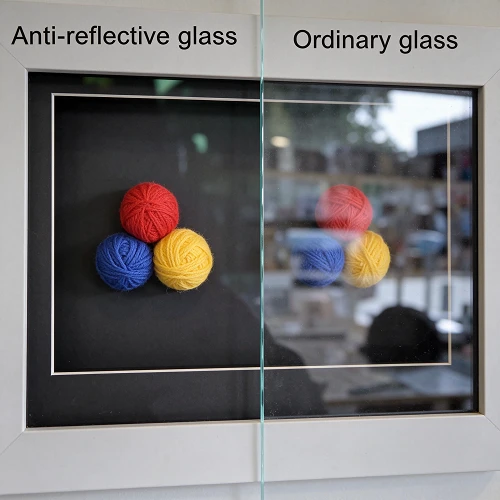
The most direct method is a thin film deposited under vacuum. Layer thicknesses and refractive indices are chosen so that light reflected from one layer meets light from the next and the two partly cancel. Less energy leaves the surface and more passes through, with no haze added. An Anti Reflective glass sheet made this way is the product behind most Ar Reflection Free Glass sold for displays and frames. It is an optical treatment, not a coating of paint, and the surface stays smooth and clear.
Scatter the light instead
A roughened surface takes a different approach. Acid etching or sandblasting breaks up a direct reflection into many weak ones, so a hot spot becomes a soft glow. The trade-off is haze: fine detail loses some of its edge. This route suits offices, control rooms and partitions where comfort matters more than a perfectly sharp view. Frosted and other textured glass products work on the same principle, though heavier versions are chosen for privacy rather than glare.
For the downsides that come with the scattering route. ⇒ Related Post: What are the disadvantages of anti-glare glass? Trade-Offs
Change what sits behind the pane
Reflection is also a matter of contrast. A dark backing behind a display reduces the amount of room visible in the glass, and low-iron base glass keeps colours neutral instead of adding a green edge tint. Face position matters too: a coated face sealed inside a laminated glass or insulated build is shielded from daily handling. None of these steps removes reflection on its own, but together they change how the finished opening reads.
Applied films are a separate route
Self-adhesive films can be fitted to existing glass, and they are often described in the same breath as factory coatings. They are a different product: applied on site, with different durability and a different cleaning regime. For a new build or a cut-to-size order, specify the factory-applied finish instead, so the performance is known before the panel leaves the fabricator.
What each route gives up
Clarity against comfort
The choice is rarely about which method is "better". A scattering finish makes a bright space comfortable and takes the edge off a direct reflection, but it softens what is behind the glass. An Anti Reflective glass sheet does the opposite: it keeps the image crisp and lowers reflection without adding haze. Buyers who need both effects usually add a second element to the build rather than asking one pane to do two jobs.
Durability follows the film's position
The coating does not fade like a printed pattern, but the film can be marked by grit, dry wiping or harsh cleaners. A coated face on the outside of a busy public area needs a clear care routine; the same film sealed inside a unit is largely protected from handling. Ask where the coating sits and how it will be protected in transport and on site before comparing prices.
For what shortens a coating's working life. ⇒ Related Post: How long do anti-reflective coatings last? Lifespan And Care
Fabrication order is fixed
Cutting, drilling and edge work have to happen before the film goes on. Heat treatment adds another constraint, because the coating must either survive tempering or be applied afterwards. Non reflective Tempered Glass is therefore a defined build with a fixed sequence, not a standard pane that acquires a new name at the last step. Agree the order with the fabricator before the order is placed.
For the safety-built version and its processing sequence. ⇒ Related Post: Is there anti-reflective tempered glass? Coating And Buyer Checks

Matching the method to the job
Displays and framed work
In a gallery case or a framed work, the object is the point and the pane should disappear. A coated finish is chosen here because it lowers reflection without obscuring detail. Ask to see a sample under the lighting the piece will actually hang in, and at the angle visitors will use. A sample under a showroom spotlight can look convincing and still show a distracting gleam on site.
Workplaces and busy public areas
Meeting rooms, reception screens and shopfronts are looked at from many angles and cleaned far more often than a gallery case. An Anti Reflective glass sheet is sensible where the view must stay clear, provided the coated face is protected and the cleaning routine is written down. Where comfort and screening matter more than sharp detail, a scattering finish is the more forgiving choice.
Where safety and low reflection meet
Some openings need both a clear view and a safety treatment. Non reflective Tempered Glass covers that combination, with the coating and the heat treatment sequenced correctly for the exact size and thickness. Confirm which face carries the film and where it sits in the finished unit. Two panels sold under the same product name can behave quite differently in a busy corridor.
Specifying the result you can actually check

Name the method, then the build
"Less reflective" describes an outcome, not a product. A workable specification starts with the method - vacuum-deposited coating or surface etch - then records the base glass, which face is treated, the dimensions, edge work and safety treatment. Anti Reflective glass sheet is a useful product reference inside that document, but the method line is what the fabricator must answer to. A non-reflective glass panel bought on a name alone gives your team nothing to check on arrival.
Compare like-for-like quotations
One quote may cover a bare coated pane; another may include low-iron glass, tempering and a protected face inside a unit. Ask every supplier to price against the same written build and the same approved sample. Ar Reflection Free Glass means little as a shopping comparison until the scope is identical. Once it is, a difference in the figures tells you something real about the product.
For the base-glass side of the comparison. ⇒ Related Post: Where Can I Buy Float Glass? A B2B Buyer's Guide
Approve a sample under real light
Hold the sample against a dark background and under the lighting of the actual space. That is where any residual reflection shows itself, and it is the only reliable way to agree what "acceptable" means. Keep the approved piece as the reference for the whole run, and compare delivered panels with it under the same conditions.
FAQ
What is the least expensive way to reduce reflection?
A surface etch is generally a simpler process than vacuum deposition, so it costs less for many projects. It also adds haze and softens detail. A coating costs more but keeps the view clear. Choose on the function the opening needs rather than on the price alone, since the wrong finish cannot be corrected after fabrication.
Does low-iron glass reduce reflection?
Not by itself. Low-iron glass raises transmission and removes the green tint at the edges, so colours behind the pane look neutral. The reflection at the surface is still there. It is a useful part of a coated build, not a substitute for a coating or a surface treatment.
Can it be done on glass that is already installed?
Films can be applied on site, but they are a different product from a factory-deposited coating and need a different maintenance routine. For a new order, specify the finish before the panels are made. That way the base glass, face position and processing sequence are all known in advance.
Is Non reflective Tempered Glass one of these methods?
It is a build that combines two of them. The coating reduces reflection and the heat treatment provides strength, but each step constrains the next. Give the fabricator final dimensions and the required safety performance at the outset, and confirm the full sequence before the order is placed.
Will any method remove reflection completely?
No. Every route leaves some residual gleam, most visible against a dark background or under a strong light. The practical goal is low reflection and a clear view, not a pane that vanishes in every condition. Agree how the result will be judged on a sample before the order goes ahead.
A Glass Manufacturer Buyers Can Compare: Luck Glass
Luck Glass is a glass processing manufacturer focused on the deep-processing of decorative and obscure glass for both residential and commercial projects. Across our ranges we produce acid-etched, frosted, painted, fabric and textured glass, and we fabricate coated and tempered builds where a project calls for them, supplied as cut-to-size panels with the finish, color and safety treatment each project needs - tempered, laminated, or a combination of both. Our multiple deep-processing lines support consistent batches across large orders, and we work with distributors, contractors and brands in many countries worldwide. From a private bathroom partition to a multi-floor commercial fit-out, our fabrication is cut-to-size and matched to project drawings.
For a broader view of manufacturing partners before you shortlist. ⇒ Related Post: Top 10 Glass Manufacturers in China 2026: A Comprehensive Guide For Businesses
Summary
There is more than one way to make glass less reflective. A vacuum-deposited coating cancels reflection while keeping the view sharp; a surface etch scatters it and adds haze; base glass, backing and face position change the contrast in the finished opening. Ar Reflection Free Glass suits displays where clarity matters, while a scattering finish suits busy spaces where comfort comes first. An Anti Reflective glass sheet should be specified by method, base, face and safety treatment, and Non reflective Tempered Glass by its fixed processing order. Judge any claim on a sample under real light.