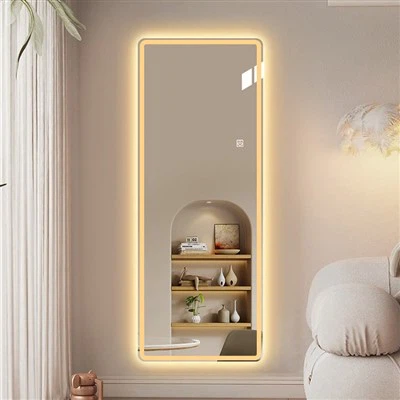
Reflective glass is a coated sheet that bounces part of the incoming light back while still letting daylight through, which is why reflective glass panels read as a sleek, tinted skin on modern offices. It is neither a true mirror nor ordinary clear glazing. The effect comes from a microscopically thin metal or metal-oxide film bonded to the surface, not from a colour mixed into the glass - a fact that explains both how the material performs and what goes wrong when it is specified carelessly.
What Reflective Glass Actually Is
Before comparing products it helps to be precise about what the term covers, because it is often used loosely for anything that looks shiny.
A coating, not a colour in the glass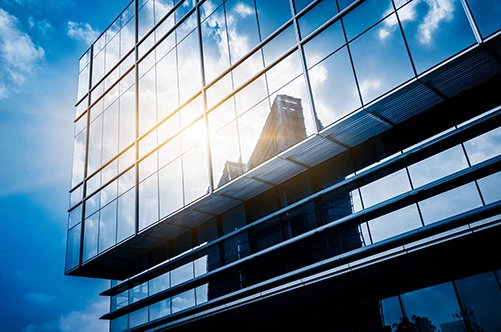
A reflective glass sheet starts as ordinary float glass. During or just after manufacture an extremely thin metallic or metal-oxide film is deposited on one face. The film is measured in nanometres, far thinner than a paint layer, and it produces the reflection while the glass underneath is only the carrier. That is why the effect is not a tint in the body of the pane, and why the orientation of the coated face matters during installation. Our decorative glass overview groups the coated and surface-treated ranges together for this reason.
How the reflection is produced
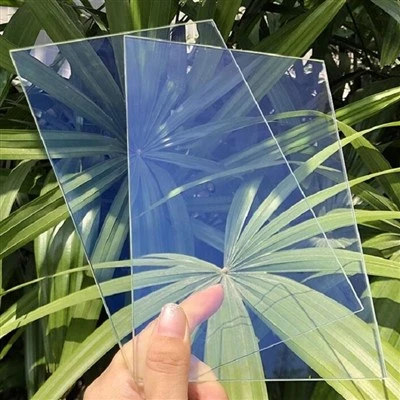
The effect on a reflective glass sheet comes from a film thin enough that some light passes through while the rest is reflected back towards the source. That balance between reflected and transmitted light is what gives a reflective glass window its characteristic daytime look: from the street it reads as a tinted mirror, while from inside the view out stays clear. Change the balance by altering the coating and the same base glass can look silver, bronze or blue-grey. A reflective glass sheet held up to a window will therefore show the street opposite rather than a perfect image of the person holding it - reflection here is functional, not decorative.
Surface treatments raise their own durability questions, which are worth separating from a fused coating ⇒ Related Post: "Does glass paint peel off? Causes And Prevention"
Hard-coat and soft-coat production
Two routes dominate. Pyrolytic, or hard-coat, glass receives the film while the sheet is still hot on the float line; the layer fuses into the surface and is tough enough to be cut and even tempered. Magnetron sputtering, or soft-coat, glass is coated offline in a vacuum chamber; it delivers sharper optics but the film is more delicate and is normally sealed inside an insulating unit. Knowing which route a product uses tells you where it can safely be installed.
Solar-control coatings belong to the same family of performance glazing ⇒ Related Post: "What type of glass is solar glass?"
What It Does On A Building
Specifiers choose this material for measurable behaviour, not for appearance alone. Three effects do most of the work.
Solar control and glare
A reflective glass window rejects a significant share of the sun's energy before it enters the room, reducing solar heat gain and the air-conditioning load that follows. The same reflection softens direct glare, which matters in open-plan offices and rooms with screens. The useful figures to ask for are visible light transmittance and the solar heat gain coefficient; both describe how much light and heat actually get through. On reflective glass panels the apparent colour also shifts with the viewing angle and the light outside, so a sample should always be judged against the real facade orientation rather than a showroom ceiling.
Daytime privacy and its limit
In daylight the bright exterior is reflected while the dimmer interior stays visible from within, giving the familiar one-way effect. That is why the treatment is common on ground-floor meeting rooms and street-facing facades. The effect reverses after dark when interior lights are on: the pane then reads as transparent from outside unless a blind or curtain is used. Honest specification treats daytime privacy as a coating benefit, not a substitute for night-time shading.
Colour and appearance
The film can be tuned across silver, bronze, grey, blue, green and gold tones, and the same nominal colour looks different on a north-facing and a south-facing elevation. Because the result depends on reflection, the surrounding buildings and sky become part of the finish - a surprise to buyers who select from a small chip. Approving a large sample in the intended position avoids most colour disputes.
Privacy behaviour is easy to overstate, and worth comparing with other glazing ⇒ Related Post: "Is Textured Glass See Through? Privacy & Light Explained"
Where Coated Glass Is Specified
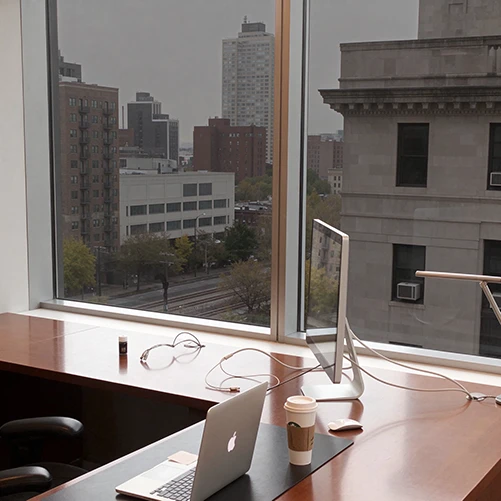
The coating is at its most useful where solar load, glare and a coherent exterior appearance have to be handled together.
Facades and curtain walls
Reflective glass panels are most often specified on commercial facades and curtain walls, where a consistent external skin matters as much as internal comfort. A wall of reflective glass panels ties the building's appearance together while keeping the solar load predictable across hundreds of units. Because every pane is seen from outside, batch-to-batch colour consistency is a real requirement. Ask how the coating is held within one production run and how repeat orders are matched to an approved sample.
Windows in offices and homes
In offices the appeal is glare control and lower cooling demand; in homes it is privacy and a cooler room in strong sun. Reflective glass panels are a natural fit for both. Our painted glass range covers the coated and spandrel applications that often sit alongside reflective glazing. Whether fixed or opening, the specification should state which face carries the film, since an exposed soft coating will not survive a wet cleaning cycle.
Entrances, lobbies and front doors
A reflective glass front door gives an entrance a clean, contemporary face while limiting what can be seen into the lobby during the day. Such a door in a busy location needs the same attention to edge finish and hardware as any other handled pane, and the coating must be specified on the face that will actually be cleaned. Where the entrance is part of a broader design scheme, a decorative glass panel can carry the interior theme while the entrance pane handles solar control - two different jobs for two different products.
Entrance glazing follows its own design cycle, which is worth tracking ⇒ Related Post: "What Is The New Trend For Front Doors?"
Combining The Coating With Safety Builds
The film does not replace the safety processing a project may require; both must be specified as one build.
Tempering and heat treatment
Hard-coat reflective glass can generally be tempered, because the film is fused to the surface and survives the furnace. Soft-coat films are usually applied after heat treatment and are not meant to be exposed on a single pane. Confirm the whole sequence - cutting, edging, drilling, heat treatment and coating - in writing with the fabricator before ordering. A supplier who cannot state that order is not ready for a complex panel.
Laminating and insulating units
Many soft-coat products are supplied only as part of a sealed insulating unit, with the coating on an internal face where it is protected. A reflective glass sheet can also be laminated where retention of broken fragments matters, such as overhead glazing or balustrades. Combining coating, interlayer and heat treatment is normal practice, but each combination should be confirmed as a standing product rather than assumed available. Our textured glass range is specified in the same way - finish and safety build fixed together on the drawing.
Which face carries the coating
Surface position is the most consequential and most overlooked line in a reflective glass specification. The same product performs differently depending on whether the film faces the street or the room, and a soft coating on an exposed face degrades quickly. Write the surface number into the schedule, not just the product name, and check it when samples arrive.
Build choices are never isolated; the same logic applies to other processed panes ⇒ Related Post: "What is the difference between laminated glass and normal glass? A Practical Comparison"
Judging Quality And Cost
Once the build is settled, the remaining task is to make sure every supplier is quoting the same thing.
The specification should state
A workable specification names the base glass, coating type, visible light transmittance, solar heat gain coefficient, coated surface number, thickness, edge work and any safety treatment. Two reflective glass panels that look alike under shop lighting can behave quite differently on a west-facing wall if those figures differ. Leaving them out transfers the decision to the seller and makes a repeat order hard to match.
Sample and batch consistency
Approve a large physical sample and keep it as the reference for the whole order. Colour can drift slightly between coating runs, and the drift is only obvious when panels are installed side by side. Ask how a supplier holds a finish across a batch and whether a repeat order will be made against the same retained sample. This is the practical meaning of quality on a facade: the result still matches when the last crate is opened.
The wider coated-glass family is worth mapping before a finish is chosen ⇒ Related Post: "What are the different types of decorative glass? Types and usage"
What drives the cost
A reflective glass price is only meaningful once the scope behind it is fixed. Base glass, coating route, panel size, quantity, edge work, heat treatment, laminating and freight all move the figure, and two prices describing different scopes cannot be compared honestly. Request the same written specification from each source. The lower quote wins only if it covers the same coating, the same surface position and the same approved sample.
Sourcing the right processor is what makes a comparable quote possible ⇒ Related Post: "Where can I buy float glass? A B2B Buyer's Guide"
FAQ
Is reflective glass the same as a mirror?
No. A mirror has a dense backing that reflects almost all light, so you see yourself. A reflective glass sheet carries a far thinner film that reflects part of the light and transmits the rest. It can look mirror-like in daylight from outside, but the view through stays clear from the dimmer side.
Can you see through reflective glass at night?
Not in the same way as during the day. A reflective glass window gives a one-way effect while the exterior is bright and the interior softly lit. After dark the effect reverses and the pane can read as clear from outside, so blinds or curtains are still needed where night-time privacy matters.
Can reflective glass be tempered?
Hard-coat reflective glass can usually be tempered because the film is fused to the surface. Soft-coat products are typically coated after heat treatment and kept inside an insulating unit. Confirm the full processing sequence with the supplier in writing rather than assuming every finish can be tempered.
Is a reflective glass front door suitable for a busy entrance?
Yes, provided the coating is specified on a cleanable face and the edges and hardware are detailed properly. Such a door is handled constantly, so well-finished edges and correct fixings matter as much as the film. Tempered or laminated builds are normally specified for safety at entrances.
Why does the price vary between suppliers?
Because the underlying scope often differs. Coating route, base glass, thickness, panel size, quantity, edge work and safety treatment all change the figure. Ask every supplier to quote against one written specification and the same retained sample; then the numbers describe the same product.
Chinese Glass Supplier: Luck Glass
Luck Glass is a glass processing manufacturer focused on the deep-processing of decorative and obscure glass for both residential and commercial projects. Across our ranges we produce acid-etched, frosted, painted, fabric and textured glass, supplied as cut-to-size panels with the finish, color and safety treatment each project needs - tempered, laminated, or a combination of both. Our multiple deep-processing lines support consistent batches across large orders, and we work with distributors, contractors and brands in many countries worldwide. From a private bathroom partition to a multi-floor commercial fit-out, our fabrication is cut-to-size and matched to project drawings.
Summary
Reflective glass is coated glass that reflects part of the incoming light while transmitting daylight; the coating, not a body colour, produces its tinted, mirror-like look. Hard-coat films fuse to the surface and can be tempered; soft-coat films give sharper optics but need protection inside an insulating unit. A reflective glass window controls solar gain and glare and gives daytime one-way privacy, while a reflective glass front door adds a clean face to an entrance. Specify coating type, coated surface, transmittance, heat-gain figure and safety build together, approve one large sample and hold it across batches. Compare like-for-like quotations and a reflective glass price becomes meaningful.