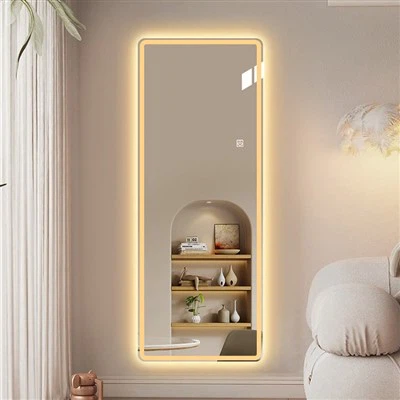
Custom pieces of glass are bought from a processor, not a shop. You send a drawing with finished dimensions, thickness, pattern, edge finish and quantity per size; the processor cuts the sheet, works the edges, and tempers or laminates the part if the application calls for it. Most decorative orders of this kind are driftwood pattern glass - a rolled pattern produced in listed sheet sizes and cut to whatever the opening needs. The buyer's job is not to find a shop that stocks the pattern; it is to specify the part precisely enough to be cut once.
Who Actually Sells Custom Pieces
Two kinds of seller handle this work, and they solve different problems.
Processors And Fabricators
A processor buys pattern sheets in standard sizes and turns them into parts - this is where custom dimensions, drilled holes, shaped edges and tempering happen. For panels on one project, a processor is the right counterpart: they work from drawings, not a catalogue.
Distributors And Stockists
A distributor holds stock in the sheet sizes they carry. They can cut a sheet down, but their value is availability on standard sizes, not engineering. Ask for a shaped part with six drill holes and the answer is usually no.
What A Processor Cannot Do
A processor cannot cut a pattern that is not made. Nor can it undo a process once applied: tempered glass cannot be cut, drilled or edged afterwards, so every operation happens before the tempering cycle. That constraint drives the sequencing of the order.
The Three Things Buyers Mean By "Custom"
"Custom pieces" describes three products, each with its own decisions. Quoting them all at the same level is how orders go wrong.
A Panel Cut To Size
A rectangle at a size that is not a stock size. The variables are width, height, thickness, pattern and pattern direction. This is the bulk of decorative volume and the fastest thing to quote, because the drawing carries no geometry beyond four edges.
A Part With Holes, Cut-Outs Or A Shape
Add drilling for hinges, handles or fixings, cut-outs for sockets, or a non-rectangular outline. Now the drawing matters more than the size: hole positions, edge distances and radii have to be explicit, because no tolerance convention covers them.
A Finished Assembly
Two panes laminated over an interlayer, or a double-glazed unit with spacer and sealant, arrives as one part. The buyer is no longer ordering glass but a build-up, specified as a system - including which face carries the pattern.
A laminated build-up is a different product from a single pane, not a thicker one ⇒ Related Post: "What Is The Difference Between Laminated Glass And Normal Glass?"
Why Patterned Glass Dominates Custom Orders
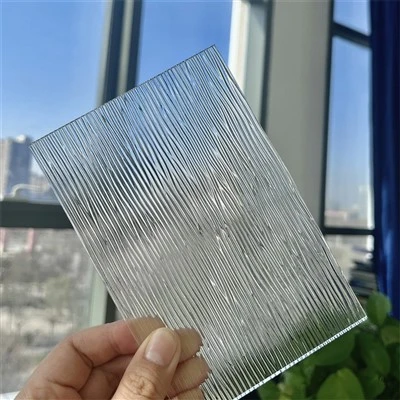
A clear pane is bought for what is behind it. A pattern is bought for what it does to the view - which is why so much cut-to-size work is decorative. driftwood pattern glass is a good example: the buyer has seen the pattern on a project, wants it in one specific opening, and needs a part rather than a sheet.
The consequence is that the driftwood glass pattern and the panel proportions are chosen together. A directional grain reads differently on a tall narrow panel than on a wide low one, and the same relief at 3 mm and at 8 mm does not obscure identically. Settle the pattern without thinking about proportions and the problem shows at installation, when the grain runs across a door light instead of down it.
Pattern names travel between markets and often arrive under two or three labels ⇒ Related Post: "What Do You Call Patterned Glass?"
Why An Existing Pattern Is Cheaper Than A New One
Custom glass is not expensive because it is cut. It is expensive when the pattern itself has to be made.

A new pattern starts with a roller: the relief is engraved, proved on a trial run and corrected before a saleable sheet comes off the line, and that set-up lands on the first order. Asking for "this pattern, but different" is not a cut - it is a development project with a glass order attached.
Choosing from a pattern range changes the shape of the order. The roller exists, the relief is proven, the thicknesses are fixed by what the line runs, and what remains is cutting, edging and tempering - operations that scale with quantity.
That is the commercial argument for buying decorative glass already in production. It is also why the range matters more than the sample book: a supplier running fine stipple, directional ribs, leaf motifs and random textures answers an obscuration question without tooling. driftwood pattern glass sits in that position - a catalogue pattern with a directional grain, made in a fixed set of thicknesses, supplied by the sheet or cut to a drawing.
What is left is fit rather than novelty: what the opening has to hide, whether the driftwood glass pattern runs in a direction that suits the panel, and whether the thickness it is made in carries the span. Those questions cost nothing to settle before an enquiry goes out.
The wider family is worth understanding before narrowing to one pattern ⇒ Related Post: "What are the different types of decorative glass? Types and usage"
How Cut-To-Size Orders Work
The enquiry is where most of the cost is decided. A complete one gets a quotation; an incomplete one starts a correspondence. patterned glass cut to size is priced on yield, not on area, so the drawing format matters as much as the dimensions.
What To Put On The Drawing
Give every dimension as a finished size, not a nominal one, and say so. State the quantity per size rather than a total area - a processor nests parts across a sheet, and area alone does not show how they fit. Mark any dimension that has to be held tight, and say what the piece is for: the application determines the safety treatment.
Tolerance, Wastage And Nesting
Cut parts carry a tolerance, and the tighter it is the more sheet is consumed reaching it. Wide rectangles nest efficiently; irregular shapes and many small parts leave offcuts that cannot be reused. That is why two quotes for "the same area" can differ - the number that matters is yield.
Edge Work
An exposed edge has to be finished, and the finish is a line item. An edge hidden by a frame can be left as cut; an edge that will be handled or left visible needs work. Specify which edges, not just that edging is required - on patterned glass cut to size for a framed opening, finishing only the sight edge is often correct.
The same cutting and edging logic applies to plain float sheet, and it is worth reading once ⇒ Related Post: "Where can I buy float glass? A B2B Buyer's Guide"
Door Lights And Their Rules
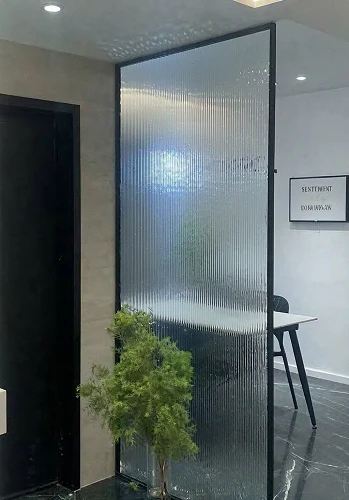
Door glass is the most common custom piece in decorative work, and it carries rules that panels do not. Most patterned glass for doors is specified by the door maker or the joiner rather than by the client, which is why the dimensions have to be confirmed rather than assumed.
Sizing Rules For Door Panels
A door panel is measured to the rebate, not the opening, and needs clearance for movement, paint and hardware. Take the rebate dimensions from the door manufacturer rather than scaling from the leaf. Where several identical doors are involved, confirm they are dimensionally identical before cutting - doors from one order frequently are not.
Safety Glazing And Why It Changes The Order
Glass in a door, and in any panel near one, is normally required to be safety glass under local building regulation. That decides the build-up - tempered, laminated, or both - and the sequence, because tempering comes last. If a piece of patterned glass for doors needs a hole for a handle, that operation happens on the annealed pane and the part is then tempered; a tempered part that arrives with the hole missing is scrap.
Front doors have their own pattern conventions, separate from interior doors ⇒ Related Post: "What Is The New Trend For Front Doors?"
Where Custom Orders Go Wrong
Four failures account for most disputes, and all four are avoidable at enquiry stage.
Area quoted instead of parts. A total square metreage cannot be cut - give a schedule of sizes with quantities.
Operations discovered late. Holes, cut-outs and edge work added after tempering cannot be executed, so list every operation first.
Pattern direction left open. The processor assumes, the grain runs the wrong way, and the panels are already tempered. A directional driftwood glass pattern makes it visible immediately.
Color batch mixed. Base color varies between production runs. Where panels sit side by side, order them together and say so.
Batch consistency is a specification item, not a complaint to raise after delivery ⇒ Related Post: "What Are The Different Types Of Laminated Glass?"
Products DescriptionPacking, Transport And Breakage
Custom parts are cut for one opening, so a broken part is not a stock item that can be swapped - it is a new production run. Packing is therefore part of the specification, not a detail left to the shipper: parts travel in plywood cases, separated and edge-protected, with the schedule marked on the case.
Check them against that schedule before installation starts, not as each opening is reached. Where a project risks one broken panel, a spare per size costs far less than a second run - and with a directional driftwood glass pattern, a replacement cut later may differ slightly in tone.
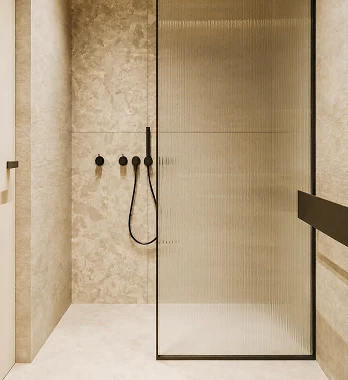
Where the order is for a wet area rather than a door, the pattern choice carries extra weight ⇒ Related Post: "What type of glass is best for a bathroom window?"
About Luck Glass
Luck Glass is a glass processing manufacturer focused on the deep-processing of decorative and obscure glass for both residential and commercial projects. Across our ranges we produce acid-etched, frosted, painted, fabric and textured glass, supplied as cut-to-size panels with the finish, color and safety treatment each project needs - tempered, laminated, or a combination of both. Our multiple deep-processing lines support consistent batches across large orders, and we work with distributors, contractors and brands in many countries worldwide. From a private bathroom partition to a multi-floor commercial fit-out, our fabrication is cut-to-size and matched to project drawings.
FAQ
Can I buy a single custom piece of glass?
Yes, but a single piece is priced on set-up rather than volume, so the cost per square metre is high. A one-off part still needs the same drawing, cutting, edging and tempering steps as a batch. Where the part is a sample or a repair, ask for the thinnest listed thickness that satisfies the application.
How do I know what thickness to order?
Thickness follows the opening and the safety requirement, not the driftwood glass pattern. Small interior panels are commonly specified thin, larger door and partition lights thicker, and any part that has to resist impact is governed by the safety glazing rule for that location. Where the application is unclear, state it and let the processor size it.
Can patterned glass be drilled after tempering?
No. Tempering puts the pane in permanent surface compression, and any cut, hole or edge grind afterwards releases it and shatters the part. Every operation must be completed on the annealed glass and then tempered - which is why a late change means a new part.
What is the difference between a stock sheet and a custom part?
A stock sheet is a catalogue size sold as it is. A custom part is cut to a dimension you specify, and may also carry edge work, holes, cut-outs, a shape, or a laminated build-up. The sheet is the raw material; the part is the product. Cutting a sheet on site usually costs more than ordering the part.
Summary
Custom pieces of glass are bought from a processor who works from a drawing, not a shop that sells sheets. The order is defined by finished dimensions, thickness, pattern, edge finish, every operation and the quantity per size - and by the sequence, because nothing can be cut, drilled or edged after tempering. Driftwood pattern glass is typical: produced in listed thicknesses and standard sheet sizes, any part within those sheets can be cut, worked and tempered to a drawing. Whether the parts are patterned glass cut to size or patterned glass for doors, specify the part rather than the area.