Laminated glass is not one product but a family of safety glazing made by bonding two or more glass layers around an interlayer. The different types are easiest to read along two lines - the interlayer material (PVB, EVA, SGP or a fabric layer) and the function the panel must serve (safety, sound, decoration or structure). This guide walks through each common type so you can pick the right build for a door, partition, balustrade or facade.
How Laminated Glass Is Classified
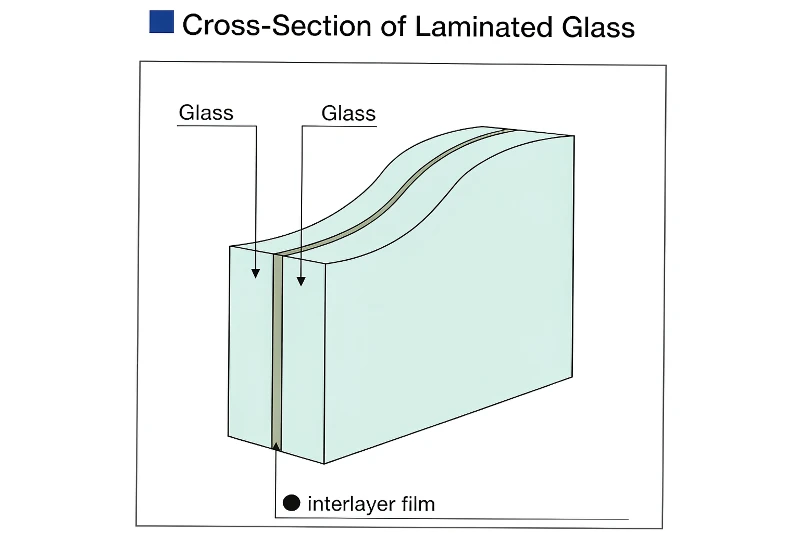
Every laminated panel shares the same sandwich idea: glass + interlayer + glass. What changes is what sits in the middle and what the panel is asked to do. Classifying by interlayer first tells you about clarity, strength and how the panel behaves after impact. Classifying by function tells you which build solves a specific problem - a shower screen needs different priorities than a bullet-resistant lobby. The sections below cover both axes, then look at how the base glass itself varies.
Types By Interlayer Material
The interlayer is the heart of any laminated glass type. It decides whether the panel stays together when broken, how much sound it blocks, and whether a decorative layer can be trapped inside.
PVB Laminated Glass
Polyvinyl butyral (PVB) is the most widely used interlayer. It is optically clear, bonds strongly to glass, and holds shards in place on impact, which is why it dominates automotive windshields and architectural safety glazing. Standard builds such as 6.38 mm laminated glass (roughly 3 mm glass + 0.38 mm PVB + 3 mm glass) are common for residential doors and balustrades. PVB is the default choice when the goal is safety and clarity without special effects.
EVA Laminated Glass
Ethylene-vinyl acetate (EVA) interlayers tolerate a wider temperature range and hold color and embedded materials more stably than PVB. That makes EVA the preferred carrier for decorative work - printed films, metal meshes and fabric layers stay vivid and well-adhered. When a panel needs to trap a colored or textured insert and keep it looking the same for years, EVA is usually the better interlayer.
SGP (Structural) Laminated Glass
Ionoplast interlayers such as SGP are engineered for structural performance. They are stiffer and roughly five times stronger than PVB at the same thickness, so a structurally laminated panel can span wider, carry load and resist penetration far better. This type appears in overhead glazing, large facades, balconies and any place where the glass itself is part of the building structure rather than just an infill.

Fabric And Glass Fibre Textile Interlayer Glass
A glass fibre textile or woven fabric layer can be encapsulated between the glass sheets instead of a plain film. The result is a translucent, textured panel where the weave is clearly visible through the glass - a look that reads as both decorative and technical. Our own Textile Glass uses a fine grey woven mesh laminated in clear glass, and is offered in transparent, bronze, green, blue and grey tints with sheet sizes such as 2440×1830 mm, 1650×2200 mm and 1900×3000 mm and thicknesses from 3 mm to 12 mm. This type sits at the intersection of safety glazing and interior design, which is why it is increasingly specified for feature walls and doors.
To understand what sits between the glass, start here ⇒ Related Post: "What Is An Interlayer in Glass? Types And Uses"
Types By Function
Beyond the interlayer, laminated glass is also grouped by the job it performs. The same PVB or EVA core can be tuned - through thickness, additional plies or coatings - to meet a specific performance target.
Safety And Security Laminated Glass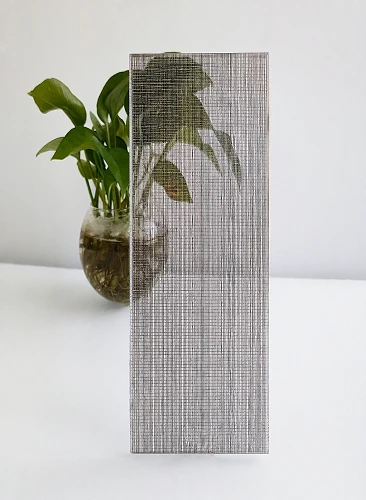
This is the original purpose of laminated glazing: hold broken glass in place so it does not fall or cut. Security versions add thicker or multiple interlayers to resist forced entry, and in high-risk settings a stiff interlayer raises the barrier further. For homes and workplaces, safety laminated glass in doors and low windows is a quiet, code-aligned upgrade.
Acoustic Laminated Glass
Acoustic types use a specialized interlayer formulated to damp sound vibration. By pairing that interlayer with an air gap or an insulated unit, a noisy street or office can be brought down to a calm interior. Acoustic laminated glass is a go-to for urban apartments, meeting rooms and hotels where quiet matters as much as light.
UV-Blocking And Solar Laminated Glass
Certain interlayers filter a large share of ultraviolet light, protecting flooring, art and fabrics from fading while still letting visible light through. Solar-control versions add a tint or coating to reduce heat gain. These types are valued in museums, retail and south-facing facades where daylight is welcome but damage from UV is not.
Decorative Laminated Glass
Decorative types trap color, pattern or material between the plies - fabric, mesh, film, string, leaf or printed imagery. The trapped layer is protected and permanently bonded, so the design cannot peel or yellow the way a surface application might. This is where decorative glass panels and decorative front door glass inserts live, turning a safety product into a design feature.
For the fabric-filled version of this build, see ⇒ Related Post: "What Is Fabric Laminated Glass? Complete Guide"
Structural And Walkable Laminated Glass
When glass must carry load - a stair tread, a bridge floor, a canopy - structurally laminated builds with stiff interlayers and multiple plies are specified. These are engineered to a project, not pulled from a catalog, and they show how far the "laminated" idea stretches beyond a simple safety pane.
Types By Glass Composition
The outer glass layers can also vary, and their combination with the interlayer defines the final look and performance.
Clear And Low-Iron Laminated Glass
Standard clear glass has a faint green edge from iron content; low-iron glass removes most of it for a truly neutral, bright look. Low-iron laminated glass is preferred when the interlayer or trapped fabric should show its true color, which matters for high-end decorative and retail work.
Tinted Laminated Glass
The base glass can be tinted bronze, grey, blue or green, or the interlayer itself can carry color. Tinted laminated glass reduces glare and adds privacy while keeping the safety benefit. It pairs naturally with decorative interlayers for doors and partitions that need both mood and function.
To see how this stacks up against ordinary glass, the comparison is useful ⇒ Related Post: "What Is The Difference Between Laminated Glass And Normal Glass?"
Tempered Laminated Glass
Heat-strengthened or fully tempered glass can be laminated, combining impact resistance with post-break containment. A tempered laminated panel is harder to break and, if it does, stays in the frame - a common spec for shower enclosures, balustrades and facades where both strength and safety are required.
Decorative Front Door Glass Inserts And Panels
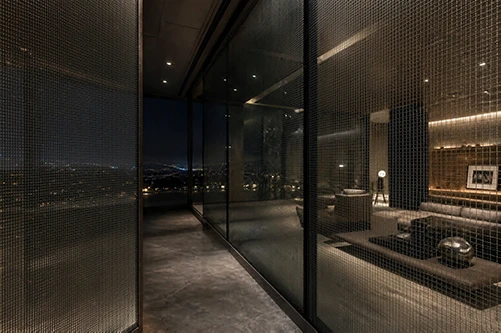
Front doors are one of the most practical places to use laminated decorative glass. A decorative front door glass insert lets light into an entrance while obscuring the view and adding character, and because it is laminated it stays intact if struck. Decorative glass panels built this way range from subtle textured meshes to bold fabric weaves, and they can be matched to a home's hardware and finish. For a manufacturer, these inserts are typically produced as custom laminated glass - specified by glass thickness, interlayer choice, tint and exact cut size so the panel drops into a standard or bespoke door frame.
For real-world laminated uses, see ⇒ Related Post: "What Is Laminated Glass Used For? Applications & Benefits"
Choosing The Right Type
Picking a type starts with the failure you are protecting against and the look you want. If safety is the only concern, a clear PVB build is usually enough. If noise is the problem, look at an acoustic interlayer. If the panel is a design element, EVA with a fabric or printed layer gives the most stable result, and a tinted or low-iron base sets the mood. When comparing laminated glass manufacturers, the useful differences are interlayer quality, edge finishing, batch consistency across a large order and the range of tints and textures they can hold. Laminated glass panels are most often supplied cut-to-size to a drawing, so the practical questions are thickness, interlayer and overall dimensions rather than a single off-the-shelf part number.
For the numbers behind the build ⇒ Related Post: "What Is The Recommended Interlayer Thickness For Laminated Glass?"
About Luck Glass
Luck Glass is a glass processing manufacturer focused on the deep-processing of decorative and obscure glass for both residential and commercial projects. Across our ranges we produce acid-etched, frosted, painted, fabric and textured glass, supplied as cut-to-size panels with the finish, color and safety treatment each project needs - tempered, laminated, or a combination of both. Our fabric and textile laminated lines, including the woven-mesh Textile Glass, are offered in transparent, bronze, green, blue and grey tints with sheet sizes such as 2440×1830 mm, 1650×2200 mm and 1900×3000 mm and thicknesses from 3 mm to 12 mm. Multiple deep-processing lines support consistent batches across large orders, and we work with distributors, contractors and brands in many countries worldwide. Our fabrication is cut-to-size and matched to project drawings, whether the job calls for a private bathroom partition or a multi-floor commercial fit-out.
Curious about sandwich glass? ⇒ Related Post: "Why Is Sandwich Glass Called Sandwich Glass?"
FAQ
What are the main types of laminated glass?
The main types split by interlayer - PVB, EVA, SGP and fabric or glass fibre textile - and by function, covering safety, acoustic, UV-blocking, decorative and structural builds. The base glass can also be clear, low-iron, tinted or tempered.
What is the difference between PVB and EVA laminated glass?
PVB is the standard clear interlayer for safety glazing and is used almost everywhere. EVA handles higher temperatures and holds embedded color or material more stably, which makes it the better choice for decorative laminated glass with trapped fabric or print.
Is fabric laminated glass the same as textile glass?
They describe the same idea: a woven layer - often a glass fibre textile or other fabric - encapsulated between glass sheets. "Textile glass" is simply the product name many suppliers use for a fabric-interlayer laminated panel, such as our textile glass build.
What type of laminated glass is used for front doors?
Decorative laminated glass is typical for front doors, usually a tinted or textured panel with a fabric or printed interlayer. It admits light and adds privacy while staying intact if struck, which is why decorative front door glass inserts are a common application.
What is the strongest type of laminated glass?
Structurally laminated glass with a stiff interlayer such as SGP is the strongest common type, carrying load and resisting penetration far better than standard PVB. For walkable or overhead glazing it is usually specified as a custom engineered build.
Can laminated glass be custom made?
Yes. Custom laminated glass is specified by glass thickness, interlayer type, tint and cut size, and can combine a decorative layer with safety or acoustic performance. Panels are typically produced cut-to-size to a project drawing rather than pulled from stock.