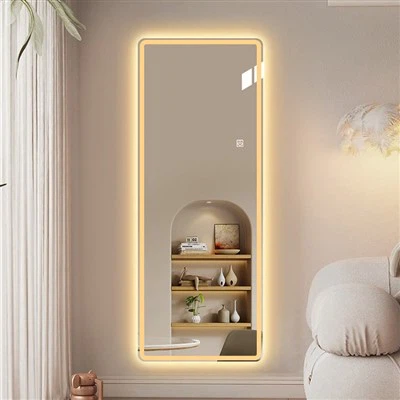
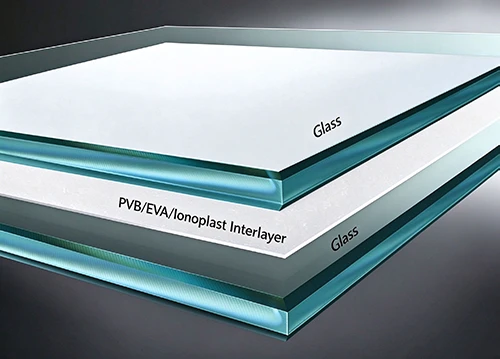
Sandwich glass is called sandwich glass because its structure resembles a sandwich: two or more layers of glass are bonded together with an intermediate material placed between them. This layered construction is the basic principle behind laminated glass. The middle layer is usually an interlayer that bonds the glass sheets together and can also provide additional functions such as fragment retention, color, sound control, or decorative effects.
The name describes how the material is constructed rather than a completely separate type of glass. In architectural and interior design applications, the material between the glass layers can be a transparent film, colored interlayer, fabric, mesh, or another suitable decorative material. When fabric is used, the result is often called Sandwich Fabric Glass, laminated fabric glass, or glass with a fabric interlayer.
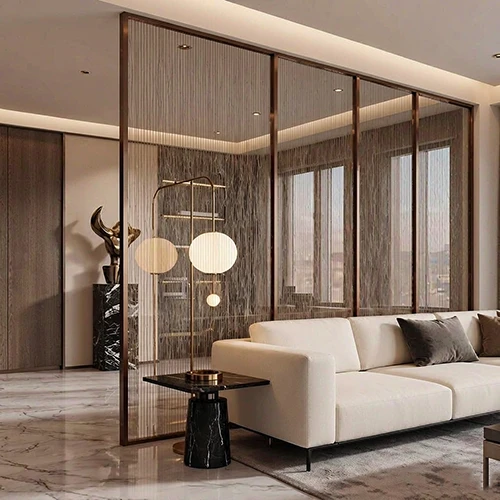
Unlike ordinary clear glass, fabric laminated glass incorporates textile patterns and textures into the glass structure. It combines the smooth appearance of glass with the visual character of fabric, making it a popular option to consider for decorative partitions, doors, furniture, and other interior applications.
What Is Sandwich Fabric Glass?
Sandwich Fabric Glass is a decorative form of laminated glass that uses fabric as the intermediate layer. Instead of using only a clear or colored interlayer, this product incorporates textile material between glass sheets to create a more textured and visually interesting finish.
The fabric can vary in color, weave, density, and pattern. Depending on the selected material, the finished glass may have a relatively transparent appearance or provide greater visual screening. Some designs create a subtle textile effect, while others feature more noticeable patterns that become a focal point in an interior space.
One of the main attractions of fabric laminated glass is that it combines two different material characteristics. Glass provides a smooth, clean exterior, while the fabric introduces warmth, texture, and decorative detail. This makes it suitable for designers who want something different from conventional clear, frosted, or patterned glass.
Want to learn where laminated glass is commonly used? Related Post: "What is laminated glass used for?"
Key Benefits of Sandwich Fabric Glass
1. Distinctive Decorative Appearance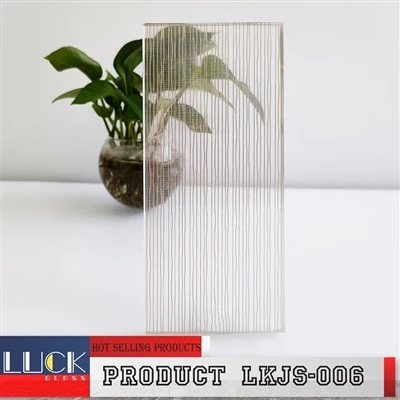
The fabric layer gives sandwich fabric glass a unique appearance that is difficult to achieve with ordinary glass alone. Different textile patterns and colors can be selected to complement interior materials, furniture, lighting, and architectural styles. Whether used in a modern office or a residential interior, the embedded fabric can add depth and visual interest without exposing the textile directly on the glass surface.
2. Flexible Design Options
Customization is one of the major advantages of laminated fabric glass. Designers can explore different fabric materials, colors, and patterns to create a finish that suits a particular project. Depending on the manufacturer's capabilities, the glass configuration and panel dimensions can also be adjusted. This flexibility makes the material suitable for both decorative details and larger interior installations.
3. Light Transmission and Visual Privacy
Fabric laminated glass can help balance natural light and visual separation. Open-weave fabrics may allow more light and visibility through the panel, while denser textiles can create a more screened appearance. This makes it worth considering for decorative privacy glass applications, such as room dividers, meeting rooms, and interior doors. The actual privacy level depends on the fabric's weave, density, color, and the lighting conditions on both sides.
4. Protected Fabric Layer
Because the textile is enclosed between glass sheets, it is not directly exposed to everyday contact in the same way as ordinary fabric coverings. The exterior glass surfaces provide a smooth finish that can be cleaned using suitable glass-cleaning methods. However, the edges and laminated structure still require appropriate handling and installation, especially in areas exposed to moisture.
5. Versatile Interior Applications
Sandwich Fabric Glass can be used in a variety of decorative settings. It can become part of a room divider, cabinet door, decorative wall panel, lighting fixture, or glazed door. Different fabric designs can also help coordinate glass elements with other interior materials, creating a more consistent overall appearance.
Curious about the limitations of laminated glass? Related Post: "What are the downsides of laminated glass?"
Where Is Sandwich Fabric Glass Used?
Shower Doors and Bathroom Interiors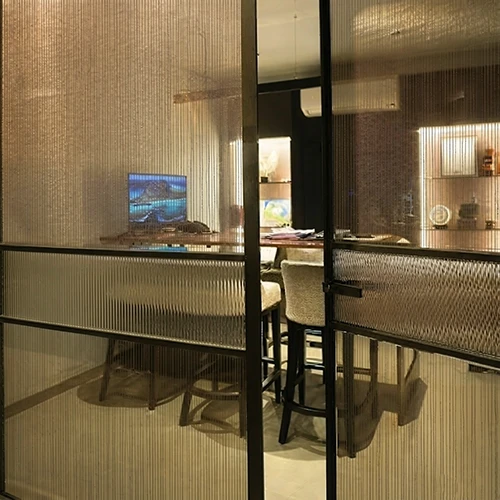
Fabric laminated glass can be considered for selected shower door designs and bathroom partitions where decorative appearance is important. The fabric layer introduces texture and visual separation, offering an alternative to plain transparent glass. For bathroom applications, however, the complete glass construction must be suitable for the expected moisture exposure. The interlayer, fabric compatibility, edge protection, and installation details should all be confirmed before use.
Decorative Furniture and Cabinet Doors
Sandwich Fabric Glass is a practical design option to consider for display cabinets, furniture panels, and decorative cabinet doors. Its embedded textile pattern creates a distinctive surface while maintaining the clean appearance of glass. In living rooms, bedrooms, hotels, and retail interiors, it can help furniture stand out without relying on additional surface decoration.
Lamps and Lighting Features
Fabric laminated glass can also be incorporated into selected decorative lighting designs. The fabric layer influences the visual appearance of the panel and can create interesting effects when light passes through it. Different textile colors and patterns can produce different results, making it useful for customized lamps and interior lighting features. The material's suitability should be checked against the lighting system's temperature and operating conditions.
Interior Doors and Window Features
For interior doors and selected glazed window features, fabric laminated glass offers a way to combine light transmission with decorative detail. The fabric can soften the view through the glass and help coordinate the door or window with the surrounding interior design. The final level of visibility depends on the selected fabric and glass construction.
Office and Commercial Spaces
In offices, conference rooms, hotels, hospitals, and other commercial interiors, decorative glass can help divide spaces while maintaining a bright and open atmosphere. Fabric laminated glass adds another design option for reception areas, meeting room partitions, and decorative wall features. It can be customized to match a project's color scheme and overall design concept.
Wondering how interlayer thickness affects laminated glass? Related Post: "What is the recommended interlayer thickness for laminated glass?"
Sandwich Fabric Glass vs. Ordinary Laminated Glass
Although sandwich fabric glass and ordinary laminated glass share a similar layered construction, their appearances and design purposes can be quite different.
Ordinary laminated glass usually uses a transparent or colored interlayer between glass sheets. It is commonly selected for applications where safety, fragment retention, sound control, or other specified performance requirements are important. Its finished appearance is often relatively simple, especially when a clear interlayer is used.
Sandwich fabric glass, on the other hand, incorporates textile material into the middle layer. This gives the finished panel a visible woven texture or decorative pattern. It is often chosen for interior design projects where the appearance of the glass is just as important as its practical function.
Neither product should be assumed to have the same performance in every application. The safety characteristics of a laminated panel depend on its complete construction, including the glass plies, interlayer, processing, and relevant testing. A decorative fabric layer alone does not establish a particular safety rating.
What Should You Consider When Choosing Sandwich Fabric Glass?
Choosing the right sandwich fabric glass starts with the intended application. A panel used as a decorative cabinet door may have different requirements from one installed in a bathroom partition or a large commercial interior. Consider the desired transparency, privacy level, fabric appearance, glass thickness, panel dimensions, and installation method before confirming the design.
Fabric selection is particularly important. The weave, thickness, color, and density of the textile can all influence the final appearance. Buyers should request samples and view them under lighting conditions similar to the actual installation environment. This helps avoid unexpected differences between the fabric sample and the finished glass panel.
The compatibility of the fabric and interlayer should also be discussed with the manufacturer. Not every textile is suitable for the lamination process. Material stability, moisture content, heat resistance, and bonding compatibility can affect the finished product. For larger projects, approving a physical sample and confirming the technical specifications in writing can help maintain consistency throughout production.
Why Work with an Experienced Laminated Glass Supplier?
The quality of sandwich fabric glass depends on more than the appearance of the selected textile. Glass preparation, fabric positioning, interlayer compatibility, lamination conditions, and final inspection all contribute to the finished result. Working with experienced laminated glass manufacturers can help buyers understand the available material combinations and identify suitable options for their projects.
When evaluating a china glass supplier or commercial glass suppliers, pay attention to sample quality, customization options, product consistency, communication, and technical support. It is also important to confirm the intended application before production, particularly when the glass will be used in doors, bathroom environments, partitions, or other locations with specific safety requirements.
At Luck Glass, our Sandwich Fabric Glass is designed for decorative architectural and interior applications. The product offers customizable sandwich materials and a variety of color options, including transparent, bronze (amber), blue, and gray. It can be considered for shower doors, decorative furniture, lamps, translucent doors, window features, guardrails, meeting rooms, hospitals, and other interior or building projects.
Interested in a decorative option that combines fabric and glass? Related Post: "What Is Fabric Laminated Glass?"
Frequently Asked Questions
Is sandwich glass the same as laminated glass?
In architectural glazing, the term sandwich glass is commonly used to describe laminated glass because the construction consists of multiple layers bonded together with an intermediate material. The term describes the layered structure rather than one specific interlayer material.
What materials are placed between the glass layers?
Depending on the product, the intermediate layer may consist of PVB, EVA, resin, decorative film, fabric, mesh, or another compatible material. The choice depends on the desired appearance and performance requirements.
Is sandwich fabric glass transparent?
Its transparency depends on the fabric's color, weave, and density, as well as the complete glass construction. Some designs allow more light and visibility, while denser fabrics create a more obscured appearance.
Can sandwich fabric glass be customized?
Yes. Fabric patterns, colors, and other sandwich materials may be customized according to the manufacturer's capabilities. Glass thickness and panel dimensions can also be discussed based on project requirements.
Is sandwich fabric glass suitable for commercial projects?
It can be considered for commercial interiors such as offices, conference rooms, hotels, hospitals, and retail spaces. The appropriate glass construction should be selected according to the installation environment, safety requirements, and intended function.
Conclusion
Sandwich glass gets its name from its layered construction, in which glass sheets are bonded together with an intermediate material, much like the layers of a sandwich. When fabric is used as the middle layer, the result is Sandwich Fabric Glass, a decorative material that combines the clean appearance of glass with the texture and color of textiles.
With its design flexibility and range of potential applications, fabric laminated glass offers an interesting option for modern interior decoration. Whether used in partitions, doors, furniture, lighting, or commercial spaces, the right combination of fabric and glass can create a distinctive finish. If you are looking for a reliable laminated glass supplier for your next project, contact Luck Glass to explore suitable decorative glass solutions.