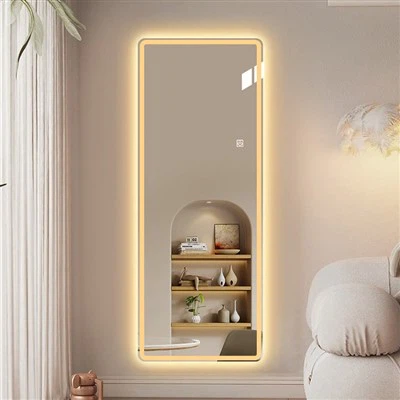
There's a particular quality to old glass that catches the eye - a gentle ripple across the surface that distorts reflections and makes the world outside look like it's moving through water. You see it in 19th-century townhouse windows, antique cabinet doors and heritage pub partitions. People often assume wavy glass is a lost craft, something that disappeared when modern float glass took over in the mid-20th century. The good news is that wavy glass is not only still available - it's being produced more consistently and in more varieties than ever before. Modern Wave Pattern Glass captures the organic, rippled character of antique glass while offering the safety, precision and customization that contemporary projects demand.
The Short Answer: Yes, and It's Better Than Ever
Wavy glass never completely went away. What changed is how it's made and who makes it.
Antique wavy glass was an accidental byproduct of early glassmaking techniques - crown glass and cylinder glass methods produced uneven surfaces because molten glass was blown and spun by hand. Modern wave glass is deliberate: manufacturers roll controlled ripple patterns into the glass during production, creating the same water-like distortion with far greater consistency, strength and design flexibility.
Antique Wavy Glass vs Modern Wave Pattern Glass
The two look similar but behave very differently. Antique wavy glass is thin, irregular and increasingly scarce. Salvaged pieces are expensive, come in limited sizes, and often carry imperfections like bubbles, seeds and inconsistent thickness. It also breaks into sharp shards because it's annealed, not tempered. Modern water wave glass replicates the rippled aesthetic but is produced in uniform sheets up to 3660mm long, can be tempered or laminated for safety, and offers predictable privacy and light performance. For restoration work, some manufacturers even produce "restoration glass" designed to closely match antique distortion patterns.
Related post: "What is the most popular obscure glass pattern? Top Privacy Patterns for Commercial Projects"
What Is Wave Pattern Glass?
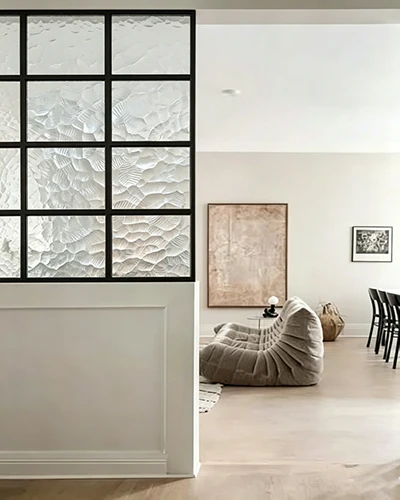
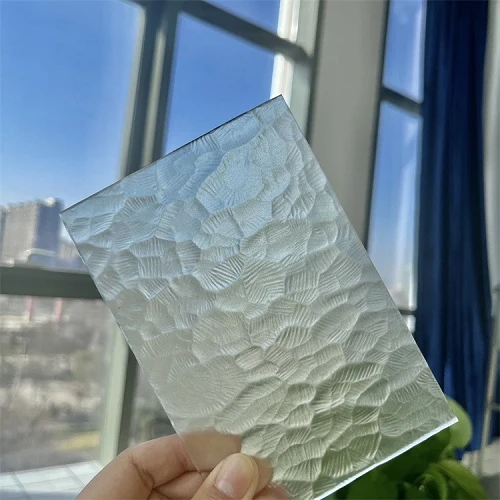
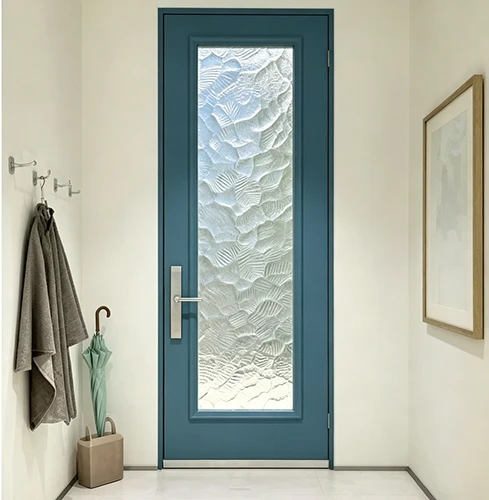
Wave Pattern Glass is a type of patterned or textured glass with continuous, organic ripple patterns across its surface. The waves scatter light as it passes through, creating a soft, watery distortion that blurs shapes and details while keeping the space bright. It sits in the same family as reeded, hammered and nashiji glass, but its irregular, flowing lines give it a more natural, less geometric character.
How It's Made
Modern wave glass is produced through a continuous rolling process. Molten glass is fed between two metal rollers, one of which carries an engraved wave pattern. As the glass passes through, the pattern transfers onto the surface while the glass is still hot and malleable. The sheet then cools slowly on a lehr (annealing oven) to relieve internal stresses. The depth, frequency and shape of the waves depend on the roller engraving, which means manufacturers can offer everything from subtle, shallow ripples to deep, dramatic undulations. Clear wave glass uses standard or low-iron glass as the substrate; the latter removes the green tint and produces a cleaner, brighter appearance.
Key Properties
Wave Pattern Glass does several jobs at once. The rippled surface diffuses light, spreading it evenly through a room without the glare of clear glass. It provides partial privacy - you can see light, color and movement through it, but faces and fine details blur. The texture also hides fingerprints, water spots and dust better than smooth glass, which reduces cleaning frequency in high-use areas. And like other patterned glass panels, wave glass can be tempered, laminated, double glazed or cut to custom sizes depending on the application.
Related post: "What are the different types of decorative glass? A Complete Guide to Patterns, Applications and Sourcing"
Wave Pattern Glass vs Clear Glass
The choice between wavy and clear glass comes down to what you want the glass to do. Clear glass maximizes transparency and direct light but offers zero privacy and shows every mark. Wave Pattern Glass trades a degree of optical clarity for privacy, light diffusion and decorative character.
Here's how they compare across the key performance areas:
| Factor | Wave Pattern Glass | Clear Glass |
|---|---|---|
| Surface | Organic ripple texture | Smooth and flat |
| Visibility | Distorted, shapes blurred | Fully transparent |
| Light | Diffused, glare-free | Direct transmission |
| Privacy | Partial to medium-high | None |
| Maintenance | Hides spots and fingerprints | Shows every mark |
| Aesthetic | Decorative, organic, vintage feel | Minimal, clean, modern |
| Common uses | Partitions, doors, cabinets, bathrooms | Storefronts, windows, display cases |
One thing worth noting: wave glass doesn't reduce the total amount of light entering a room by much. Even deep ripple patterns typically transmit 75-88% of visible light, depending on texture depth. What changes is the quality of that light - it becomes softer and more evenly distributed rather than directional.
Related post: "Is frosted glass better than clear glass? Privacy, Light and Style Compared"
Common Applications
Wave Pattern Glass works across a surprisingly wide range of settings, from heritage restorations to contemporary commercial interiors. Its ability to feel both vintage and modern is a big part of its appeal.
Interior Partitions and Office Dividers
In open-plan offices, wave glass partitions divide space without closing it off. Light travels through the rippled surface and reaches deeper into the floor plate, while the distortion gives meeting rooms and individual workspaces visual privacy. The organic pattern softens the hard edges of commercial interiors and works equally well with black steel frames, warm wood or aluminum systems.
Doors, Windows and Cabinets
Entrance doors, interior doors and side panels are classic applications. Clear wave glass in a front door gives homeowners privacy from the street while keeping the entryway bright. Cabinet doors and wardrobe fronts benefit too - the rippled surface hides the contents of shelves and closets while adding texture to furniture. For heritage and restoration projects, wave glass is often specified to replace broken antique panes without losing the character of the building.
Bathrooms and Wet Areas
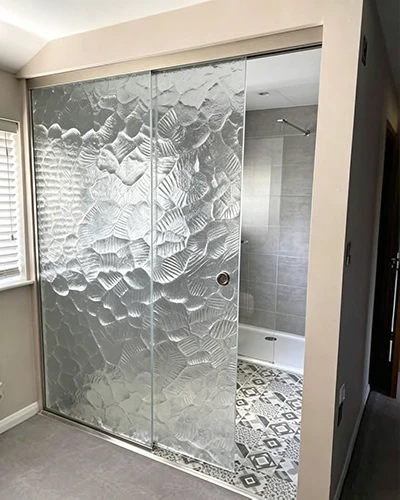
Bathroom windows and shower enclosures are among the most common uses. Wave glass provides privacy in spaces where blinds or curtains are impractical, and the textured surface hides water spots and soap residue better than smooth glass. When tempered, it meets safety codes for shower doors and low-level glazing. The watery ripple pattern also feels naturally at home in wet environments, reinforcing the design language of the space.
Related post: "What type of glass is best for shower doors? Safety, Privacy and Durability Guide"
Design and Specification Tips
Wave Pattern Glass is forgiving to work with, but a few specification choices make a real difference to the finished result.
Frame Selection
Slim frames let the ripple texture take center stage. Minimal black steel or aluminum frames create a clean, contemporary look that contrasts nicely with the organic glass. Traditional wood frames lean into the vintage character and work well for restoration projects. Whatever frame you choose, make sure glazing clearances account for the textured surface - the patterned side typically faces the interior for easier cleaning and protection.
Safety Treatments
Any wave glass used in doors, shower enclosures, low-level windows, balustrades or other hazardous locations should be tempered or laminated. Tempered wave glass breaks into small blunt fragments; laminated wave glass holds together on impact. Both treatments preserve the ripple pattern while bringing the glass up to EN 12150 or ANSI Z97.1 safety standards. For exterior windows in cold climates, double glazed wave units combine the privacy pattern with thermal insulation and noise reduction.
Pattern Orientation and Consistency
Unlike reeded glass, wave patterns are generally non-directional, which makes installation simpler and reduces the risk of misaligned panels. Still, for projects with multiple adjacent panels, order all units from the same production batch to ensure consistent wave depth and frequency. Reputable pattern glass suppliers will batch-match commercial orders on request.
Related post: "Does patterned glass go on the inside or outside? Installation Orientation and Best Practices"
Sourcing Wave Pattern Glass for Commercial Projects
When sourcing wave glass for a commercial or multi-unit project, buying directly from decorative glass manufacturers is the most cost-effective route. Chinese glass manufacturers in particular have invested heavily in patterned glass rolling lines in recent years, offering a wide range of privacy glass patterns at competitive prices and with the capacity to handle large export orders. That said, quality varies between factories, so it's worth vetting suppliers carefully.
Ask for full-size samples before committing to a large order - small swatches don't always show how a ripple pattern looks across a 2400mm panel or in different lighting conditions. Request test data on light transmission, tempering standards and seal integrity for double glazed units. And compare total landed cost, including packaging, shipping and insurance, rather than just the per-square-meter quote. Wholesale window glass suppliers that carry a broad range of patterned glass panels can consolidate orders across multiple patterns and treatments, simplifying logistics for projects that mix wave, reeded, frosted and clear glass.
For ongoing supply relationships, look for a manufacturer that can offer consistent batch quality, custom pattern development, reliable lead times (typically 20-30 days for patterned units) and export documentation support. The cheapest quote rarely ends up being the cheapest project once delays, breakages and inconsistent quality are factored in.
Related post: "Is pressed glass durable? Strength, Lifespan and Maintenance Guide"
Luck Glass: Your Wave Pattern Glass Partner
Luck Glass is a professional decorative glass manufacturer specializing in Wave Pattern Glass, clear wave glass, water wave glass, reeded glass, frosted glass, hammered glass, back painted glass, laminated glass and custom patterned glass panels, serving global contractors, developers, window fabricators, building material traders and brand clients. The company runs advanced rolling, tempering, insulating glass and finishing production lines with an experienced technical team that keeps quality consistent and delivery on schedule.
Luck Glass offers wave glass in a range of ripple depths and styles, from subtle restoration-style patterns to bold contemporary undulations. All patterned glass can be tempered to meet EN 12150 and ANSI Z97.1 safety standards, laminated for security and acoustic performance, or assembled into double glazed insulated units for thermal efficiency. Full customization is supported across size, thickness, pattern selection, edge finishing, hole drilling and cutouts, with maximum panel sizes up to 3660mm x 2440mm and typical delivery within 25 working days.
Whether the project calls for water wave glass for a heritage restoration, clear wave glass partitions for a modern office, patterned glass panels for hotel shower enclosures, or bulk supply from wholesale window glass suppliers for a large-scale development, Luck Glass delivers efficient, reliable solutions tailored to each project's specifications and budget. The technical team can also provide guidance on pattern selection, orientation, safety compliance and glazing details for every application.
Frequently Asked Questions
Q: Can you still get wavy glass for old windows?
A: Yes. Modern manufacturers produce wave pattern glass and restoration glass designed to replicate the rippled appearance of antique windows. These are available in standard and custom sizes, can be tempered or laminated for safety, and are far more consistent and affordable than salvaged antique panes.
Q: When did they stop making original wavy glass?
A: Hand-blown wavy glass was common from the 1700s through the early 1900s. After the 1950s, modern float glass production created perfectly flat sheets, and the accidental waviness of old glass largely disappeared from new construction. Deliberately patterned wave glass, however, has continued to be produced ever since.
Q: What's the difference between wavy glass and reeded glass?
A: Wavy glass features irregular, organic ripples that resemble water, while reeded glass has uniform, parallel vertical grooves. Wavy glass feels more natural and vintage; reeded glass feels more geometric and contemporary. Both diffuse light and provide privacy.
Q: Is wavy glass expensive?
A: Modern wave pattern glass is competitively priced compared to other decorative patterned glass, especially when sourced directly from manufacturers. It costs more than standard clear glass but less than many custom or art glass options. Bulk orders from wholesale suppliers reduce per-unit costs significantly.
Q: Can wavy glass be tempered?
A: Yes. Wave Pattern Glass can be tempered, laminated or made into double glazed units without losing the ripple pattern. Tempering is recommended for doors, showers, low-level windows and any location covered by safety glazing codes.
Final Thoughts
So can you still get wavy glass? Absolutely - and in many ways, today's wave pattern glass is better than the antique version it honors. Modern rolling technology delivers the same organic, watery ripple that makes old glass so charming, but with consistent quality, predictable privacy performance, safety tempering options and sizes that antique glass could never achieve. Whether you're restoring a 19th-century building or designing a contemporary office, water wave glass gives you light diffusion, partial privacy and genuine decorative character in one material.
The key is sourcing from decorative glass manufacturers that understand pattern consistency and can provide samples, test data and batch-matched supply. With the right supplier and a few smart specification choices - slim frames, appropriate safety treatment and matched production batches - wave glass becomes one of the most distinctive and practical glazing options in your design toolkit.