If you're specifying windows or doors that need both privacy and insulation, patterned double glazed glass is one of the smartest choices on the market. It pairs a textured outer pane - reeded, frosted, nashiji or any number of obscure window glass patterns - with an inner pane separated by an air or argon-filled gap, giving you privacy, thermal performance and noise reduction in a single unit. But the question that comes up on every project is simple: how much does it actually cost? Double glazed glass panels prices vary widely depending on pattern, thickness, size, quantity and whether you're buying retail or direct from a manufacturer. This guide breaks down the numbers and the value behind them.
What Is Patterned Double Glazed Glass?
Before getting into pricing, it's worth understanding what you're paying for. Patterned double glazed glass - also called patterned insulated glazing or double glazed decorative glass - is an insulated glass unit (IGU) made from two panes of glass sealed together with a spacer bar and a gas-filled cavity between them. At least one pane carries a rolled or embossed pattern that diffuses light and obscures views.
How It's Made
The patterned pane is produced first. Molten glass is fed between two rollers, one of which carries an engraved pattern that transfers onto the glass surface as it cools. The textured pane is then paired with a clear or low-emissivity (low-E) inner pane, separated by an aluminum or warm-edge spacer, and sealed around the perimeter with butyl and polysulfide sealants. The cavity is filled with dry air or argon gas, which improves thermal performance. The result is a sealed unit that delivers far better insulation than a single pane.
Why Pattern and Double Glazing Work Together
The combination solves two problems at once. The patterned pane provides privacy and light diffusion - it lets daylight in while blurring what's on the other side. The double glazed cavity provides thermal insulation, condensation resistance and noise reduction. Together they create a unit that works hard in bathrooms, street-facing windows, office partitions and entrance doors, where a single patterned pane alone would let heat escape and a clear double glazed unit would offer no privacy.
Related post: "What is the most popular obscure glass pattern? Top Privacy Patterns for Commercial Projects"
How Much Does Double Glazed Glass Cost?
Double glazed glass panels prices range quite a bit, and the pattern is only one of several cost drivers. Here's a realistic breakdown of what to expect when sourcing for a residential or commercial project.
Price Ranges by Glass Type
As a rough benchmark for standard-sized units in moderate quantities, clear double glazed glass starts at around $30-50 per square meter for basic configurations. Patterned double glazed glass typically adds a premium for the textured pane, landing in the $40-70 per square meter range depending on the pattern and whether low-E glass or argon gas is included. More elaborate double glazing stained glass patterns, custom designs or laminated safety glass can push prices to $70-120 per square meter or more.
These are unit-level material prices, not installed prices. Installation, framing, hardware and site-specific fabrication all add to the total project cost. For commercial buyers ordering in bulk from wholesale window glass suppliers, per-square-meter prices can be 15-30% lower than retail rates, especially when ordering full containers or committing to ongoing supply.
What Drives the Cost Up or Down
Several factors move the needle on double glazed glass panels prices. The pattern itself matters - common patterns like reeded and frosted are produced in high volume and cost less, while custom or low-volume patterns carry a setup premium. Glass thickness affects price too; standard 4mm+4mm units are the most affordable, while 6mm+6mm or laminated combinations cost more. Low-E coatings, argon gas fill, warm-edge spacers and tempered safety glass all add cost but improve performance.
Size and quantity are the biggest commercial levers. Large or oversized units require bigger substrates and more careful handling, while small units carry a higher per-square-meter cost due to fixed cutting and sealing overheads. Bulk orders spread those overheads across more units and qualify for volume discounts. Custom edge finishing, hole drilling, notches and special shapes also add processing cost.
Related post: "Is tempered glass window worth it? Safety, Cost and Long-Term Value Guide"
The Benefits Beyond Cost
Looking only at the upfront price misses the bigger picture. Patterned double glazed glass delivers a stack of performance benefits that often pay back the premium over the life of the building.
Privacy and Light Diffusion
The textured pane is the defining feature. Obscure window glass patterns - reeded, nashiji, hammered, frosted, rain and geometric designs - scatter light so that shapes and details blur while daylight still floods through. Obscurity is typically rated on a scale from 1 (nearly clear) to 5 (fully opaque), with most bathroom and street-facing windows specifying level 3 or 4. Unlike blinds or curtains, patterned glass provides privacy 24 hours a day without any moving parts or maintenance.
Insulation and Energy Savings
The sealed cavity is where double glazing earns its keep. A standard air-filled double glazed unit achieves a U-value of around 2.8 W/m²K, compared to roughly 5.0-5.8 for single glazing. Adding argon gas and a low-E coating drops the U-value to 1.2-1.8, cutting heat loss by more than half. In air-conditioned commercial buildings or heated homes, that translates directly into lower energy bills year-round - cooler interiors in summer, warmer in winter, and less load on HVAC systems.
Safety and Noise Reduction
Double glazed units can be specified with tempered or laminated panes to meet building codes for doors, low-level windows, shower areas and balustrades. The dual-pane construction also reduces sound transmission by roughly 25-35 decibels compared to single glazing, making patterned double glazed glass a strong choice for buildings on busy streets, near airports or in dense urban areas. The combination of privacy, safety and acoustic comfort is hard to match with any single-pane product.
Related post: "Does laminated glass crack easily? Safety, Strength and Applications"
Common Applications
Patterned double glazed glass shows up anywhere privacy and thermal performance matter together.  The pattern can face inward or outward depending on the design and cleaning considerations.
Windows and Doors
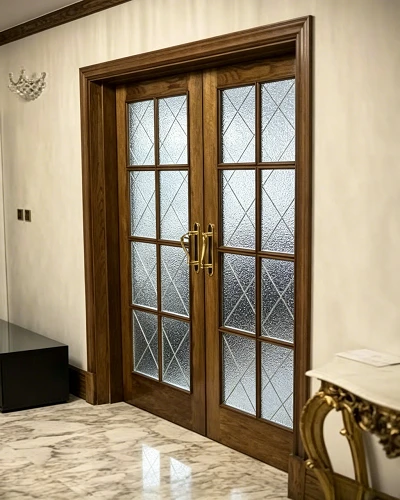
Bathroom and toilet windows are the classic application - they need privacy from neighbors but benefit from natural light and ventilation. Street-facing ground-floor windows in homes and offices use patterned double glazing to block views while keeping rooms bright. Entrance doors, side panels and fanlights frequently use reeded or frosted double glazed units for both privacy and curb appeal. In colder climates, double glazing is effectively standard, so choosing a patterned version costs little more than clear.
Partitions and Commercial Spaces
Interior double glazed partitions in offices, meeting rooms and healthcare facilities use patterned units to combine visual privacy with acoustic separation - the cavity reduces speech transmission between rooms. Hotels specify patterned double glazed glass for bathroom windows and shower screens. Retail and hospitality projects use it for feature walls, restaurant dividers and changing room screens. Working with experienced glass partition manufacturers ensures the units are fabricated to the right thickness and pattern orientation for each space.
Related post: "Does patterned glass go on the inside or outside? Installation Orientation and Best Practices"
How to Source Patterned Double Glazed Glass
For commercial buyers and contractors, sourcing directly from a glass supply company or glass partition supplier is almost always more cost-effective than buying through retail channels. A manufacturer that runs its own rolling, tempering and insulating glass lines can offer better pricing, tighter quality control and shorter lead times than a reseller.
When comparing commercial glass suppliers, ask for test data on U-values, light transmission, obscurity levels and safety standards (EN 12150 for tempered glass, EN 1279 for insulating glass units). Request full-size samples of the specific pattern you're specifying - small swatches don't always reveal how a texture looks across a large unit or in different lighting. And confirm pattern orientation before fabrication; some patterns like reeded have a directional grain that needs to align consistently across multiple panels.
For projects combining multiple glass types - patterned double glazed windows, clear double glazed storefronts, single glazed interior partitions - consolidating with one supplier simplifies logistics and quality control. Wholesale window glass suppliers that carry a full range can ensure consistent edge quality, seal integrity and delivery timing across the entire project. Always compare total landed cost including packaging, shipping and insurance, and place bulk orders well ahead of installation dates to account for the 20-30 day fabrication cycle typical of insulated units.
Related post: "What is the role of reflection in solar radiation? Understanding Light Loss and Patterned Glass Solutions"
Luck Glass: Your Patterned Double Glazed Glass Partner
Luck Glass is a professional glass manufacturer specializing in Patterned Double Glazed Glass, patterned glass panels, reeded glass, frosted glass, nashiji glass, back painted glass, laminated glass and custom decorative glass products, serving global contractors, developers, window fabricators, building material traders and brand clients. The company runs advanced rolling, tempering, insulating glass and finishing production lines with an experienced technical team that keeps quality consistent and delivery on schedule.
Luck Glass offers patterned double glazed units in a wide range of obscure window glass patterns, with options for low-E coatings, argon gas fill, warm-edge spacers, tempered or laminated safety glass and custom edge finishing. All units are fabricated to EN 1279 insulating glass standards, with consistent seal integrity and thermal performance. Full customization is supported across size, thickness, pattern selection, cavity width and safety treatment, with maximum panel sizes up to 3660mm x 2440mm and typical delivery within 25 working days.
Whether the project calls for patterned double glazed bathroom windows, double glazing stained glass patterns for a heritage development, insulated partitions from glass partition manufacturers for an office fit-out, or bulk supply from commercial glass suppliers for a large-scale build, Luck Glass delivers efficient, reliable solutions tailored to each project's specifications and budget. The technical team can also provide guidance on U-values, pattern orientation and safety compliance for every application.
Frequently Asked Questions
Q: How much does patterned double glazed glass cost?
A: Standard patterned double glazed glass typically costs $40-70 per square meter for material units, depending on pattern, thickness and configuration. Adding low-E glass, argon gas or laminated safety glass moves the price to $55-100 per square meter, while custom stained or artistic patterns can cost $70-120 or more. Bulk orders from wholesale suppliers are typically 15-30% lower.
Q: Is patterned double glazing more expensive than clear double glazing?
A: Yes, the patterned pane adds a modest premium, usually 10-30% over clear double glazed units of the same size and configuration. Common patterns like reeded and frosted carry the smallest premium because they're produced in high volume.
Q: Can patterned double glazed glass be tempered?
A: Yes. Either or both panes can be tempered to meet safety codes for doors, shower enclosures, low-level windows and balustrades. Laminated options are also available for enhanced security and acoustic performance.
Q: Which pattern gives the best privacy?
A: Obscurity is rated from 1 to 5. Deep patterns like hammered, heavy frosted and certain stained glass patterns reach level 4-5, while reeded and nashiji typically sit at level 3-4. A reputable glass supply company can recommend the right level for each application.
Q: How long do double glazed units last?
A: Quality double glazed units typically last 20-30 years or more when properly fabricated and installed. The seals are the most vulnerable component; reputable manufacturers back their units with multi-year warranties against fogging or seal failure.
Final Thoughts
Patterned double glazed glass isn't the cheapest glazing option on the shelf, but it delivers a combination of privacy, insulation, noise reduction and safety that no single-pane product can match. With material prices ranging from $40-70 per square meter for standard patterns and $55-100 for high-performance configurations, the upfront premium is modest when measured against the energy savings, comfort and long-term durability - especially when you're buying in bulk from experienced wholesale window glass suppliers rather than paying retail margins.
The key to getting the right product at the right price is to match the pattern and configuration to the application, request physical samples, and source from a manufacturer that controls the full production process. Obscure window glass patterns aren't just decorative - they're a functional specification that shapes privacy, light and energy performance for decades. Choose well, and patterned double glazed glass becomes one of the hardest-working materials in the building.