Short answer: textured glass can face either direction, but the practical rule is to keep the smooth face toward the side that is hardest to clean or most exposed to grime. On an exterior textured glass door that usually means the patterned side faces in while the street side stays flat. Privacy and light diffusion still work from both directions because the pattern sits inside the glass. The right call depends on cleaning access, the frame, and whether the panel is single- or double-textured.
What "Facing In Or Out" Actually Means
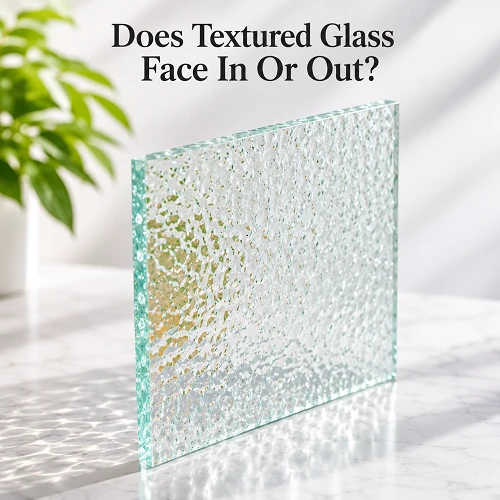
Before choosing an orientation you have to know what the glass actually is. Textured glass - also called patterned or rolled glass - is made by passing molten glass between embossed rollers that press a relief onto the surface as it cools. The result is a pane that scatters light and softens sightlines while still passing daylight.
Single-Textured Vs Double-Textured
Most decorative textured glass is cast with the pattern on one face only; the opposite face is flat and smooth. Some designs are rolled with relief on both sides, so the texture reads either way. Knowing which you have matters, because a double-textured pane has no "smooth side" to aim anywhere.
Where The Pattern Sits In The Glass
Because the relief is pressed into the hot glass during rolling, the obscuration is built into the pane rather than applied on top. That is why flipping the glass does not switch privacy on or off - the pattern is in the body of the glass, not just on the surface you happen to face.
To understand the surface relief we are talking about, start with the basics ⇒ Related Post: "What Is Glass Texture? Types, Uses And Decorative Panels"
The Practical Rule: Smooth Face To The Hard-To-Clean Side
The single most useful guideline is boring but reliable: point the smooth face at whatever is hardest to keep clean. Flat glass wipes in seconds; a patterned surface traps film in every groove.
Exterior Doors And Windows
On a street-facing textured glass door, aim to present the smooth face outward. Rain and wind keep the outside cleaner than the inside, and any film that does build up wipes off a flat pane far more easily than a relief one.
Shower And Wet-Room Screens
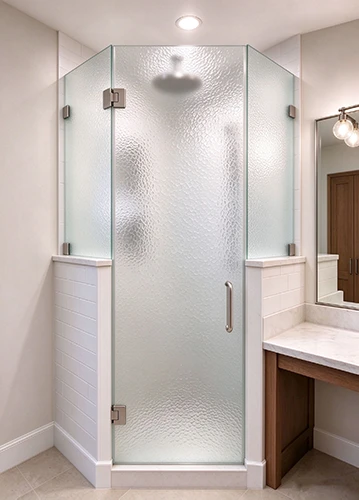
In a shower the wettest, soapiest side should be the smooth one. That means the textured face points into the stall and the flat face into the bathroom, so you squeegee a plain surface instead of chasing limescale out of a pattern. It is the same logic as the exterior door, just with water instead of weather.
Interior Partitions And Doors
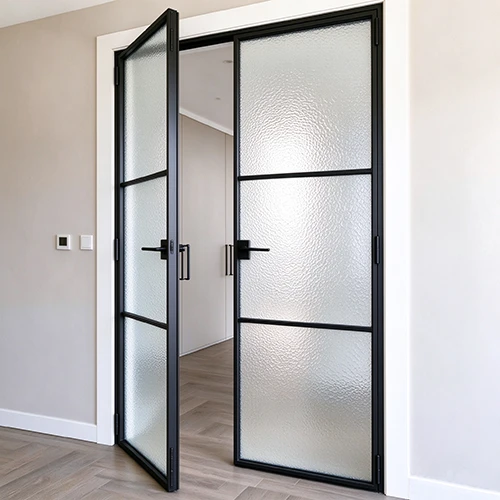
For interior rooms there is no weather, so orientation is mostly aesthetic. Put the texture where you want it to be seen - toward the hallway, the office, or the room you are dressing. A textured glass panel used as a divider can face either way without penalty.
|
Where it goes |
Put the smooth face |
Why it helps |
|
Exterior door / window |
Outward (street side) |
Sheds weather, easy to wipe |
|
Shower screen |
Toward the room |
Wet, soapy stall side wipes clean |
|
Interior partition |
Either way |
Aesthetic choice only |
For a closer look at how texture affects screening and sightlines, this is the natural next read ⇒ Related Post: "How Private Is Textured Glass? Light, Doors And Panels"
Does Orientation Change Privacy Or Light?
A common worry is that facing the texture inward "gives up" privacy from outside.  It does not, and understanding why removes most of the hesitation around orientation.
Privacy Reads From Both Sides
Because the relief is inside the glass, the sightline is broken no matter which face you stand behind. A person outside an exterior textured glass door cannot see in clearly whether the pattern points toward them or away.
Light Diffusion And Glare Control
The pattern breaks up direct beams regardless of which way it points. Daylight entering through a textured glass door is softened into an even glow, and harsh sun glare is cut without blocking the room. Orientation changes where the relief looks busy up close, not how much light passes.
Seeing the actual surface finishes helps explain why the effect is the same both ways ⇒ Related Post: "What Does Textured Glass Look Like?"
Square Textured Glass: A Pattern That Works Either Way
Among the many reliefs, Square Textured Glass - a fine, closely spaced grid or checkerboard impression - is a quiet workhorse. It scatters light evenly, reads as deliberately decorative, and suits both traditional and modern frames.
Why The Square Grid Reads As Decorative
The fine square cells catch light at slightly different angles, giving the pane a soft, pebbled shimmer rather than a hard mirror. That is why Square Textured Glass turns up in doors, screens and cabinet fronts alike.
Matching Square Texture To The Room
Use the square grid where you want privacy without weight: a bathroom sidelight, a home-office divider, or a pantry door. It pairs well with slim black or warm wood frames and stays legible from across a room.
The same relief goes by several names depending on the catalogue, worth knowing ⇒ Related Post: "What Do You Call Patterned Glass?"
Textured Glass Door: What To Specify
When the panel goes into a door, orientation is only half the brief. The glass also has to be safe, seat correctly, and survive daily use.
Temper For Safety
Any glass in a door - front, interior, or shower - must be safety glass, normally tempered, so it breaks into small dull pieces rather than shards. Specify tempering at the order stage; the texture is rolled in before tempering, so the relief is unchanged and orientation rules still apply.
Frame, Gasket And Edge Notes
Textured glass is often a little thicker than standard clear, so confirm the glazing groove depth before committing the frame. A soft gasket protects the edge, and a clean reveal keeps the smooth face accessible.
If you are weighing reeded or fluted looks for the same door, the comparison helps ⇒ Related Post: "What Is The Difference Between Fluted And Reeded Glass?"
Textured Glass Panels Beyond Doors
Doors are only the start. Textured glass panels earn their place wherever you want light plus a little mystery.
Cabinet Fronts And Dressers
A textured insert on a kitchen cabinet or dresser hides the contents while keeping the run of light across a room. The smooth face can sit toward the handle side for easy wiping, with the relief turned inward toward the shelf.
Shelving And Room Dividers
Full-height textured glass panels make excellent room dividers: they mark a zone without building a wall and let a small apartment borrow daylight from the next space. Orientation here is pure taste, since neither side sees weather or soap.
For the wider family of looks this panel belongs to, see the full rundown ⇒ Related Post: "What Are The Different Types Of Decorative Glass?"
Textured Privacy Glass Where It Matters Most
Textured privacy glass is the category name for any relief glass used to screen a view, and two locations benefit most.
Bathrooms And En-Suites
Bathroom windows and shower screens are the classic home for privacy glass. The square grid or a softer floral relief obscures the silhouette while daylight still fills the room - exactly the balance a bathroom needs.
Street-Facing Entrances
A front textured glass door lets you watch the light change through the day without feeling on display to the street. With the smooth face out, it also stays presentable between cleanings, which is the practical payoff of the orientation rule.
For a trend angle on decorative relief glass, this piece is useful ⇒ Related Post: "Is Reeded Glass Back In Fashion?"
Decorative Textured Glass As A Design Layer
Seen as a material rather than a fix, decorative textured glass is a lighting tool you hang in a frame.
Layering Daylight
A textured pane turns a harsh window into a soft lantern. With a curtain or a second clear sheet, it shifts a room from bright to hushed without blocking the view of the sky.
Pairing With Frame Finishes
The relief reads differently against black steel, warm oak, or brushed brass. Square and grid patterns feel modern with black; softer scrolls feel period with brass. Choose the frame to set the mood, and let the glass do the diffusing.
About Luck Glass
Luck Glass is a glass processing manufacturer focused on the deep-processing of decorative and obscure glass for both residential and commercial projects. Across our ranges we produce acid-etched, frosted, painted, fabric, textured and patterned glass, supplied as cut-to-size panels with the finish, color and safety treatment each project needs - tempered, laminated, or a combination of both. Our multiple deep-processing lines support consistent batches across large orders, and we work with distributors, contractors and brands in many countries worldwide. From a private bathroom partition to a multi-floor commercial fit-out, our fabrication is cut-to-size and matched to project drawings.
FAQ
Does textured glass have to face a certain way?
No - textured glass has no fixed orientation, but the practical rule is to keep the smooth face toward the harder-to-clean side. On an exterior textured glass door that usually means the pattern faces in and the flat side faces the street. The choice affects cleaning and look, not safety or privacy, which work from both directions.
Should the textured side face inside or outside a shower?
In a shower, point the textured face into the wet stall and keep the smooth face toward the bathroom. Soap and limescale wipe far more easily off a flat pane than a patterned one, so the room side stays clearer with less effort. Privacy is unchanged because the relief sits inside the glass.
Can you flip textured glass if you change your mind?
Usually yes - single-textured glass can be flipped during installation because the pane is symmetrical in size, though the visible relief then moves to the other room. Double-textured glass looks identical either way. The one constraint is the frame and any pre-cut glazing grooves, which may favour one orientation.
Is square textured glass more private than clear glass?
Yes - square textured glass is far more private than clear glass because its fine grid relief scatters light and breaks up the direct sightline. It is not fully blackout, but it obscures shapes and faces while still passing daylight. The effect is the same regardless of which way the square texture faces.
Summary
Textured glass can face either direction, but the safe default is to keep the smooth face toward the side that is hardest to clean or most exposed - outward on a street-facing textured glass door, toward the room on a shower screen. Privacy and light diffusion are unchanged by orientation because the pattern sits inside the pane, so Square Textured Glass, textured glass panels and textured privacy glass all read the same from both sides. When you specify a textured glass door, temper it for safety and let the frame decide any final detail. Choose the relief for the room you want it to adorn, and let decorative textured glass do the diffusing.