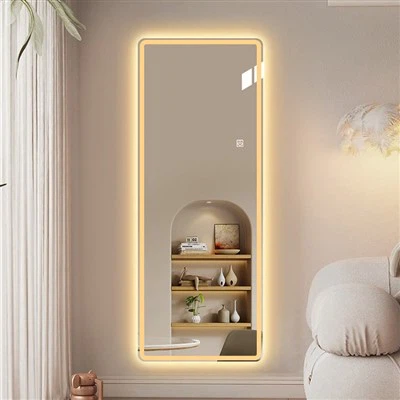
Good-quality double glazing shows itself in three places: a tight, dry sealed unit, the right glass build-up for the job, and - where privacy matters - a well-made obscure or patterned pane. The pattern itself points back to the pattern glass factory that rolled it, which is why the maker behind the glass matters as much as the frame around it.
What "good quality" double glazing means
A double-glazed unit is two glass panes separated by a spacer and a sealed gap, usually filled with air or an inert gas. Quality is not one number; it is how well those parts hold together over years. A good unit keeps its gap dry, its edges sealed, and its panes aligned. When one of those fails, the whole window underperforms even if the glass looks fine on day one.
The build-up is the second half of the story. Low-emissivity coatings, the right glass thickness, and a warm-edge spacer reduce heat loss and condensation. None of that is visible from the street, which is exactly why buyers lean on reputation and specification sheets instead of eyeballing the glass.
A unit is only as good as its weakest component. Two thin panes with a great coating still underperform if the spacer lets moisture through, and a perfect seal means little if the glass itself is poorly rolled or poorly tempered. When you assess quality, read the whole specification, not just the headline glass type.
For the wider family this fits into, start here ⇒ Related Post: "What are the different types of decorative glass? Types and usage"
Obscure And Patterned Glass Inside Double Glazing
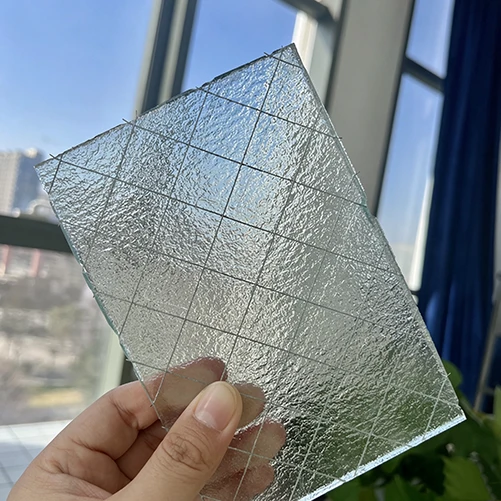
Many double-glazed windows are not meant to be clear. Bathrooms, street-facing doors and ground-floor partitions use a textured pane for privacy while still passing daylight. That is where double glazing obscure glass patterns enter the picture - and where the choice of pattern changes both the look and the function of the unit.
Why patterns appear in double glazed units
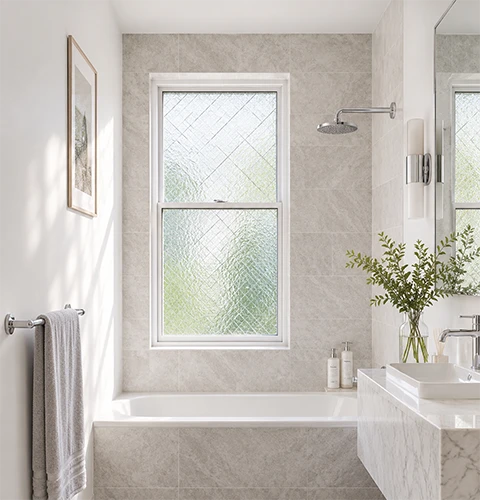
The pattern is rolled into one pane at the glass factory, then that pane is paired with a clear pane in the sealed unit. The textured side can face in or out depending on the application, and the degree of distortion sets how private the room feels. A faint reed or minute bubble pattern reads as "softened" rather than "hidden"; a deep ice-crack or wired pattern reads as properly obscure.
LUCK GLASS produces great quality double glazing
Common obscure glass patterns to know
The language of double glazing patterns runs from subtle to strong. Below are the types buyers actually meet, and what each one is built for.
|
Pattern |
Privacy level |
Typical use in double glazing |
|
Reed / lines |
Low to medium |
Doors, side panels where light matters most |
|
Minute bubble / stipple |
Medium |
Bathroom windows, partitions |
|
Frosted / acid-etched |
High |
Shower screens, street-facing glass |
|
Ice-crack / crushed ice |
High |
Feature glazing, privacy with character |
|
Wired grid |
High |
Safety-adjacent obscure glazing |
The same pattern family also shows up as patterned double glazed glass, where the texture is the selling point rather than just the privacy layer. The two terms overlap: "obscure" describes the effect, "patterned" describes the cause.
To see how privacy and light actually balance, this explains it ⇒ Related Post: "Is Textured Glass See Through? Privacy & Light Explained"
The Pattern Glass Factory Behind The Pane
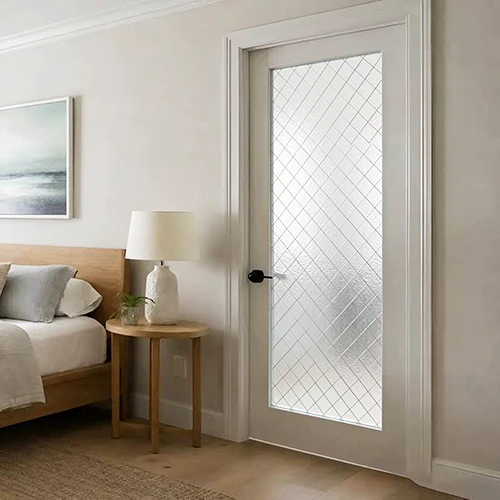
A patterned pane is only as good as the pattern glass factory that produced it. The roller that impresses the texture sets the depth and consistency of every sheet, and small drift there becomes a visible defect once the glass sits in a sealed unit under raking light.
What a pattern glass factory controls
The variables are fewer than buyers think but harder to fake. Roller condition decides pattern sharpness; the annealing line decides flatness; the washing and inspection steps decide how many flaws reach the customer. A factory that controls its own rolling and tempering can hold a pattern across a repeat order months later - which is the difference between a matched renovation and a patchwork of slightly different panes.
Documented process discipline matters as much as the machinery. A maker that records each run - pattern lot, thickness, any coating - can trace a fault back to its source and, just as importantly, prove consistency to the distributor or contractor who has to stand behind the installation.
How pattern quality shows up in the finished unit
In the installed window, good pattern quality reads as an even, intentional texture with no warps, no trapped debris, and no soft spots where the pattern fades. Poor quality shows as wavy distortion, bubbles in the wrong places, or a pattern that looks stamped rather than rolled. These are exactly the things a quick site inspection catches before the frames are sealed shut.
For a privacy-focused read on textured glass, see ⇒ Related Post: "How Private Is Textured Glass? Light, Doors And Panels"
Signs Of Poor-Quality Double Glazing
The failure modes are consistent enough to memorize. Condensation or a foggy film between the panes means the seal has broken and the gas has escaped - the unit is no longer insulating as designed. Draughts around the edge, discolored spacer bars, or glass that feels cold to the touch in winter all point the same way: the build-up or the seal is underperforming.
Pattern-related defects are easier to miss. A pane that looks fine in the showroom can reveal an uneven or badly rolled texture once it faces direct sun. That is why specifying the pattern and the maker matters more than specifying a brand name alone.
A practical check takes minutes. Hold a straight edge or a tile line behind the glass and look for wobble in the reflected image; walk the pane under raking light to spot soft or faded pattern zones; and compare two samples from the same order to confirm they match. Small effort at delivery saves a full-unit replacement later.
On which way the textured side should face, this answers it ⇒ Related Post: "Does Textured Glass Face In Or Out?"
About Luck Glass
Luck Glass is a glass processing manufacturer focused on the deep-processing of decorative and obscure glass for both residential and commercial projects. Across our ranges we produce acid-etched, frosted, painted, fabric and textured glass - including patterned and obscure glass suited to double-glazed privacy and feature units - supplied as cut-to-size panels with the finish, color and safety treatment each project needs, tempered, laminated, or both. Our multiple deep-processing lines support consistent batches across large orders, and we work with distributors, contractors and brands in many countries worldwide. From a single obscure pane to a full double-glazing supply program, our fabrication is cut-to-size and matched to project drawings.
FAQ
Does patterned glass reduce double glazing quality?
No - a rolled pattern does not weaken a properly made unit; it only changes appearance and privacy. The quality risk is not the texture itself but how evenly it was rolled and whether the pane was handled correctly afterward. A well-made patterned pane performs as insulation and sealing exactly like a clear one, so pattern choice is a design decision, not a quality trade-off.
Can obscure glass still let light through?
Yes. Obscure glass scatters and distorts what you see through it, but most patterns still transmit a high share of daylight. The more aggressive the texture, the more privacy you gain and the softer the light becomes, but even a strongly patterned pane is not a blackout. Choose the pattern by the room: bathrooms want high obscuration, hallways often want light with only mild softening.
Is wired patterned glass safe for double glazing?
It can be, within its limits. A wired pattern - a mesh or grid rolled into the glass - adds a degree of retention if the pane is broken, which is why it appears in privacy and safety-adjacent glazing. The boundary: the wire does not make the glass impact-rated, and the grid itself is a pattern choice, so confirm the full safety specification with the supplier rather than assuming the wire does the work.
How do I check if my double glazing is failing?
Look between the panes first. Any misting, droplets or a milky film that does not wipe away means the seal has failed and the insulating gas is gone. Then check the edges for draughts, and the spacer for staining or discoloration. Pattern-related issues show up as uneven texture under strong light. Catching a broken seal early limits damage to the surrounding frame and keeps replacement a single unit rather than a whole wall.
For a focused privacy guide on obscure glass, read ⇒ Related Post: "Can You See Through Obscure Glass? A Privacy Guide"
Summary
You can tell if double glazing is good quality by checking three things: a sealed, dry unit with no inter-pane condensation; a glass build-up matched to the room; and - for private spaces - a clean, evenly rolled obscure or patterned pane. The pattern points back to the pattern glass factory that made it, so specify both the effect and the maker. Good patterned double glazed glass performs as insulation exactly like clear glass; the pattern is a privacy and design choice, not a quality compromise.
For a plain-language take on the product itself, see ⇒ Related Post: "What is a patterned glass?"