Neither option is better in the abstract. Glossy glass gives the clearest, sharpest view through a pane; an anti-glare finish trades a little of that clarity for softer reflections and useful privacy. The right answer depends on what the glazing has to do - does the view matter more, or does comfort and screening matter more? A third option, an anti-reflective coating, reduces reflection without the haze of an anti-glare surface, and it is often what a buyer actually wants when they ask for "better". Name the job first, then choose the finish. The decorative glass family contains all three, and the labels alone will not tell you which one you are quoting.
Three finishes that are often confused
Buyers use "glossy", "anti-glare" and "anti-reflective" as if they sit on one scale. They do not. They solve different problems in different ways, and mixing them up is the most common reason a delivered panel disappoints.
What glossy actually means
Glossy is simply the natural state of polished float glass: a smooth, transparent surface that reflects a sharp image of whatever is in front of it. It is not a treatment, and it is not a defect. It gives maximum light and the crispest view through the pane, which is why it is the default for windows, shopfronts and display cases. Its weakness is also its strength: the reflection is clear, so a bright room behind the glass, or a lamp in front of it, can read as a second image. When someone asks for "better" glass, they are usually asking for that reflection to be dealt with.
Want the full range of surface options explained before you decide? ⇒ Related Post: What are the different types of decorative glass? Types and usage
What an anti-glare finish does
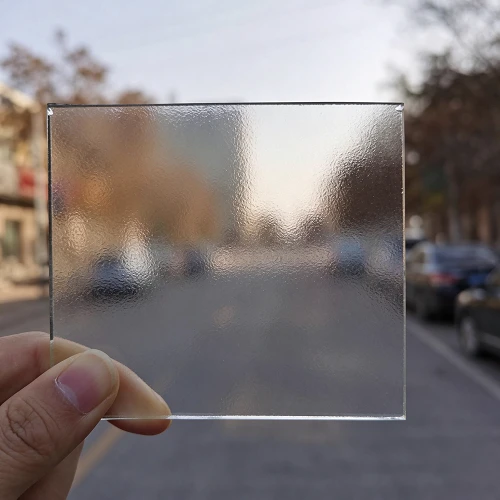
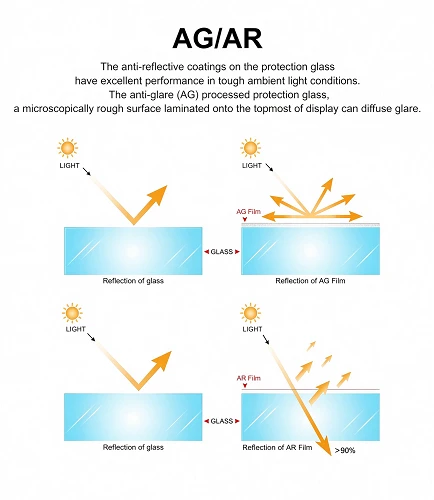
An anti-glare surface is textured or etched so that reflected light is scattered rather than returned as a sharp image. The reflection becomes a soft wash instead of a readable mirror, and the pane also obscures the view to some degree. That is a genuine function, not a side effect - on a screen-adjacent partition or a busy open-plan office, softening the reflection improves comfort. The cost is a loss of sharpness through the glass. Anti reflective glass glazing takes a different route: a thin coating reduces the amount of light reflected at the surface while keeping the view clear, with none of the scattering haze.
Where anti-reflective fits
It helps to keep the three in separate boxes. Glossy leaves the reflection sharp. Anti-glare scatters it and gives privacy. Anti-reflective lowers it without scattering, so detail stays crisp. An anti reflective glass company should be able to explain that difference in one sentence; if a supplier uses the terms interchangeably, the quotation is not yet reliable. The choice is not about a premium finish being universally superior - it is about matching an optical behaviour to a space.
Need the coating and reflective families explained in more depth? ⇒ Related Post: What is reflective glass? Coating, Types And Buyer Checks
Pros and cons, finish by finish
Each finish solves a different problem, and each has a cost. This is not a ranking - what counts as an advantage in one room is a drawback in another. A general anti glare glass supplier will stock all three precisely because no single finish suits every opening.
Glossy: maximum clarity, no concealment
Glossy glass wins on light and clarity. It is the untreated state of polished float glass, so there is no coating to damage, no texture to trap dirt and no finishing step to pay for. It suits display cases, shopfronts and any opening where the view through the pane is the point. The cost is the reflection: a lit room behind the glass, or a lamp in front of it, reads as a sharp second image, and there is no screening at all. Where visual comfort matters, that reflection becomes the very problem the buyer came to solve.
Anti-glare: comfort gained, sharpness lost
An anti-glare finish trades sharpness for comfort. Its textured or etched surface scatters reflected light, so a bright lamp becomes a soft wash rather than a readable mirror, and the pane screens the view to a useful degree. On partitions beside screens or in busy open-plan offices that is a real gain, and the texture hides fingerprints better than a smooth face. The drawback is detail: everything beyond the glass looks softer, so an anti-glare panel is a poor choice where a product or a work of art must be read clearly. An anti glare glass supplier will usually describe this as a comfort finish rather than a clarity finish.
Want to see how scattering affects privacy in practice? ⇒ Related Post: How Private Is Textured Glass? Light, Doors And Panels
Anti-reflective: low reflection without the haze
Anti reflective glass glazing reduces reflection without scattering, so the view stays crisp. That is why it is specified for museums, vitrines and premium shopfronts: the pane almost disappears and detail behind it is not softened. The trade-offs are cost and care. A deposited coating is more expensive than an untreated pane and must be protected through cutting, handling and cleaning; harsh cleaners can mark an exposed face. It also offers no privacy, because the light still passes straight through. The finish an anti reflective glass company supplies is a coating, not an etch, so it behaves quite differently under a cloth.

Choosing for a double-glazed build
Once the finish is clear, the next question is where it sits in the unit. In a double-glazed panel, a finish can be applied to an outer face, an inner face, or a surface sealed inside the cavity. That decision affects durability, cleaning and the result you actually see.
Why face position matters
A surface inside a sealed unit is protected for the life of the panel; an exposed face meets cloths, dust and cleaning products every week. Anti Glare Double Glazing normally carries the treatment on a protected face, which is one reason it holds its appearance well in service. If the same finish is put on an exposed face, it can be marked far sooner. Ask which face carries the treatment and how the unit is built before you compare prices - the same name can describe two quite different panels.
Light, privacy and the view through
The practical test is what happens on both sides of the glass. Where the view is the point - a display case, a shopfront, a museum panel - a clear low-reflection surface usually wins, and Anti Glare Double Glazing would soften detail you want to keep. Where comfort and screening matter - meeting rooms, reception screens, partitions beside workstations - the scattered reflection of an anti-glare finish is the more useful tool. Write down which side of the glass matters more before you request samples; it saves a round of revisions.
Want to judge the build quality of a sealed unit properly? ⇒ Related Post: How can you tell if double glazing is good quality?
Tempering, laminating and safety
Both finishes can be combined with safety processing, but the order of operations matters and not every combination is available. A coated surface may need to survive the heat of tempering, or be applied after it; an etched surface may be harder to temper cleanly. When you ask an anti glare glass supplier for the full process sequence in writing, confirm which treatments may follow the finish. A supplier who has made the combination before will answer in specifics, including where it is not possible. If the plan relies on anti reflective glass glazing being tempered after coating, make sure they can actually do it.
Curious how a sensitive layer is protected inside a laminated build? ⇒ Related Post: What Are The Different Types Of Laminated Glass?
FAQ
Is anti-glare or glossy glass better?
Neither is better on its own. Glossy glass keeps the sharpest view and the most light, while Anti Glare Double Glazing softens reflections and adds privacy at the cost of some clarity. Choose by the job: clarity and low reflection favour a clear or coated pane, while comfort and screening favour an anti-glare finish.
Is anti-glare the same as anti-reflective?
No. Anti-glare scatters reflected light, which softens the image and reduces clarity. Anti-reflective uses a thin coating to lower reflection while keeping the view sharp; anti reflective glass glazing does not create the haze an etched surface does. They are different products. Name the behaviour you need rather than assuming one term covers both.
Does an anti-glare finish reduce daylight?
It reduces the sharpness of what passes through, not the amount of light in a dramatic way, but the surface can make a room feel slightly dimmer because detail is softened. Where brightness and a crisp view both matter, ask an anti reflective glass company to quote a clear low-reflection build instead. Judge the sample in the real space.
Which finish lasts longer in a busy interior?
A finish on a protected face inside a sealed unit will outlast one on an exposed surface, whichever type you choose. Etched and coated surfaces on exposed faces can be marked by grit and harsh cleaners. Ask where the finish sits and what care routine is recommended, then put both in the handover documents.
Can the wrong finish make a room uncomfortable?
Yes. A buyer who asks only for "better glass" may receive glossy when they needed scattering, or an anti-glare pane when they needed a clear low-reflection view. An anti glare glass supplier who asks about the room, the lighting and the view is more useful than one who only repeats a product name. Match the behaviour to the job first.
A Chinese Glass Supplier For Glazing Projects: Luck Glass
Luck Glass is a glass processing manufacturer focused on the deep-processing of decorative and obscure glass for both residential and commercial projects. Across our ranges we produce acid-etched, frosted, painted, fabric and textured glass, supplied as cut-to-size panels with the finish, color and safety treatment each project needs - tempered, laminated, or a combination of both. Our multiple deep-processing lines support consistent batches across large orders, and we work with distributors, contractors and brands in many countries worldwide. From a private bathroom partition to a multi-floor commercial fit-out, our fabrication is cut-to-size and matched to project drawings.
Looking beyond one factory at the wider supplier landscape ⇒ Related Post: "Top 10 Glass Manufacturers & Suppliers in China: An In-Depth B2B Guide"
Discuss your project requirements with our team
Summary
There is no universal winner between anti-glare and glossy. Glossy keeps the view sharp and costs nothing extra; an anti-glare finish softens reflections and adds privacy at the cost of clarity; an anti-reflective coating lowers reflection without scattering. Choose by what the pane must do, and fix the finish, face position and build in writing. Any anti glare glass supplier should be able to explain those trade-offs in plain terms, and a sample seen in real light is worth more than a catalogue name. Anti Glare Double Glazing earns its place where comfort and screening matter more than a crisp view through.