When someone runs a hand across a pane and says "what do you call this bumpy glass?", they are naming one of the oldest tricks in architectural glazing. The short answer: "bumpy glass" is the plain-language name for textured glass or patterned glass - a sheet whose surface is cast or rolled into a raised, uneven, three-dimensional pattern. Those bumps are the feature, not a defect: they scatter light for privacy and soft daylight without a solid wall, and turn an ordinary pane into a decorative glass panel. This guide covers what it is called in the trade, how it is made, the common patterns, and where each one works best.
What People Mean By "Bumpy Glass"
"bumpy glass" is a descriptive, non-technical term. Shoppers and homeowners reach for it when the touch or the look is the first thing they notice: a surface that is not flat like clear glass and not uniformly cloudy like frosted glass, but physically raised in a repeating design. In a showroom that word usually points to the same family professionals label textured, figured, or patterned glass.
The bumpiness matters because a flat clear pane shows every silhouette, while a bumpy pane breaks up that sightline. How deep, dense, and transparent the base is decides how much privacy and light you get.
To see how this naming fits the wider family of named products, start here ⇒ Related Post: "What Do You Call Patterned Glass?"
The Real Names: Textured, Patterned, Figured And Rolled Glass
"bumpy glass" is a nickname. In specifications and on quotation sheets you will see several more precise names, and they overlap.
Textured glass
Textured glass is the broadest term. It covers any glass whose face carries a deliberate relief - ribs, pebbles, waves, grids, or a frost-like bite - cast in during manufacture or applied later by acid etching. The defining trait is surface relief you can feel.
Patterned (figured) glass
Patterned glass - also called figured glass - is textured glass made with a repeating, designed motif: a pebble field, a reed, a leaf, a geometric grid. "Patterned" emphasizes the repeat design; "figured" is the older trade word for the same thing, and most rolled glass you buy by the sheet is patterned glass.
Rolled glass
Rolled glass describes the method. A ribbon of molten glass is passed between rollers, one engraved with the pattern, so the design is pressed into the soft glass and frozen as it cools. Because the pattern is rolled in, the back of the sheet stays smoother while the front carries the bumps - the workhorse behind most decorative glass panels.
How Bumpy Glass Is Made
There are two routes to a bumpy surface.
Cast and rolled during production
This is how standard patterned glass sheets are born: molten glass meets an engraved roller and the relief is set while the glass is still soft, for a consistent, repeatable pattern.
Post-process surface treatment
Acid etching and frosting change the surface after the glass is made, giving a smooth, velvety, non-reflective finish rather than a deep physical bump. These are often combined with a cast pattern to tune privacy.
Common Bumpy Patterns You'll See
Walking a sample rack, the bumps sort into a few recognizable families that each read differently in a room.
Pebble and rock patterns
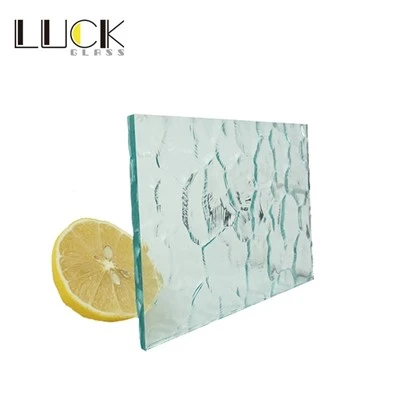
Small, rounded, irregular shapes packed across the surface - like the pale blue-green pebble panel many homeowners pick for a spa-like bathroom. The bumps are gentle, the base can stay transparent, and the effect is organic rather than mechanical: the classic "bumpy glass" people picture.
Reeded and fluted
Parallel vertical ribs. Reeded glass has fine, closely spaced lines; fluted glass has deeper, rounder column-like grooves. Both scatter light horizontally while reading as clean and contemporary, so they show up on cabinets, showers, and doors.
Frosted and acid-etched
A smoother, cloudy finish that reads as "bumpy" only up close. It maximizes privacy and softens light, and pairs well with a cast pattern underneath for extra obscuration.
Woven and fabric-look
Glass laminated with a fabric or mesh interlayer gives a textured, dimensional surface with a cloth-like character - less a hard bump, more depth and shadow play.
To go deeper on surface relief and the patterns behind it, this explains the bigger picture ⇒ Related Post: "What Is Glass Texture? Types, Uses And Decorative Panels"
Why The Bumps Matter: Light, Privacy And Safety
The pattern is not decoration; three things change the moment you choose a bumpy pane.
Privacy without losing daylight
A bumpy surface scrambles the view so someone on the other side sees diffuse light and color, not clear detail - the core job of privacy glass patterns: hide the silhouette, keep the room bright.
Light diffusion
Instead of a hard shaft of sun, bumpy glass spreads light across a space, removing glare and giving an even glow - one reason textured glass is a staple near windows and light wells.
Toughened and laminated options
Bumpy glass is not fragile by definition. The same patterned sheet can be tempered for strength or laminated for safety and sound control, so a decorative panel can also meet building-code demands at a door or stair landing.
For a direct look at how much you can actually see through these panels, this is the comparison ⇒ Related Post: "How Private Is Textured Glass? Light, Doors And Panels"
Where Bumpy Glass Is Used
Because it solves both privacy and aesthetics, bumpy glass lands all over the building.
Bathrooms and showers
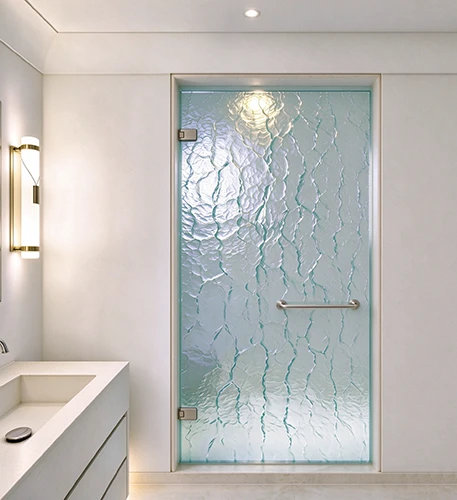
Shower enclosures and bathroom windows are the most common home for patterned glass sheets. The bumps give privacy while the transparent base keeps the space from feeling closed in.
Doors and partitions
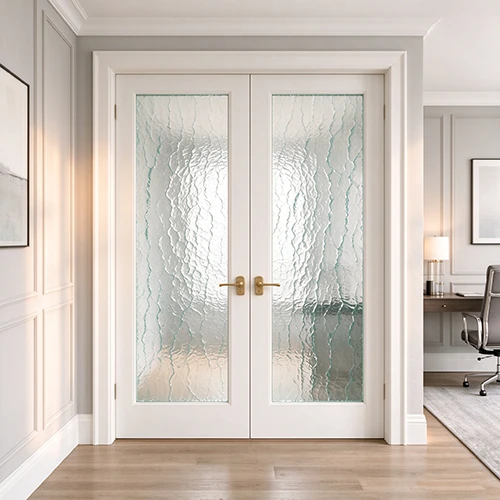
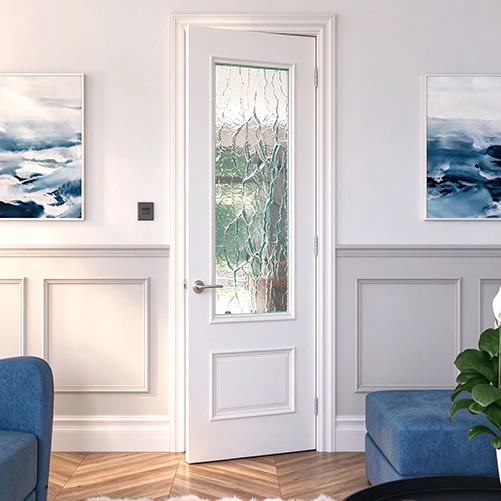
Interior door lights, office meeting-room walls, and stair partitions use textured glass to separate spaces without solid walls. A bumpy insert turns a plain door into a design moment.
Kitchen and cabinet fronts
Glass cabinet doors with a subtle pattern hide the contents while showing the cabinet is glazed. Reeded and pebble patterns read as intentional here, not hidden.
Decorative panels and front doors
Feature walls, reception backdrops, and modern front doors use bold decorative glass patterns as a private, light-filled focal point.
To see the patterns in real rooms and door applications, this shows the looks ⇒ Related Post: "What Does Textured Glass Look Like? Privacy & Door Panels"
Decorative Glass Patterns And How To Choose
Choosing a pattern is really choosing a balance between three things: privacy, light, and style.
Match pattern to privacy need
A deep pebble or heavy frost obscures the most; fine reeds and light etch let more show. For a bathroom or street-level window, lean toward deeper relief; for an interior partition, a lighter pattern is usually enough.
Match pattern to room
Restful spaces suit organic pebble and wave patterns; crisp, modern interiors suit reeded and geometric grids. The pattern should belong to the room's language, not read as a bolt-on.
To see the full range of decorative families this fits into, this is the overview ⇒ Related Post: "What Are The Different Types Of Decorative Glass?"
Frosting Patterns On Glass
"frosting patterns on glass" deserve a note because they are often confused with hard bumps. Frosting is a finish - acid etch or film - that makes glass look permanently steamed, as a uniform cloud, gradient, or cut design. Combined with a cast bumpy pattern, you get both physical relief and a soft, private haze for maximum obscuration.
Patterned Glass Sheets: Cut To Size And Custom
Most bumpy glass reaches the project as patterned glass sheets that are then cut.
Standard sheet sizes
Patterned glass is produced in large sheets and cut down for the job. You rarely buy the whole sheet - you order the panel size your opening needs, since exact dimensions depend on the manufacturer and pattern.
Cut-to-size and edgework
A fabricated panel is cut to the opening, then finished with the edge and safety treatment the install calls for - tempered, laminated, or both. Color tint, base transparency, and pattern can all be specified, turning a generic "bumpy glass" into a made-for-you decorative glass panel.
To tell the specific ribbed patterns apart before you spec them, this is the detailed comparison ⇒ Related Post: "What Is The Difference Between Fluted And Reeded Glass?"
What Affects Patterned Glass Price
"patterned glass price" is one of the first things buyers search, and the honest answer is that it moves with several variables rather than a single number. Understanding them helps you budget without surprises.
|
Factor |
What it changes |
|
Pattern complexity |
Deeper, multi-step, or low-volume patterns cost more to produce than common repeats. |
|
Glass thickness |
Thicker panes use more material and need more robust handling. |
|
Safety treatment |
Tempering or lamination adds process steps and value. |
|
Tint and base |
Colored or low-iron transparent bases shift the cost versus standard clear. |
|
Order volume |
Larger, repeated batches are typically more efficient per panel than one-off cuts. |
The practical takeaway: compare quotes by specification, not by a headline price. A clear pebble panel and a laminated tinted reed are different products, so their prices should differ.
Privacy Glass Patterns: Picking The Right Obscuration
When privacy is the priority, the pattern choice decides the result.
Light obscuration patterns - pebble, rock, and heavy frost - suit bathrooms, street-facing windows, and changing areas. Medium patterns like reeds and waves give privacy at arm's length but still hint at movement, suiting offices and living zones. A clear-based bumpy glass keeps a room bright, while a tinted base pushes privacy higher at the cost of some light.
Before you install it, orientation changes the result - this covers which way the bumpy face should point ⇒ Related Post: "Does Textured Glass Face In Or Out?"
Care And Cleaning Of Bumpy Glass
Bumpy surfaces trap more dust and water spots than flat glass, so clean them with a soft, non-abrasive cloth and a mild solution - avoid harsh pads that could scuff the relief. In a shower, a quick squeegee after use prevents mineral buildup in the low spots, and a clean panel reads noticeably brighter because the bumps diffuse light.
About Luck Glass
Luck Glass is a glass processing manufacturer focused on the deep-processing of decorative and obscure glass for both residential and commercial projects. Across our ranges we produce acid-etched, frosted, painted, fabric and textured glass, supplied as cut-to-size panels with the finish, color and safety treatment each project needs - tempered, laminated, or a combination of both. Our multiple deep-processing lines support consistent batches across large orders, and we work with distributors, contractors and brands in many countries worldwide. From a private bathroom partition to a multi-floor commercial fit-out, our fabrication is cut-to-size and matched to project drawings.
FAQ
Is bumpy glass the same as textured glass?
Yes - "bumpy glass" is the casual name for textured or patterned glass. The bumps are a cast or rolled surface relief that scatters light. Trade documents use "textured," "patterned," or "figured" instead of "bumpy," but they describe the same family of decorative glass panels.
Can bumpy glass be tempered?
Yes. Most patterned glass sheets can be tempered after cutting, which raises strength and makes them safe for doors, showers, and partitions. Tempering is done before any edgework, and very deep or low-volume patterns may need a quick check first. Lamination is also available when sound control or post-break retention is required for the project.
Does bumpy glass block light?
It diffuses rather than blocks light. A bumpy surface scatters daylight so glare drops and privacy rises, but most transparent-based panels still pass a high share of ambient light. Heavy frost or a tinted base reduces brightness more than a clear pebble pattern.
Is patterned glass more expensive than clear glass?
Generally yes, because the pattern adds a manufacturing step and often a specific base or finish. The final patterned glass price depends on pattern complexity, thickness, safety treatment, tint, and order volume rather than a single fixed figure, so compare quotes by full specification.
Summary
Bumpy glass is the everyday name for textured or patterned glass - a single pane with a raised, uneven surface rolled or cast into a repeating design. Those bumps scatter light for privacy while keeping rooms bright, and they come in families from pebble and reed to frost and fabric-look. Choose the pattern by privacy need, room style, and whether the panel must be tempered or laminated, then have it cut to size as a decorative glass panel built for the opening.